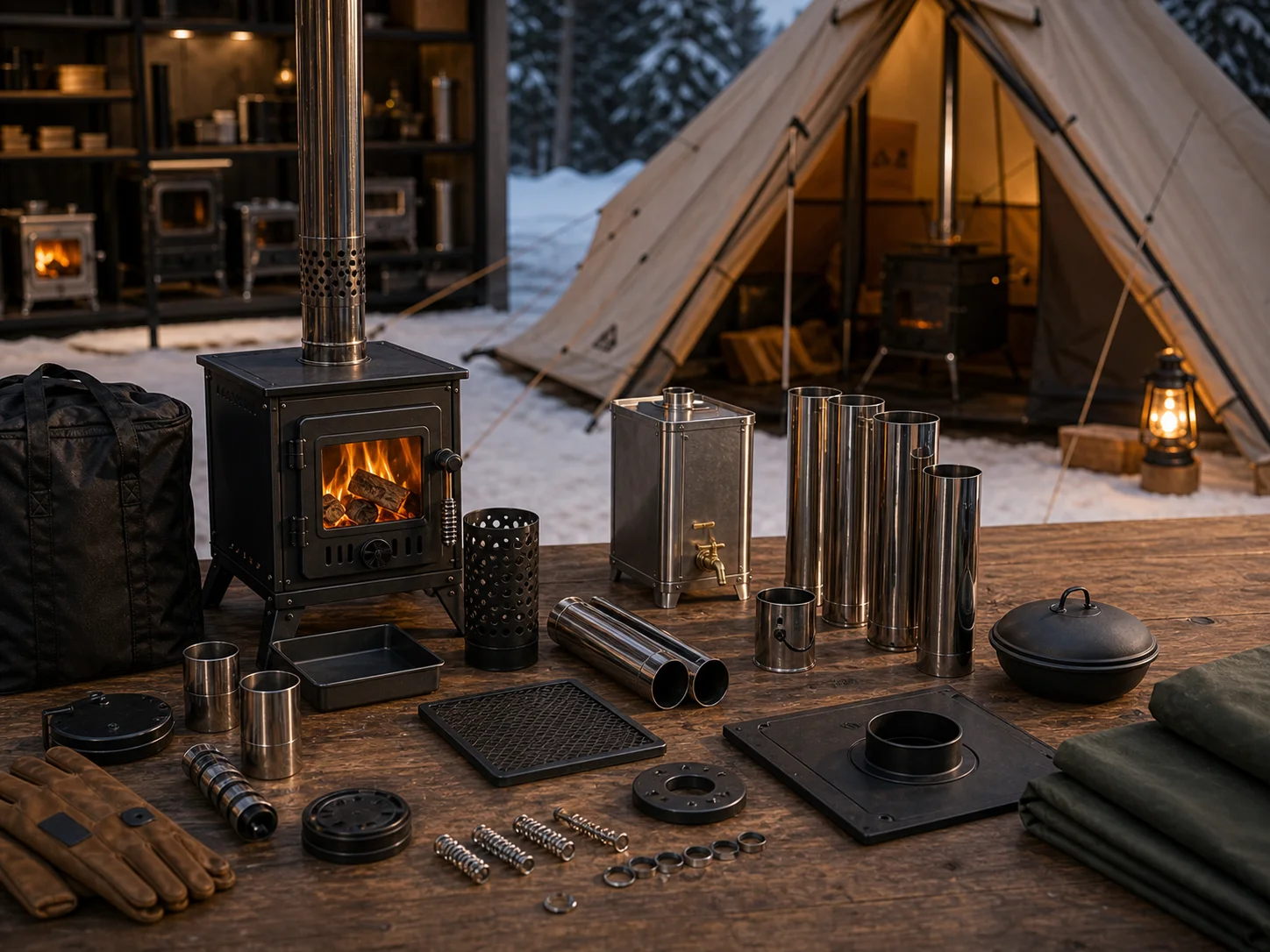
Define the complete kit
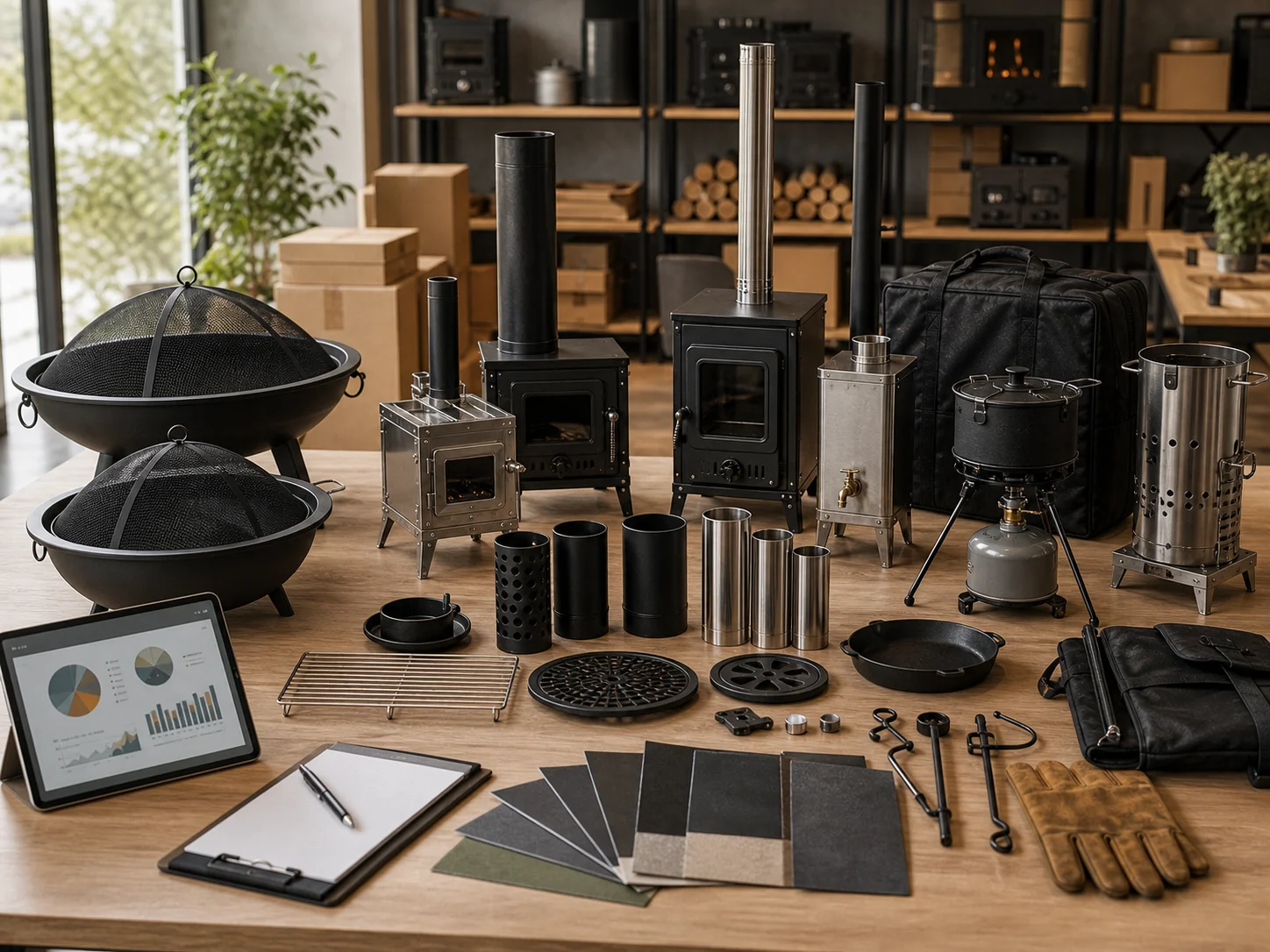
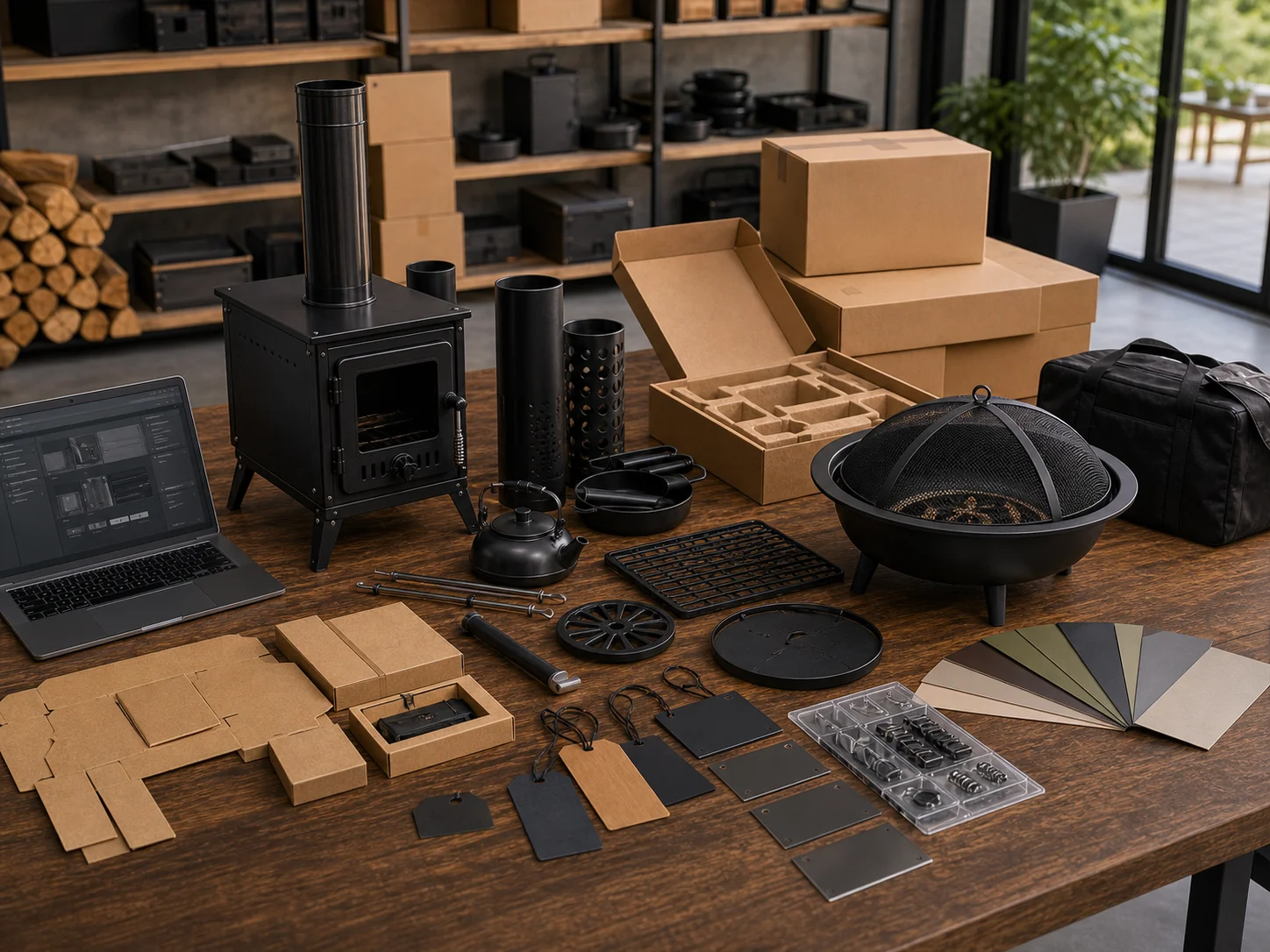
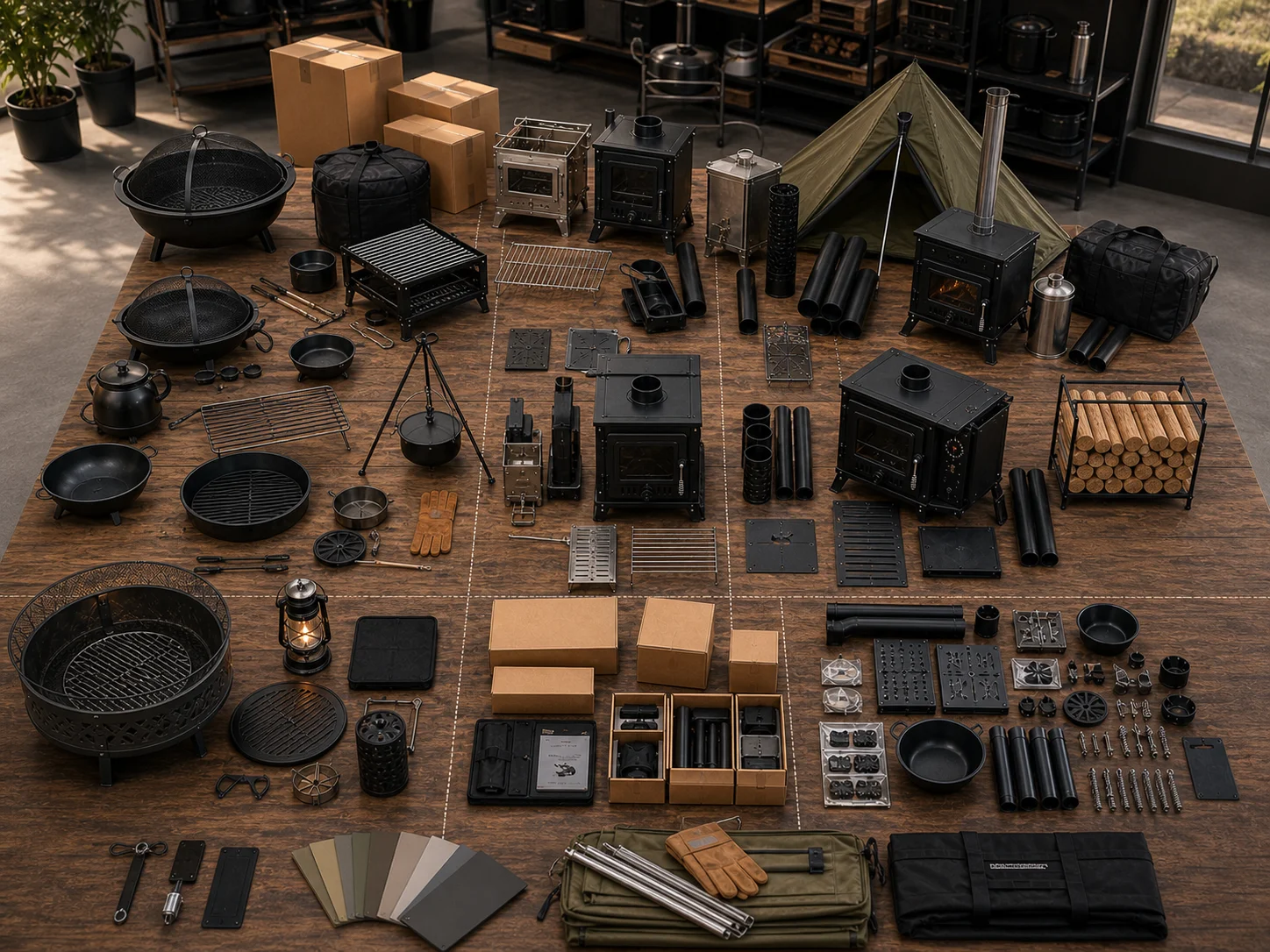
Start with the exact stove model and intended stove-ready tent. List the chimney sections, spark arrestor, supports, carry bag and other included items. Mark water tanks, replacement glass and additional parts as included or optional so the buyer can compare complete kits.
Request assembled and packed dimensions and the weight of the full kit, with its contents identified. Stove-body weight alone does not describe what the customer will carry. Check that the packed parts fit the supplied bag and are protected from damaging one another.
Check connections and the tent interface
For each chimney connection, confirm the mating dimensions, joint design and intended orientation. The same nominal diameter does not guarantee that pipes from different systems fit or are approved for use together. Share your selected stove and chimney configuration with us so we can review the compatible parts.
A stove jack or flashing component needs to suit the tent material, chimney arrangement and product instructions. Confirm model-specific clearances, ventilation, installation requirements and the role of each protective accessory. Use the equipment documentation for installation and operation.
Plan service parts and the winter order
Identify replacement glass, seals, fasteners and chimney parts by the model and version they fit. Similar appearance is not enough to establish compatibility. Confirm which parts are replaceable and what information the customer needs to order them correctly.
Schedule sample review, packaging approval and shipping before the intended seasonal launch. Keep the kit list, instructions and replacement-part references consistent across your catalog and cartons. We can review the proposed stove configuration and accessory requirements before preparing a quotation.