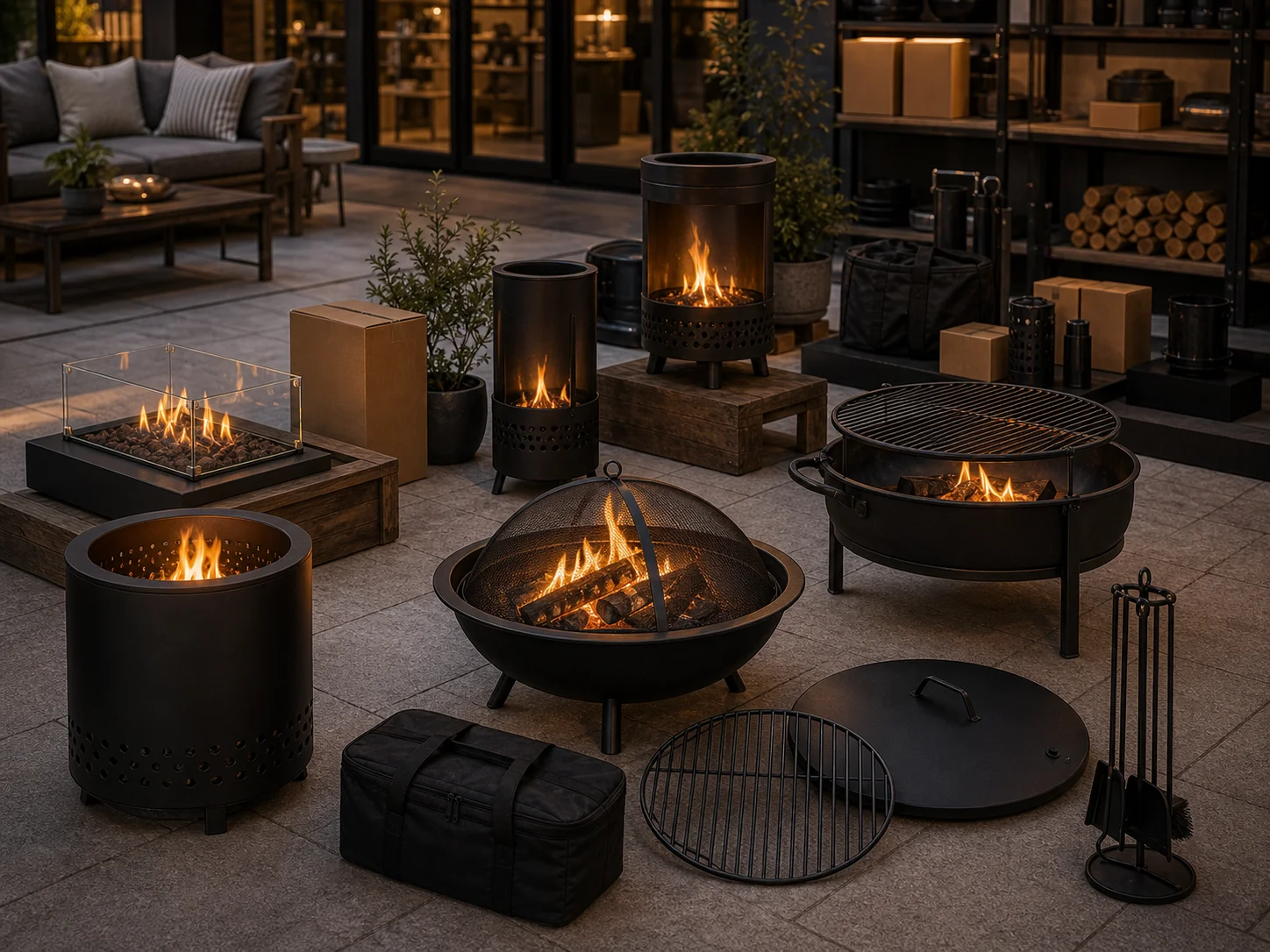
Define the role of each model
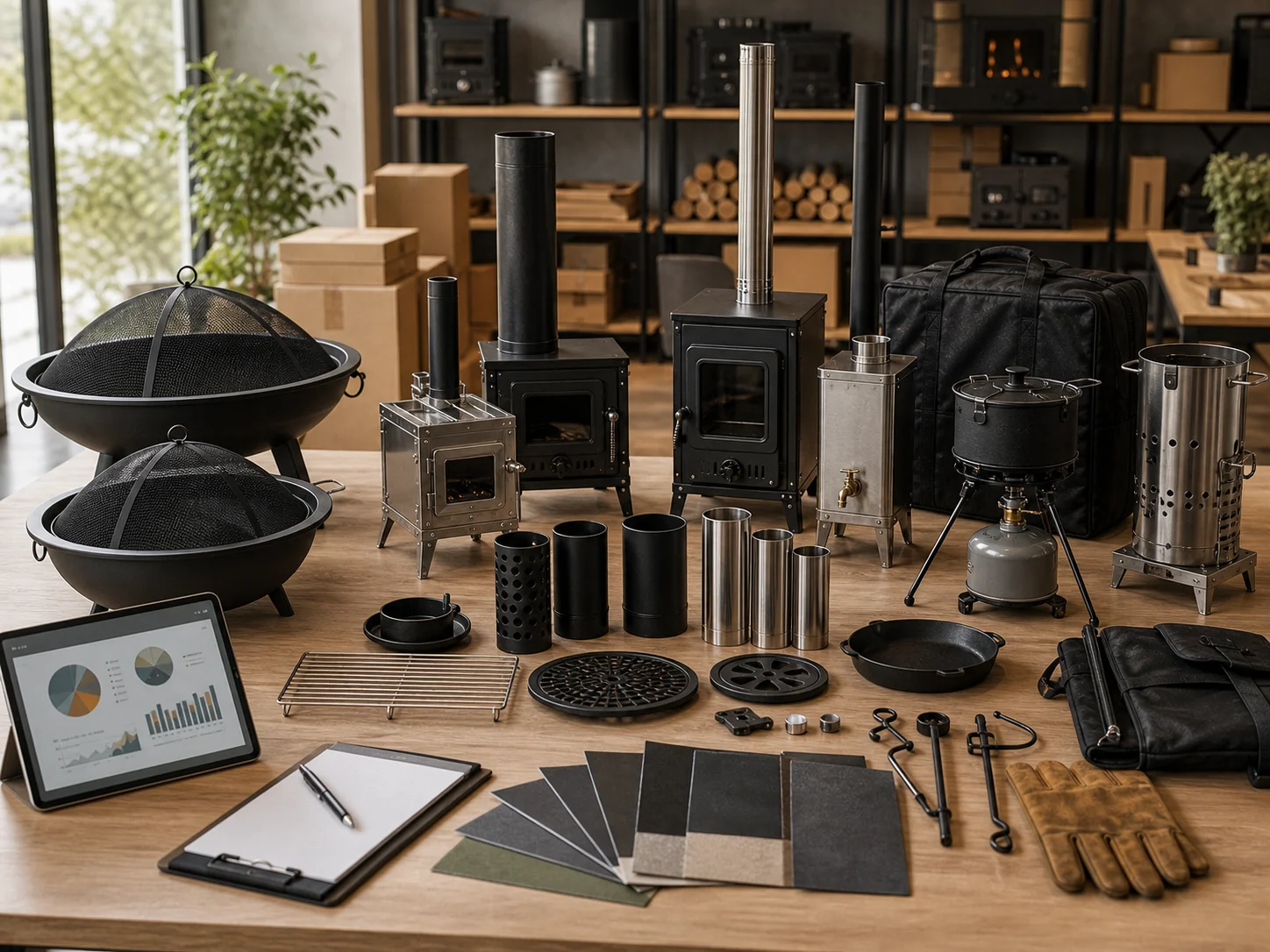
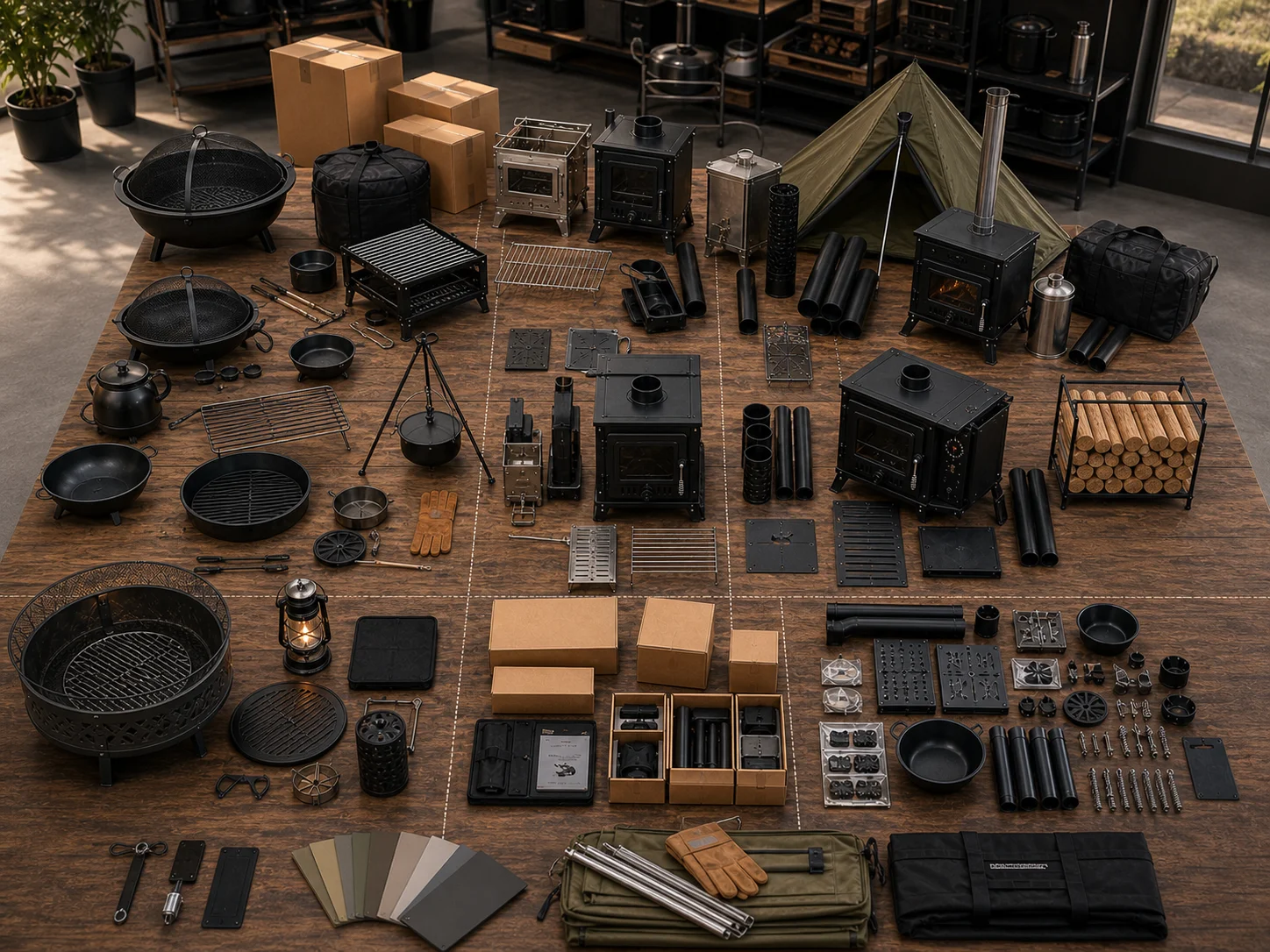
A large patio bowl, a compact tabletop unit and a fire pit with a cooking grate meet different needs. Compare dimensions, fuel requirements, construction, finish and included components before choosing the range. Do not assume that all fire pits use the same fuel or are suitable for the same supporting surface.
For products described as smokeless, review the operating conditions and supporting information for the selected model. Smoke levels depend on the fuel and how the fire is operated. Keep your product description and customer guidance aligned with the model-specific information we provide.
Match accessories to the actual fire pit
Check the dimensions and attachment or support method for cooking grates, spark screens, lids and stands. A grate that spans the opening still needs the intended support arrangement. Confirm the materials and finish of food-contact components instead of extending the fire pit body specification to the cooking surface.
Distinguish a spark screen, a rigid lid and a weather cover: they serve different purposes and should not be described interchangeably as a safety cover. Confirm when and how each may be used in the model instructions. Keep replacement accessories linked to the correct model.
Plan the finish, display and delivery pack
Confirm the body material, grade, finish and care requirements. For a rust-colored fire pit, specify whether the appearance comes from weathering steel or a decorative finish; for stainless models, identify the grade. Use these details to set accurate customer expectations about storage and maintenance.
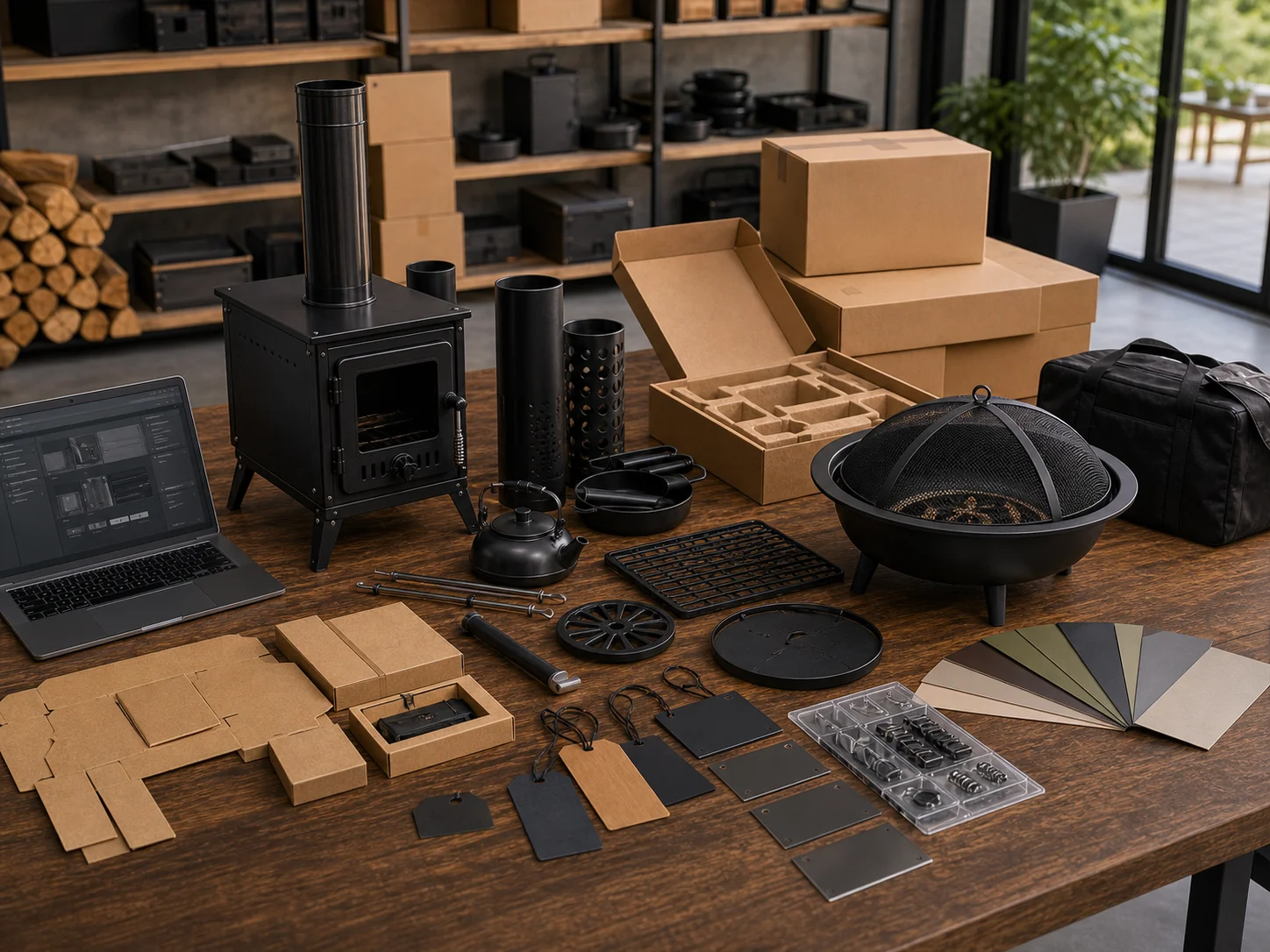
Retail displays can show scale and compatible accessories; ecommerce listings also need precise dimensions, kit contents and delivery information. Keep model-specific clearances and permitted locations in the product instructions. Review packaging for the sales channel, protecting finished surfaces and separating loose accessories before shipment.