Loading Access for Prepared Fuel
Door opening and usable firebox length are specified around the split wood planned for the building.
Wholesale Wood Burning Stoves
These workshop wood stoves combine specified loading access, prepared-fuel capacity and model-specific service references for permitted garages, farm buildings and utility spaces.
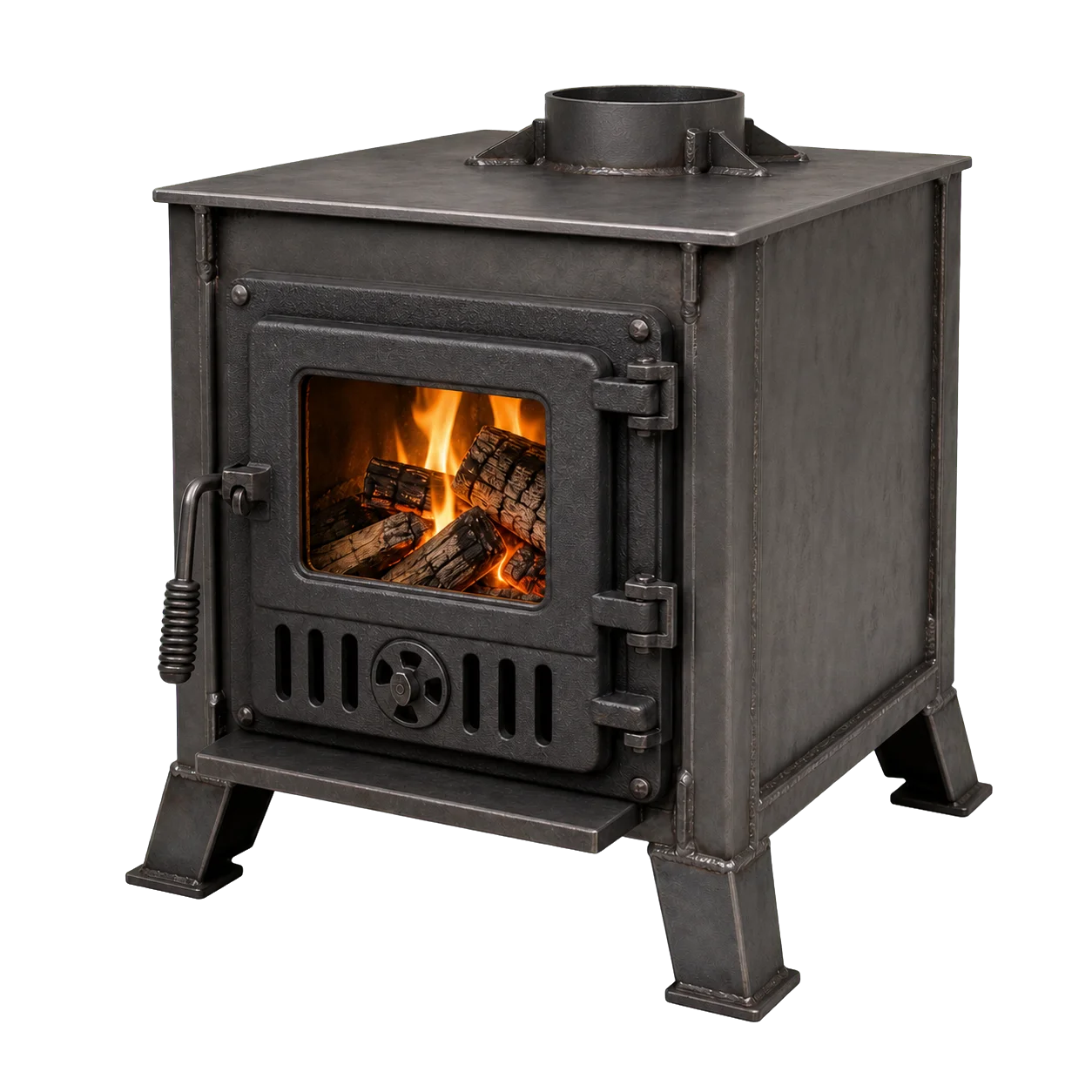
Product Focus
Working environments favor clear controls, serviceable doors and straightforward ash access. A large body is not enough; the stove must fit the building, fuel routine, hearth and permitted flue installation.
Door opening and usable firebox length are specified around the split wood planned for the building.
Handles, latches and controls use documented attachment, inspection points and model-specific replacement references.
Workshop volume, floor protection, chimney route and local rules determine whether a documented model suits the building.
Design Details
Fuel loading, panel support, external hardware and cleaning access are checked against the selected building duty and service routine.
The opening is dimensioned for the nominated log length, while frame condition, hinge support and latch engagement are included in the model-specific heat-cycle criteria.
Panel gauge and reinforcement follow the firebox spans and documented duty rather than a generic heavy-duty label.
Frequently touched parts carry identifiable references, documented attachment and inspection access, with replacement capability stated by model.
The service procedure identifies any external parts that must be removed before cooled-ash access or internal inspection.
Specifications
Building size, insulation, work pattern, fuel and installation conditions provide the basis for comparing documented models.
Materials & Finish
Body panels, doors and handling parts face different loads and should be specified by component.
Steel supports practical fabrication and broad firebox sizes, with gauge and bracing matched to the actual panel spans.
Door frames, latches and grate components can use model-specific steel or cast-iron construction selected for heat and repeated handling.
Black or dark-grey heat-resistant finishes suit utility settings when preparation, coating limits and care guidance are clear.
Applications
A farm shed, repair workshop and private garage do not share one installation assumption.
Supervised utility spaces can specify prepared-fuel loading, service access and an installation plan for the selected building.
Model selection must account for workplace fire risks, stored materials, ventilation and local rules.
Hobby spaces require documented output, stored-material confirmation and an installation permitted by local building, fire and insurance requirements.
OEM & Private Label
Private-label options can focus on usable loading, replaceable working parts and maintainable model families.
FAQ
Building volume, insulation, operating duty, prepared fuel and the permitted installation provide the basis for model comparison.
The declared fuel for the selected model must be followed. Treated, painted or unsuitable waste material should not be implied by the workshop label.
Use the building, insulation, heating role and documented model performance. Firebox volume alone is not an output rating.
Door frames, latches, handles, controls, grates and legs face different combinations of repeated handling, concentrated heat and installed load, so each should be checked by component.
Only where the documented product, local fire and building rules, stored materials and insurance requirements permit the installation.
Door seals, grate components, handles, control parts and ash tools may be relevant, depending on the exact model.
Provide the building type, insulation and heating role, prepared fuel length, loading routine, hearth and chimney assumptions, service parts and order quantity.