Usable Cooking Surface
Published cooking area excludes collars, handles, edges and zones outside the documented cookware positions.
Wholesale Wood Burning Stoves
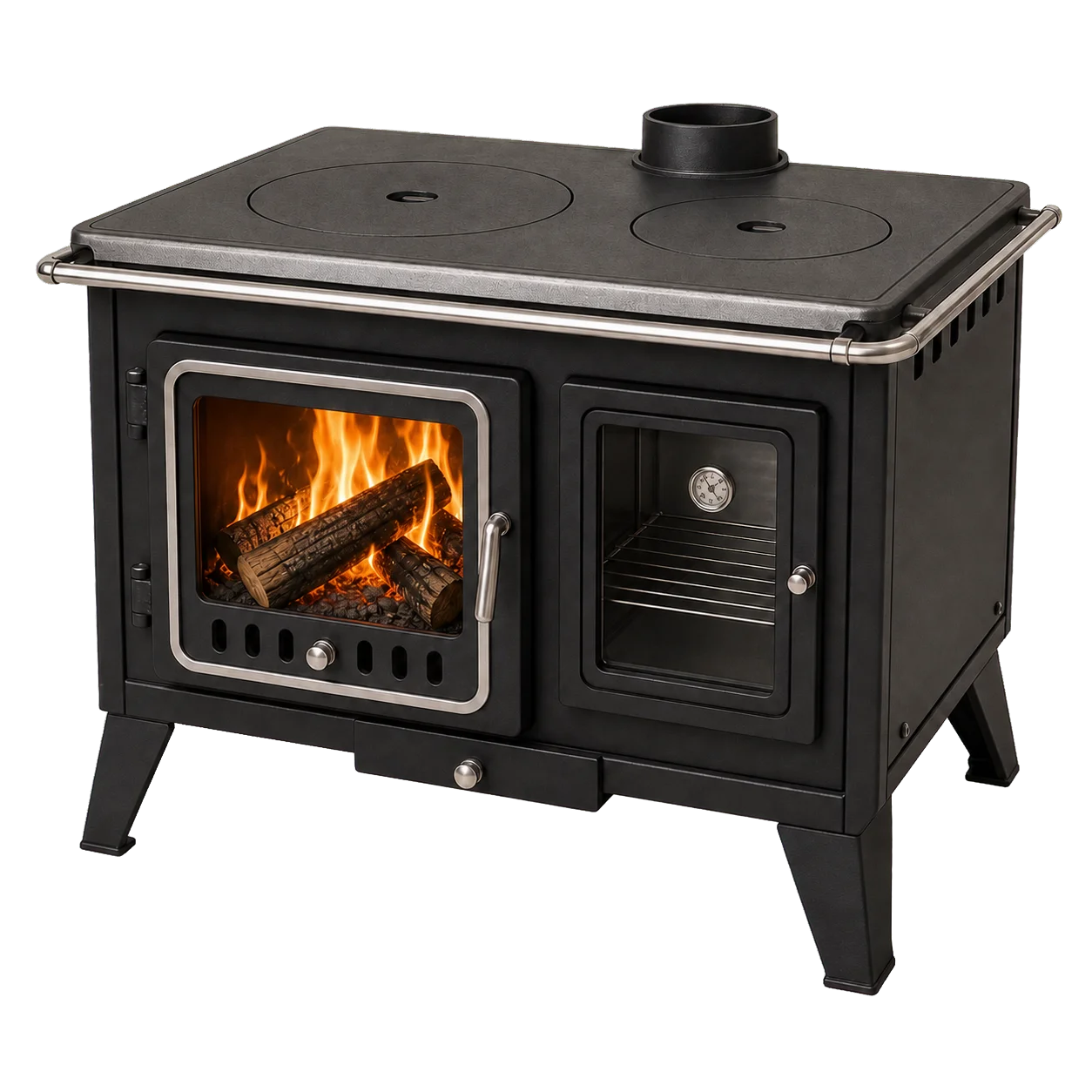
These wood cook stoves combine a documented firebox, cookware-specific top and defined food-zone materials for off-grid kitchens and cabins.
Product Focus
Firebox size, top material and usable cooking zones are specified around the cookware, meals and prepared fuel. Space-heating claims and cooking claims remain separate unless the model documentation supports both.
Published cooking area excludes collars, handles, edges and zones outside the documented cookware positions.
Painted stove panels, cast-iron tops and stainless trim require distinct material declarations and care guidance.
Fuel loading, pot movement, ash service and cleaning access are specified around the nominated cookware and meal sequence.
Design Details
Fuel access, heat pattern, vessel support and cleaning routes are documented with the nominated cookware and meal sequence.
Loading access and usable log length are validated for each meal pattern, stove footprint and target service cadence.
Practical vessel positions and observed heat patterns are recorded without claiming uniform temperature across every surface.
Rings or plates are checked with the nominated pot bases, filled masses and selected top material.
The service plan defines separate tools, access and sequence for fully cooled ash and cooking residue.
Specifications
Selection should account for the meal pattern, vessel sizes, prepared fuel, cooktop material and installed flue.
Materials & Finish
Each zone has a different relationship with flame, cookware, food and cleaning.
The fabricated body carries a component-level steel and finish schedule, with coated surfaces excluded from declared food-contact zones.
The cast-iron top is specified by dimensions, mass, cookware contacts, seasoning and maintenance guidance; heat behavior remains model-specific.
Stainless grade and component role are identified for any trim, edge or service part.
Applications
The product fits customers who accept active fuel tending and a planned chimney in exchange for solid-fuel cooking independence.
Cabin models are specified around nominated pots and kettles, prepared fuel, hearth and flue installation.
Regular meal preparation requires documented cookware loads, usable cooking zones, fuel access and cleaning routes.
Outdoor versions require weather, placement and local fire guidance distinct from residential indoor installations.
OEM & Private Label
OEM work can coordinate firebox, top zones, vessel interfaces and cleaning parts with the market's cooking routine.
FAQ
Menu, cookware and installation provide a better starting point than the total appliance width.
Identify the practical vessel positions and their supported base sizes, excluding handles, collars and edges that are not working zones.
Painted body surfaces should not be described as food-contact areas. The actual cooking-contact component and finish must be declared separately.
Only where the selected model and grate arrangement explicitly support it. Optional fuel capability should not be generalized to other models.
A stove releases heat, but a marketable room-heating claim requires documented model performance and the relevant compliance path.
Cast iron, carbon steel and stainless steel have different seasoning, corrosion and cleaning needs. Selection follows the menu and ownership expectations.
Provide the menu, cookware bases and filled loads, prepared fuel, kitchen setting, hearth and flue route, material preferences, accessories, quantity and destination.