Component-Level Steel Gauge
The firebox shell, top, door frame and legs carry different spans, temperatures and loads, so the material schedule identifies each component separately.
Wholesale Wood Burning Stoves
These fabricated-steel wood stoves combine component-level sheet schedules, documented joint methods, heat-zone reinforcement and model-specific service references.
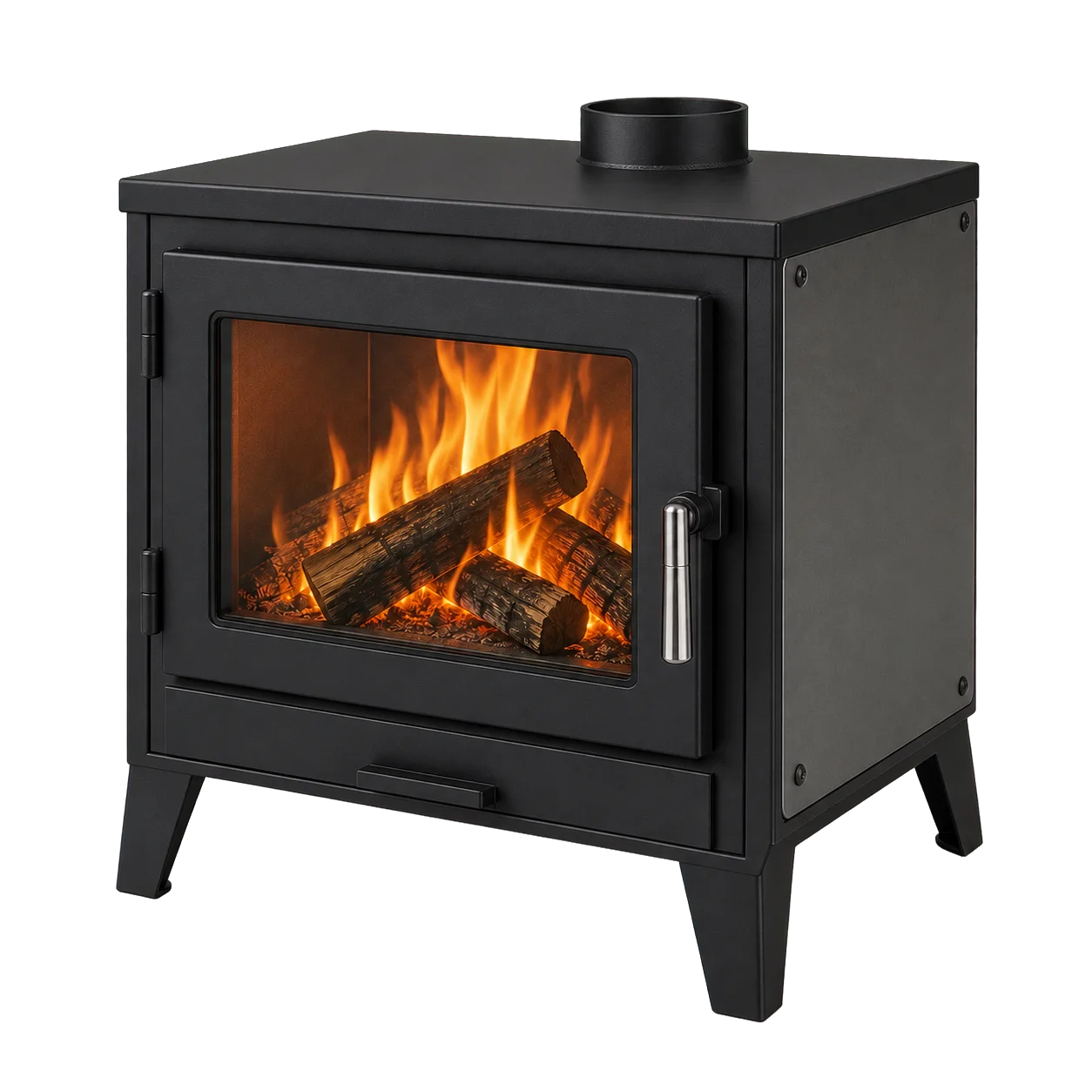
Product Focus
A steel stove is not specified by material name alone. Sheet thickness, formed returns, weld access, door-frame support and local heat concentration define the construction and service documentation.
The firebox shell, top, door frame and legs carry different spans, temperatures and loads, so the material schedule identifies each component separately.
Returns, ribs and supported joints are specified by location and included in post-heating panel and interface inspection.
Doors, seals, glazing, controls and grate parts carry references tied to the exact body and revision.
Design Details
Material allocation, formed structure, welded joints and heat-exposed interfaces define the manufactured product.
Each body panel and support receives a declared material and thickness based on its span, temperature, load and expected heat movement.
The drawing records bend, rib and support locations together with the panel or interface condition expected after heating.
Welded, formed and fastened joints are identified with their inspection access, finish requirement and service role.
Door frames, collars and service parts are tied to a specific model, revision and critical interface dimensions.
Specifications
The buyer specification should separate body geometry, sheet schedule, joint method, finish and supplied parts.
Materials & Finish
The body substrate, heat- and wear-exposed parts, visible trim and coating system are separate specification lines.
Carbon-steel grade, thickness and reinforcement are stated by component for the selected model.
Grates, tops, collars or trim may use other materials where their thermal, wear or appearance role is defined.
The coating specification states substrate preparation, application, use limits and care guidance; packing contact points are checked separately.
Applications
Fabricated construction can support several settings without pretending one body is suitable for every installation.
Different body sizes and visible finishes can serve homes only where the selected model has documented output, compliance and installation requirements.
Workshops and utility buildings require installation records tied to local regulations, operator flow and service access, not one generic cabin standard.
Panel geometry, legs, handles and trim provide different appearance options while technical claims remain tied to the documented model.
OEM & Private Label
OEM development can change geometry and presentation while preserving model-specific interfaces, material schedules and compliance boundaries.
FAQ
A complete steel-stove specification identifies the construction, not only the outside dimensions and color.
There is no universal answer. Panel span, reinforcement, temperature, load and target mass determine the appropriate component schedule.
It can be, but it may add unnecessary mass or leave critical areas under-specified. Component-level decisions are usually more informative.
Frame flatness, latch position, gasket contact, hinge support and replacement references should be tied to the complete model.
Not automatically. Changes to panel spans, outlet position, door geometry or internal volume can affect the product and should be defined as a controlled model change before quotation.
State the substrate, preparation, finish type, visible color and care expectations without implying that every coating suits every heat zone.
Include body and firebox dimensions, prepared fuel, component sheet schedule, door and flue interfaces, finish, service parts, documentation, packing and quantity.