Measured Heat Demand
Room volume, insulation, climate and use pattern provide context for documented model performance.
Wholesale Wood Burning Stoves
These compact wood stoves combine documented model output, prepared short-log dimensions and a complete installed footprint for small rooms and cabins.
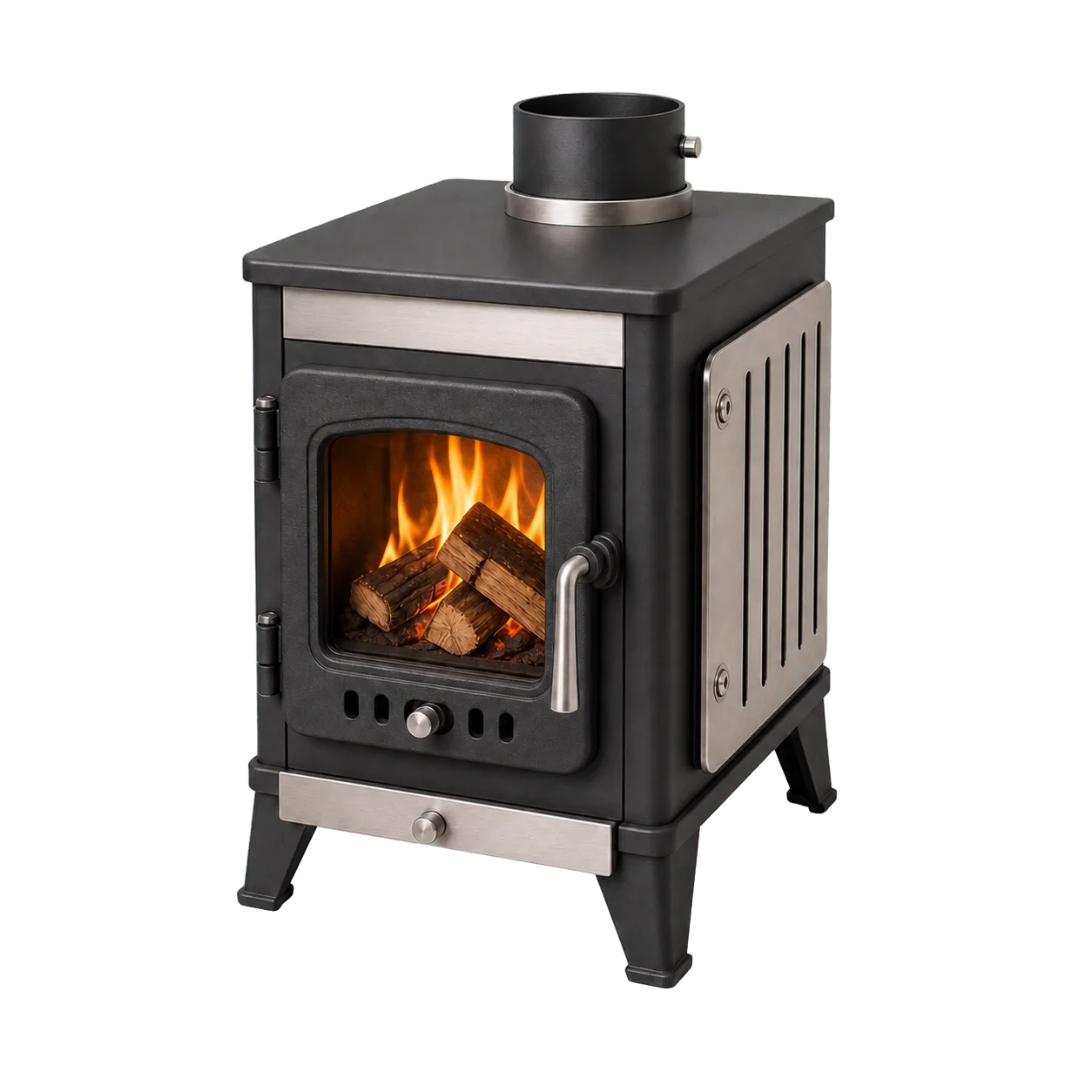
Product Focus
A small room can overheat with an oversized firebox, while an underspecified stove may encourage poor operation. Model selection requires documented output, prepared short-log dimensions and the full hearth, clearance and flue envelope.
Room volume, insulation, climate and use pattern provide context for documented model performance.
Published dimensions include hearth projection, clearance, door access and chimney route alongside the stove body.
Clean or stable low-output performance is stated only when test or engineering evidence supports the specific model.
Design Details
Firebox scale, loading access, installed envelope and service route are checked for the measured heating application.
Usable chamber dimensions and door opening are stated with the prepared fuel length for the selected model.
Air controls and performance descriptions remain tied to the tested or engineered configuration.
The foot pattern and hearth contact are checked with the nominated fuel load and normal door operation.
The service plan records access and part-removal steps for cleaning, seal inspection and model-specific replacement parts.
Specifications
Small-space selection requires measured demand, fuel format, hearth area, chimney route and destination compliance.
Materials & Finish
Body, door, grate and trim materials are declared according to their component roles.
Steel grade, gauge and reinforcement are specified for the actual firebox and panel spans.
Doors, tops or grates may use cast iron where their function and replacement route are defined.
Black or dark-grey finishes carry substrate and use-limit guidance; stainless details are identified as trim rather than the whole body material.
Applications
Each setting needs its own demand and installation assessment despite sharing a preference for reduced dimensions.
A documented model may serve supplementary heating where output, hearth, clearances and flue installation suit the room.
Intermittent use requires a stated short-log routine, identified controls and retained operating guidance.
These buildings require specific hearth, chimney and compliance confirmation rather than a generic small-space claim.
OEM & Private Label
OEM choices can coordinate firebox, body depth, outlet and service parts after room and installation conditions are known.
FAQ
The correct model is established by demand and installation, not by choosing the smallest available body.
Use measured room demand and documented model performance. Exterior dimensions alone cannot establish suitability.
No universal claim should be made. Fuel, load, draft and combustion design determine operation, and any duration claim needs model evidence.
State the practical log length, loading opening and intended preparation for the selected firebox.
No. Heating demand, complete installation envelope and applicable rules determine the appropriate documented product.
Only a documented compatible shield and installation configuration can support revised spacing.
Provide measured heating demand, room and insulation details, prepared fuel length, complete installation envelope, outlet route, materials, service parts, quantity and destination.