Cast and Fabricated Body Routes
A sectional cast-iron stove and a rolled-steel interpretation have different joints, mass, service and finish expectations.
Wholesale Wood Burning Stoves
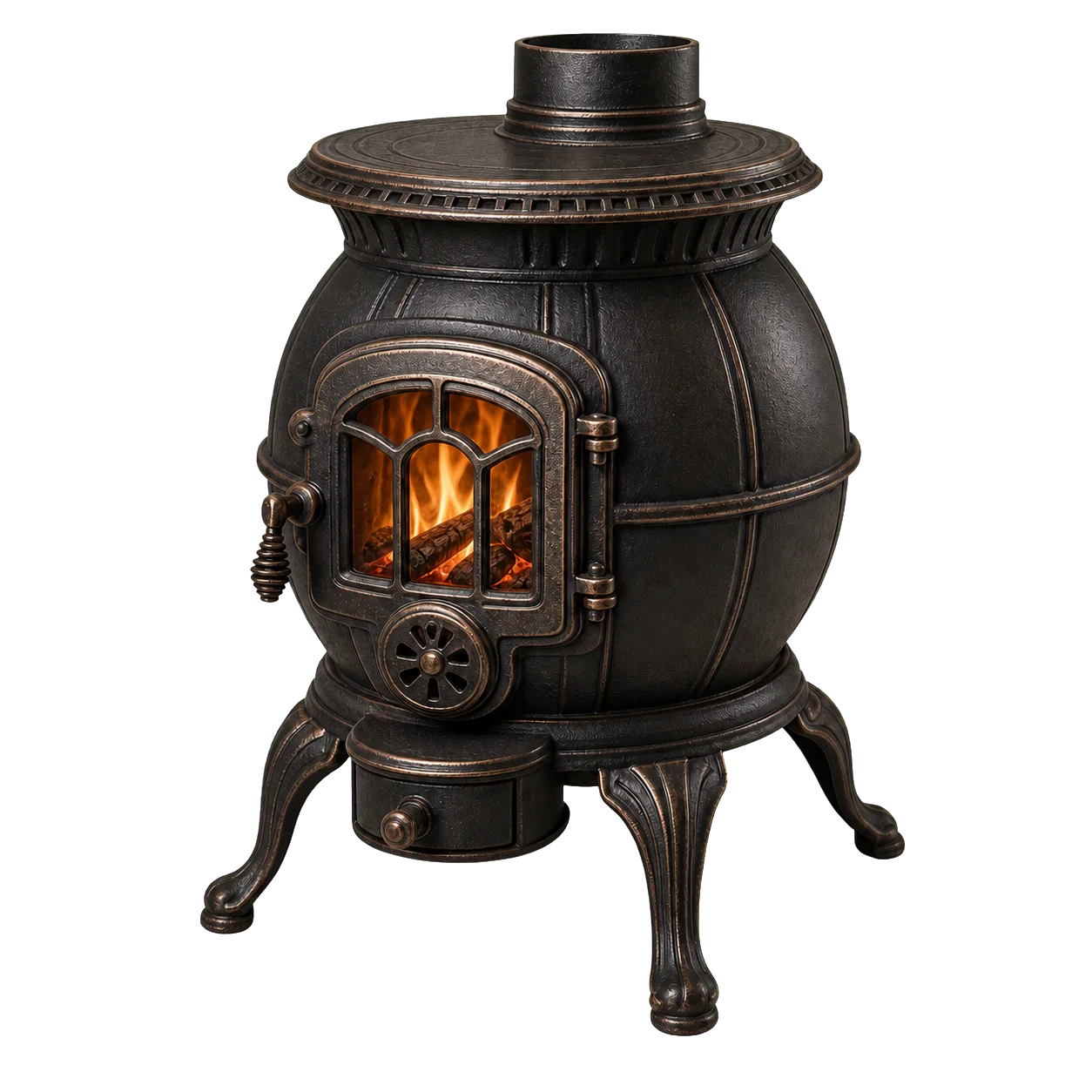
These pot belly stoves combine a traditional rounded body, specified footing and model-specific firebox service references for cabins, workshops and heritage interiors.
Product Focus
The pot-belly silhouette can use sectional cast iron or fabricated steel. Section joints, footing, loading access, fuel legality and the flue connection determine the applicable model and installation.
A sectional cast-iron stove and a rolled-steel interpretation have different joints, mass, service and finish expectations.
The base, legs and center of mass are checked on the specified hearth with the nominated fuel load and door operation.
Wood is the primary route; coal is mentioned only for a model and destination where it is documented and lawful.
Design Details
Body construction, joint method, footing contact, control access and ash service are checked for the selected model.
Cast sections or formed steel parts are identified with the seams, seals and fasteners used by the selected model.
Loading-frame condition, hinge position, latch engagement and gasket contact are inspected before and after the documented heat-cycle criteria.
Foot spacing and hearth contact are checked with the complete stove, nominated fuel load and normal door operation.
The service specification records hand access, operating range and any part-removal steps required around the rounded shell.
Specifications
The specification distinguishes cast and fabricated models, identifies the declared fuel and states the installation route.
Materials & Finish
Cast iron, formed steel and antique-style finishes require different production, inspection and ownership guidance.
Cast sections use documented surface, joint, seal and heavy-component packing criteria for the selected model.
Rolled or formed steel uses a model-specific sheet schedule, shell support and door-frame inspection; complete mass is published for comparison.
Surface options create the heritage presentation without suggesting that decorative treatment changes the documented fuel or performance.
Applications
The recognizable form suits several settings when installation and fuel boundaries remain explicit.
Seasonal properties require retained fuel and maintenance guidance, documented output and an installation suitable for the selected model.
Permitted work-building installations can specify loading access, ash service and replacement parts around the building duty, declared fuel and local rules.
Antique-style finishes provide a traditional appearance, while the appliance remains subject to model-specific output, fuel and installation requirements.
OEM & Private Label
OEM options can coordinate body route, door, base, finish and service parts around distinct model identities.
FAQ
Construction route and declared fuel matter more than the familiar outline.
No. Some use sectional cast construction; others reproduce the rounded form in fabricated steel. Product information should state the actual route.
No. Coal must be supported by the model design, documentation and destination law. It cannot be assumed from the stove style.
Mating surfaces, seals, fasteners and assembled alignment should match the selected construction and service plan.
Check foot spacing and hearth contact with the complete stove and normal loading access, not from the silhouette alone.
The finish must suit the substrate and heat exposure. Color development and care expectations are confirmed for the selected body.
Provide the cast or fabricated construction, declared fuel, size, door and base style, flue outlet, finish, service parts, destination and quantity.