Three-Dimensional Recess Measurements
Width, height, depth, taper and obstructions are recorded instead of relying on the front opening alone.
Wholesale Wood Burning Stoves
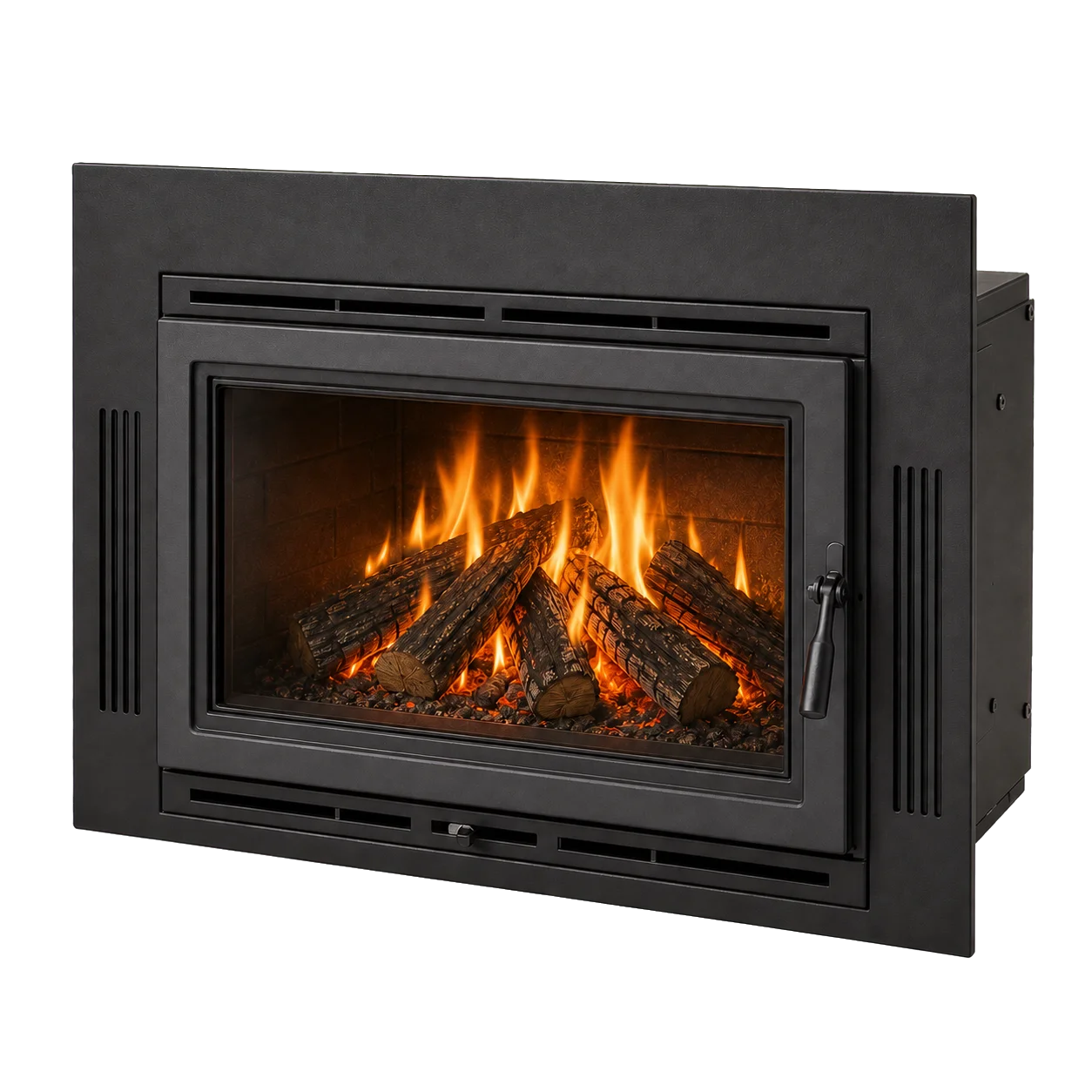
These insert wood stoves combine a measured recess envelope, documented surround coverage and a specified liner interface for existing masonry fireplaces.
Product Focus
Nominal product width cannot show whether an insert will fit a masonry fireplace. Opening dimensions, depth, hearth, surround coverage, liner route and access for installation and maintenance define compatibility.
Width, height, depth, taper and obstructions are recorded instead of relying on the front opening alone.
The trim panel covers the documented face area without acting as structural support, while the liner interface follows the inspected chimney route.
The installation plan identifies access for connection, inspection, cleaning and model-specific door service.
Design Details
The masonry opening, surround, liner connection and service route determine the project-specific insert configuration.
The insert body is selected from recorded opening dimensions, including depth, taper and internal obstructions.
Trim geometry is specified for the documented face area without being treated as structural support or universal fit.
Outlet position and diameter are specified with the selected liner and inspected chimney route.
The installation method records the removal or access steps required for door parts, ash areas, connection inspection and chimney cleaning.
Specifications
The specification requires the existing opening, hearth, chimney condition, liner plan and visible surround requirement.
Materials & Finish
The recessed body, visible door and decorative surround face different heat, wear and appearance conditions.
Steel body gauge, reinforcement and liner-connection features are specified for the selected envelope.
Cast door parts, heat-resistant glazing, seals and replacement references are documented as one model-specific assembly.
Black or dark-grey surrounds carry flatness, appearance and packing-contact criteria for the selected project format.
Applications
The product belongs in measured renovations, not as a universal replacement for every open fireplace.
Measured inserts can provide an enclosed wood appliance where the opening, inspected chimney, liner and installation are suitable.
Older properties require recorded opening geometry, chimney condition, liner planning and model-specific service access.
Contractor-led work uses measurement sheets, model references, surround dimensions and documented post-installation service routes.
OEM & Private Label
OEM development can organize body envelopes, surrounds, doors and liner interfaces for clearly defined renovation segments.
FAQ
Opening measurements, hearth condition, inspected chimney, liner route and service access provide the basis for insert selection.
Record front and rear width, height, depth, taper, hearth condition, obstructions and the intended surround coverage.
No. Chimney condition, liner type, outlet diameter and installation requirements need to match the selected insert and the actual site.
It closes the visible gap around the insert. It does not correct an unsuitable recess or replace structural and clearance requirements.
Defined body families and surrounds may be developed, but any change to the appliance envelope or flue connection must be handled as a controlled insert configuration before quotation.
The planned installation should preserve access for ash removal, door parts, connection inspection and chimney cleaning.
Provide the opening width, height, depth and taper, hearth condition, chimney and liner route, surround coverage, door style, quantity and destination requirements.