Base Interface for the Specified Surface
The base and foot pattern are checked on the nominated paving, slab or prepared ground with the required leveling method stated.
Wholesale Wood Burning Stoves
These garden wood stoves combine a specified base interface, accessible fuel loading and material-specific weathering guidance for patios and landscaped spaces.
Product Focus
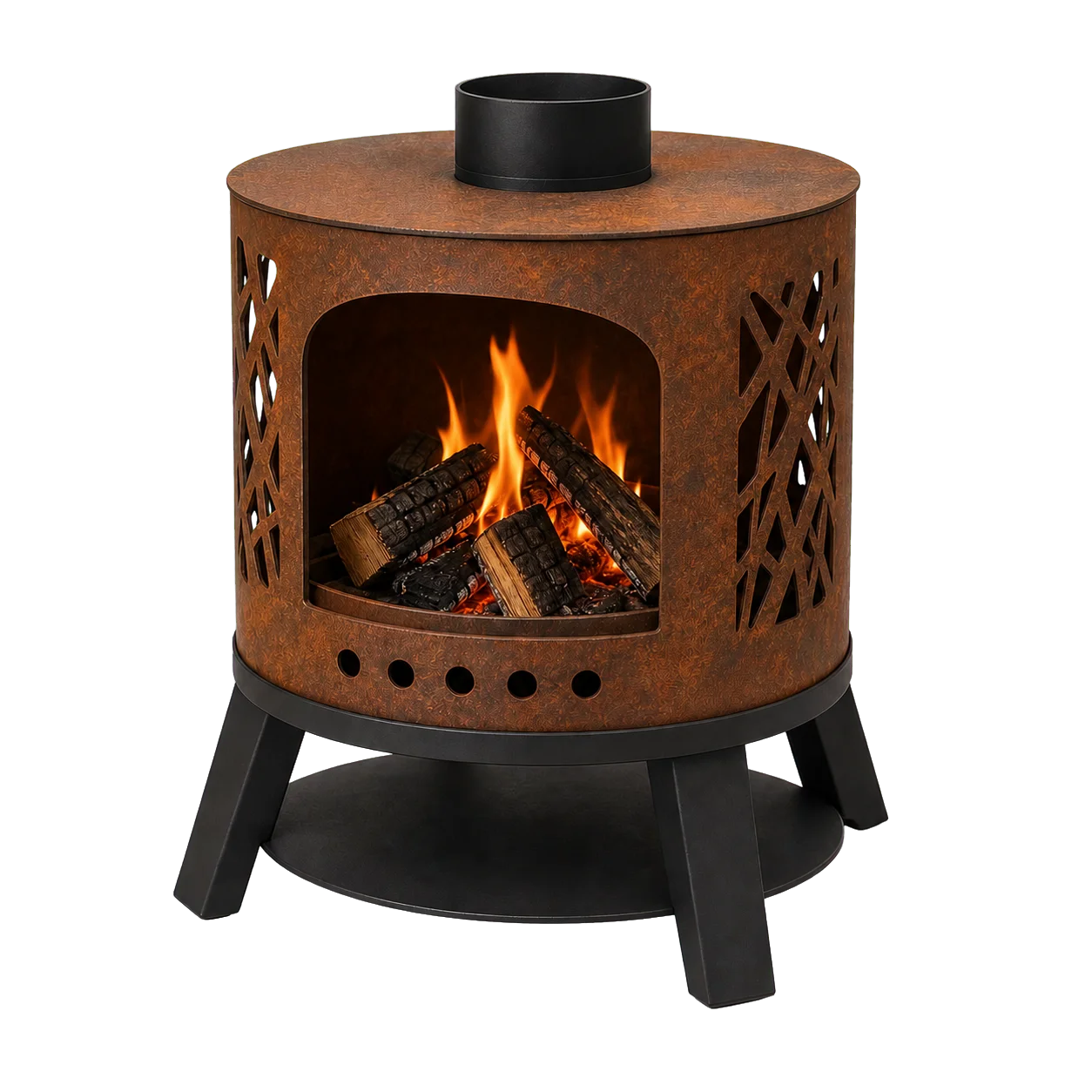
Garden stoves face rain, drainage, uneven paving and visible finish aging. The product specification must define the placement surface, operating zone and care guidance for the selected material and finish.
The base and foot pattern are checked on the nominated paving, slab or prepared ground with the required leveling method stated.
Openings, seams, low points and ash access are inspected for retained water and residue after the nominated exposure and cleaning routine.
Painted steel, stainless steel and weathering steel carry different maintenance, runoff and appearance guidance.
Design Details
Base contact, fuel access, water retention and service-part condition are checked for the nominated outdoor site and exposure routine.
The base is checked with the nominated fuel load on the specified outdoor surface, including leveling and the defined operating zone.
The opening is checked with the intended split logs while furniture, circulation and operator access are plotted around the nominated loading side.
Low points, seams and ash access are inspected for retained moisture and residue after the documented exposure and cleaning routine.
Handles, fasteners and removable ash parts are inspected after the documented exposure and heat-cycle criteria, with service capability stated by model.
Specifications
The intended patio or garden setting affects the base, body material, care instructions and local open-fire guidance.
Materials & Finish
The substrate, finish and exposed hardware should present one coherent maintenance expectation.
Carbon steel permits varied body forms, with coating temperature limits, exposed edges and touch-up guidance stated for the nominated outdoor exposure.
The component-level stainless grade, surface condition, mixed-metal contacts and cleaning guidance are specified for the expected moisture and deposits.
Weathering steel develops a changing surface and may produce runoff during patina formation; customer guidance must not describe it as maintenance-free or stain-free.
Applications
The format can serve domestic and commercial outdoor settings when placement and local fire rules are explicit.
Domestic outdoor settings require a prepared non-combustible surface, documented operating zone and local open-fire approval for the selected model.
Commercial settings require assigned operation, guest circulation, shutdown procedures and local fire approval for the installed location.
Landscape projects can integrate a model whose delivery access, base contact, drainage and finish-aging behavior are documented for the site.
OEM & Private Label
OEM development can coordinate silhouette, base, fuel opening, finish and protective packing for the intended outdoor setting.
FAQ
Material aging, placement and local rules are as important as the visible flame format.
That depends on material, finish, drainage, climate and care. The selected model should include realistic exposure and storage guidance.
No. It forms a weathered surface by controlled corrosion and may produce runoff during development. The site and customer expectations must suit that behavior.
Provide the placement surface, available footprint, leveling condition and required ground clearance for the selected model.
Not necessarily. Fire-facing, ash-contact, handling and decorative areas can require different materials or surface treatments.
No. Open-fire, smoke, property and hospitality rules vary. Customer information must direct users to applicable local requirements.
Provide the placement surface, available footprint, operating zone, prepared fuel size, climate exposure, preferred material and finish, packing and order quantity.