Match the Firebox to Real Fuel
The useful loading length, door opening and grate arrangement should reflect the split wood available in the destination market. These measurements give buyers a more meaningful comparison than nominal body width.
Wholesale Wood Burning Stoves
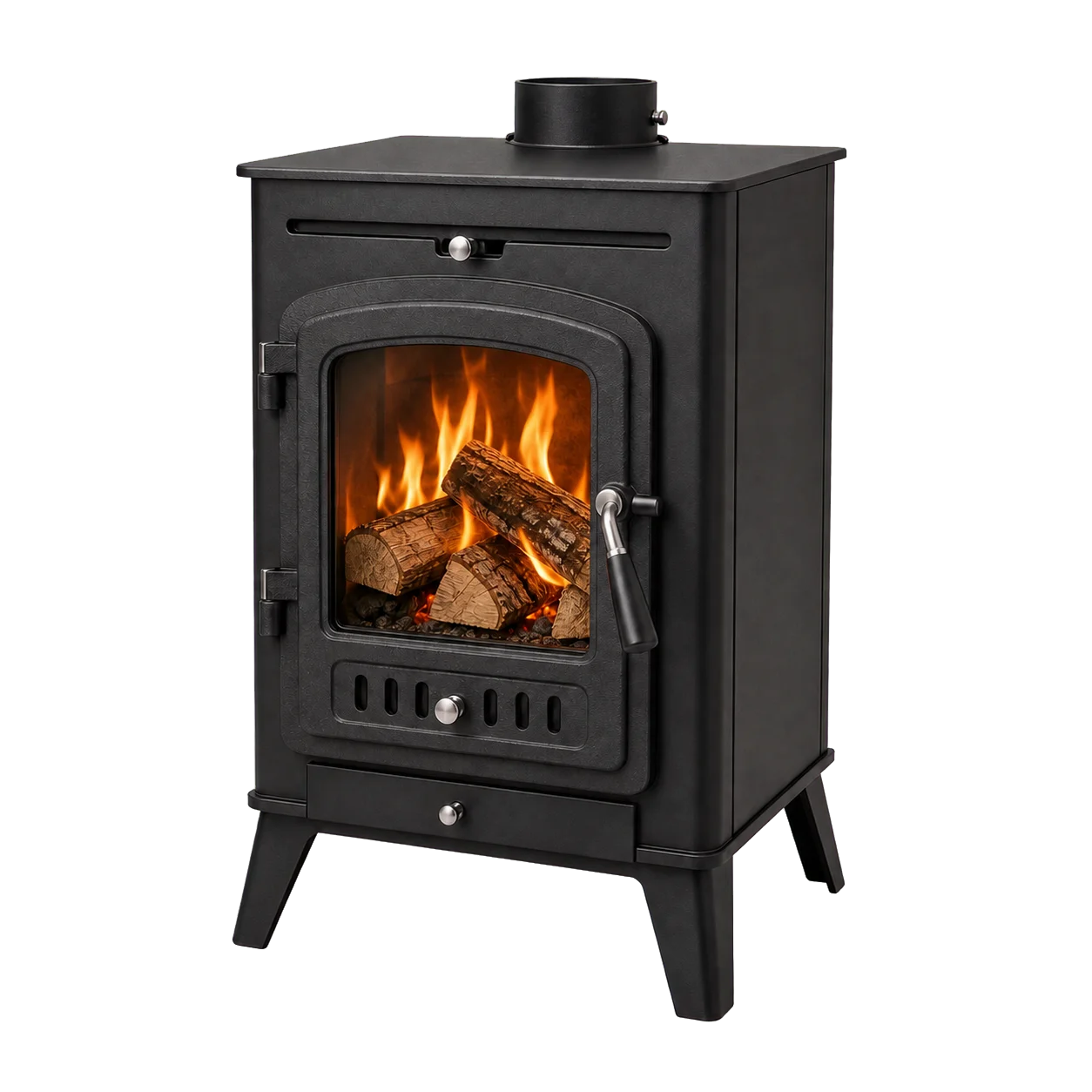
These freestanding wood stoves combine model-specific fireboxes, declared materials, matched flue interfaces and service parts for residential and light-commercial heating.
Product Focus
Freestanding stoves serve several heating settings, but a cabin model and a workshop model should not be selected by exterior size alone. Room demand, practical log length, hearth position and the intended flue system determine the appropriate body format.
The useful loading length, door opening and grate arrangement should reflect the split wood available in the destination market. These measurements give buyers a more meaningful comparison than nominal body width.
Collar diameter, outlet position and required clearances affect where a model can be sold and installed. Product information should identify the intended chimney system without implying universal compatibility.
Door rope, glazing, grate components and operating controls are easier to support when model references and replacement routes are established from the first order.
Design Details
The firebox, door, freestanding base and flue connection work as one appliance. Buyers should evaluate each area against the intended room, fuel and installation route.
Usable fuel length, loading access and ash space establish the internal proportions. Body dimensions alone do not show whether the stove fits the local wood supply.
The door frame, latch and gasket contact are included in the model-specific heat-cycle criteria. The parts schedule identifies replaceable seals and glazing where the selected construction permits service.
Foot positions, contact area and loaded condition are checked on the specified hearth surface for the selected appliance model.
The outlet diameter and position are stated for the selected model, while the proposed installation is checked for ash removal and inspection access.
Specifications
A useful specification starts with the intended heating setting and installation route. Final dimensions and performance claims remain model- and market-specific.
Materials & Finish
Body material, heat-exposed components and visible finishes perform different jobs. They are specified separately rather than presented as one broad metal claim.
Steel construction permits different body formats. Sheet thickness, reinforcement and weld access are specified for the selected firebox, heating duty and documented model configuration.
Cast iron can support traditional styling and thermal mass, but casting quality, joint sealing and replacement strategy need their own criteria.
Black or dark-grey high-temperature finishes suit many stove models. Enamel or stainless details are offered only where the selected construction supports them, with protected export packing for visible surfaces.
Applications
The same exterior style can serve very different customers. Product selection should follow the room, operating routine and installation conditions of the intended setting.
Intermittent-use models are selected around the local log format, documented lighting and control procedure, ash service and destination installation requirements.
Workshop models generally prioritize loading access, replaceable working parts and practical ash service. Permitted installation and floor protection still depend on local rules.
Residential use requires a clearly documented model, flue route and compliance path. A compact body alone does not establish suitability for a small room.
OEM & Private Label
Private-label development can coordinate body format, visible finish, supplied parts and customer documentation once the destination market and intended installation are clear.
FAQ
Room demand, fuel dimensions, flue interface, service parts and destination requirements provide the basis for model selection.
Provide the intended room and heating role, practical log length, loading preference and installation constraints. A final model should then be matched to documented output and destination requirements.
Yes. A fabricated-steel body may use cast-iron doors, tops or grates, while other models can use sectional cast construction. Component materials should be identified for each model.
Confirm outlet position, collar diameter, installed route and the chimney system intended for the market. Local clearance and building requirements remain part of installation planning.
Door seals, glazing, grate components, handles and control parts are common candidates. The appropriate list depends on the selected construction and model life cycle.
Only where documented performance, installation instructions and destination compliance support both uses. A market description cannot replace a model-specific assessment.
Provide the intended room and heating role, prepared log size, preferred body style, hearth and chimney route, destination requirements, quantity and service-part needs.