Casting Surfaces and Assembly Interfaces
Visible finish, section flatness, joint alignment and door interfaces are inspected against the selected assembly criteria.
Wholesale Wood Burning Stoves
These cast-iron wood stoves combine documented section criteria, specified joint systems, model-specific hardware and traditional body forms.
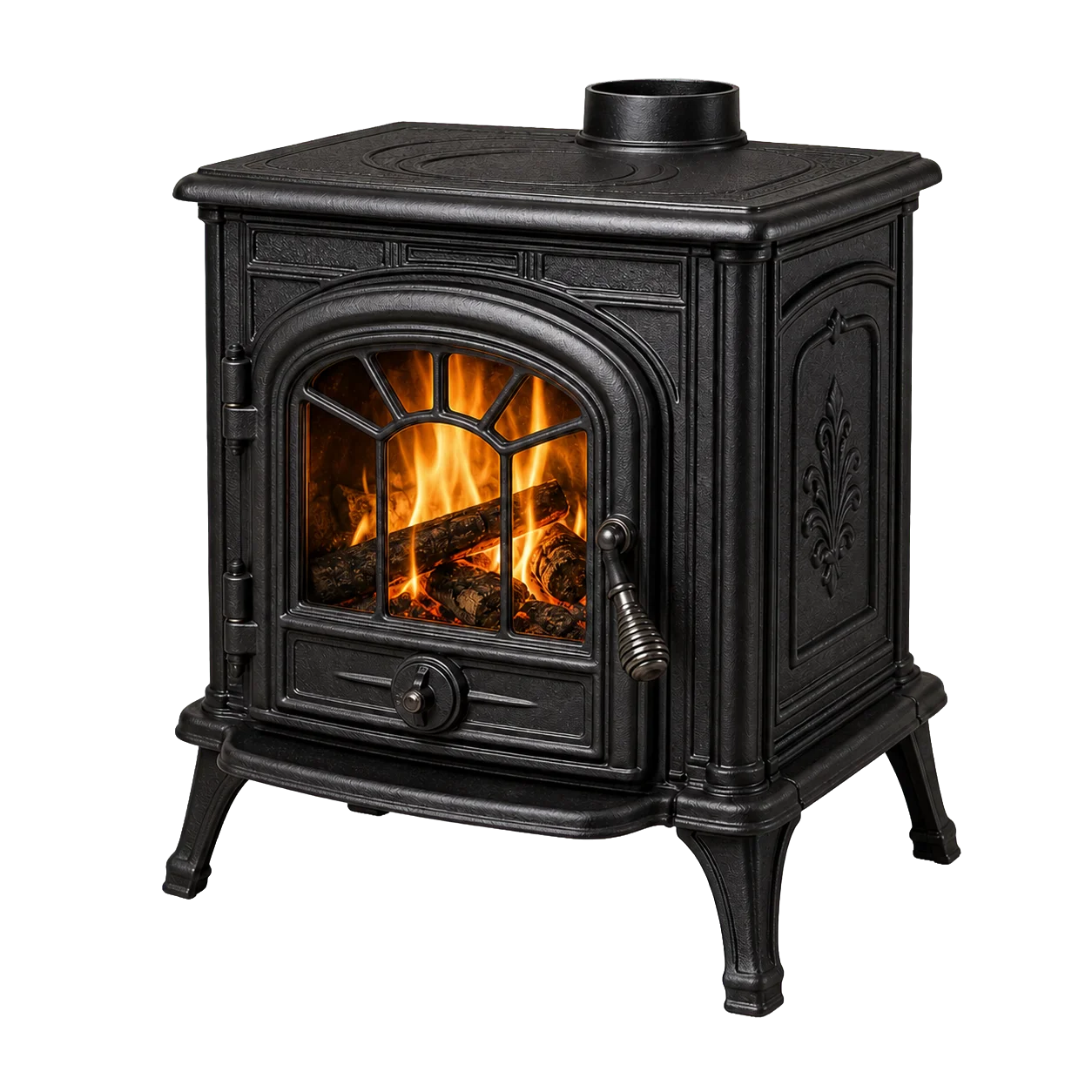
Product Focus
Traditional form gives cast-iron stoves a recognizable residential appearance, but the working product depends on section integrity, machined interfaces, sealed assembly and allowances for thermal movement.
Visible finish, section flatness, joint alignment and door interfaces are inspected against the selected assembly criteria.
Gaskets, cemented interfaces and fasteners are tied to the selected sectional construction and documented heat-cycle criteria.
Doors, tops, grates and other service candidates carry model and revision references with component-specific packing requirements.
Design Details
Casting acceptance, joint assembly, door contact and model-specific service references define the sectional product.
Each section is checked for surface condition, dimensions and interfaces required by its position in the assembled stove.
The assembly specification identifies mating faces, sealing materials, fasteners and post-heating joint inspection.
Door, grate and other wear-exposed castings carry references tied to the exact model and revision.
The assembly method allows for expansion, while joint position, sealing condition and interface movement are recorded after the documented heat-cycle criteria.
Specifications
The specification identifies cast sections, declared fuel, finish, flue interface and replacement strategy for the selected model.
Materials & Finish
The casting material, joint system and visible coating perform different functions and require separate material and care information.
Section dimensions, surface condition, mating faces and critical interfaces are specified for the selected assembly.
Fasteners, collars, controls or trim can use other metals where their component role and mixed-metal contact are declared.
Black paint and enamel carry different preparation, appearance, care, impact-inspection and packing requirements.
Applications
Cast-iron styling fits traditional interiors, but every placement still requires a documented installation path.
Decorative proportions and enamel options can be specified for established hearth settings with a documented installation path.
Seasonal properties require a selected model whose controls, maintenance routine, output and installation are documented for intermittent occupancy.
Visible cast detail and model-specific door service can be coordinated with a measured hearth and flue installation.
OEM & Private Label
Private-label work can coordinate casting patterns, finish, hardware and service parts around defined models.
FAQ
Cast sections, joint sealing, door interfaces, finish and service references provide the basis for comparing models.
Not necessarily. Controls, collars, fasteners and trim may use other materials; the component schedule should say so.
Cracks, harmful porosity, distorted interfaces and poor mating surfaces can affect assembly. Acceptance criteria should match the component and process.
Color development may be possible, but enamel chemistry, firing, color tolerance, impact protection and order volume require separate confirmation.
Maintenance follows the actual gasket or sealing system. Customer information and replacement references should match the selected model.
Material mass influences heat response, but no universal performance claim should replace documented model data.
Provide the target style, model size, casting scope, finish, fuel, flue interface, service-parts plan, quantity and market requirements.