Documented Cold-Start Routine
Door access, kindling space and primary-air controls are defined from a cold stove and chimney using the nominated fuel and final instructions.
Wholesale Wood Burning Stoves
These cabin wood stoves combine a documented cold-start routine, nominated log dimensions and model-specific service references for seasonal and off-grid properties.
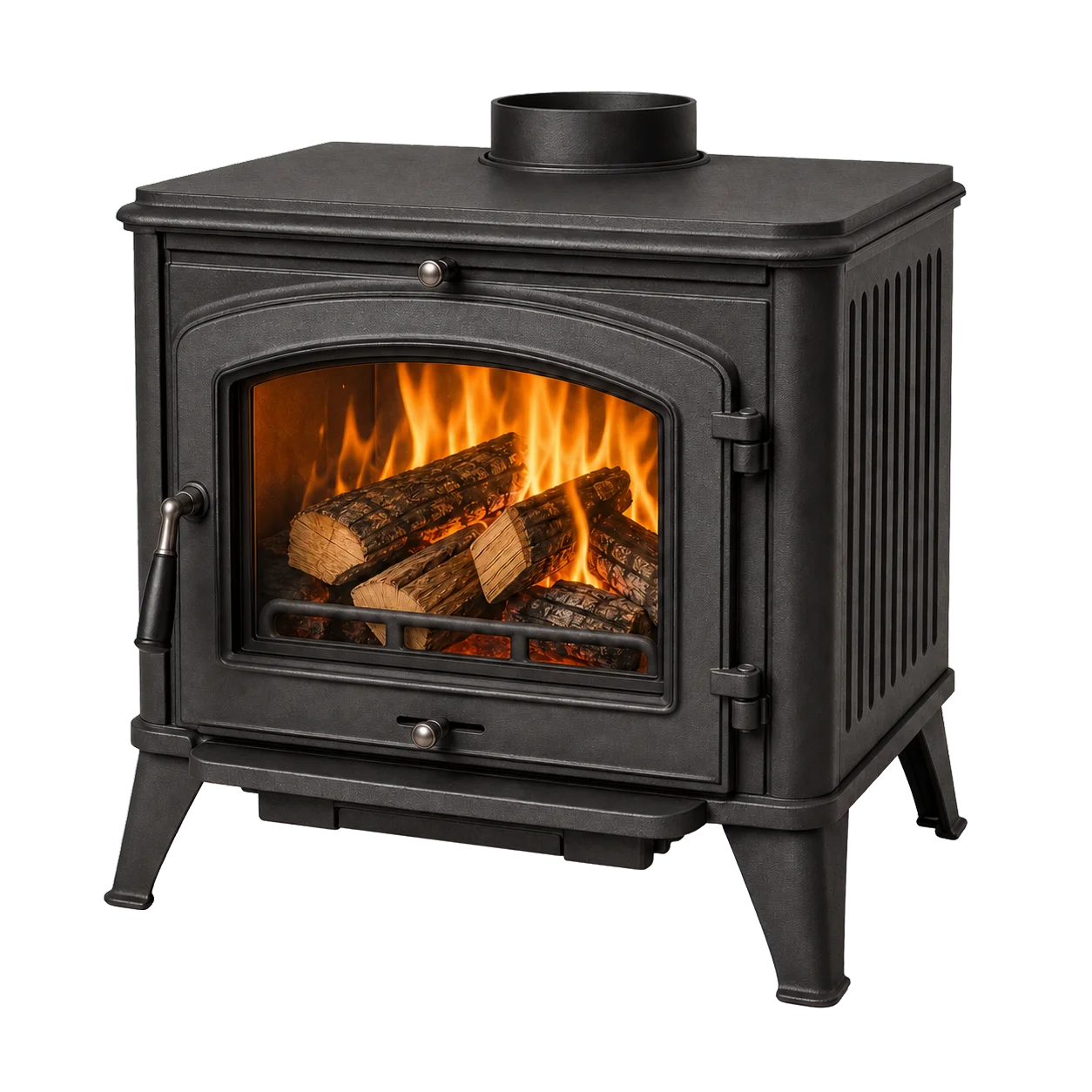
Product Focus
A cabin stove may sit unused for weeks before a cold start. Straightforward controls, accessible ash service and a fuel chamber matched to locally prepared logs matter more than decorative complexity; ignition and emissions claims remain model- and test-specific.
Door access, kindling space and primary-air controls are defined from a cold stove and chimney using the nominated fuel and final instructions.
The useful log length and loading opening provide a better buying reference than the outside width of the stove.
The proposed installation is checked for ash removal, chimney inspection and access to model-specific door service parts before seasonal reopening.
Design Details
Cabin use places equal weight on cold-start access, clearly marked controls, documented installation and maintenance after storage. The selected model should address all four without relying on a universal winter claim.
Door opening, firebox floor and kindling space are specified around the nominated split logs and documented cold-start procedure.
Air controls and latches are checked for identification and operation after the nominated firing and cleaning routine.
Outlet position, pipe diameter and the proposed route are selected with the building and chimney system, not inferred from the stove alone.
The service plan identifies access to ash areas, door-seal inspection points and model-specific replacement references before seasonal reopening.
Specifications
Cabin volume is only one input. Insulation, occupancy pattern, fuel preparation, hearth position and local installation rules also shape the appropriate product.
Materials & Finish
The material decision affects weight, styling, heat response and service strategy. It should reflect how the cabin is reached, used and maintained.
Carbon-steel bodies support varied footprints and straightforward welded construction. Gauge and reinforcement remain model-specific.
Cast iron offers heritage form and thermal mass, with casting integrity, sealed joints and replacement sections requiring separate attention.
Black and dark-grey finishes suit varied cabin interiors; enamel remains a model-specific option with appropriate impact protection in transit.
Applications
Weekend cabins, remote properties and rental lodges place different demands on controls, instructions and after-sales support.
Occasional-use properties require retained lighting and shutdown guidance, a documented fuel routine and service checks after periods without occupancy.
Remote installations can specify accessible external controls and a model-specific spare-parts list where immediate repair or replacement is unavailable.
Hospitality programs require bounded operating guidance, identified external controls and clearly assigned installation, inspection and maintenance responsibilities.
OEM & Private Label
OEM decisions can align the firebox, controls, finish, spare parts and instructions with the way the property is occupied and maintained.
FAQ
Cabin occupancy, insulation, prepared fuel, installation and service access provide the basis for model selection.
Begin with the property, insulation, occupancy pattern and installation plan, then match a documented model to the required heating role and destination rules.
No universal duration should be promised. Log species, moisture, load, draft and operating setting all affect the result; only documented model-specific claims should be published.
Simple, clearly marked air controls and a positive door latch are easier to explain. The final choice still depends on the combustion design of the selected model.
Typical candidates include door rope, glazing retainers, grate components and handles, but the list must be tied to the actual model.
No. Building construction, chimney route, clearances and local regulation determine whether a model can be installed.
Provide the cabin type, occupancy pattern, insulation context, prepared log length, hearth and flue assumptions, preferred materials, service parts and order quantity.