Door-Cutout Reinforcement
The loading cutout removes shell material, so frame, hinge and latch loads are included in the documented heat-and-operation cycle.
Wholesale Wood Burning Stoves
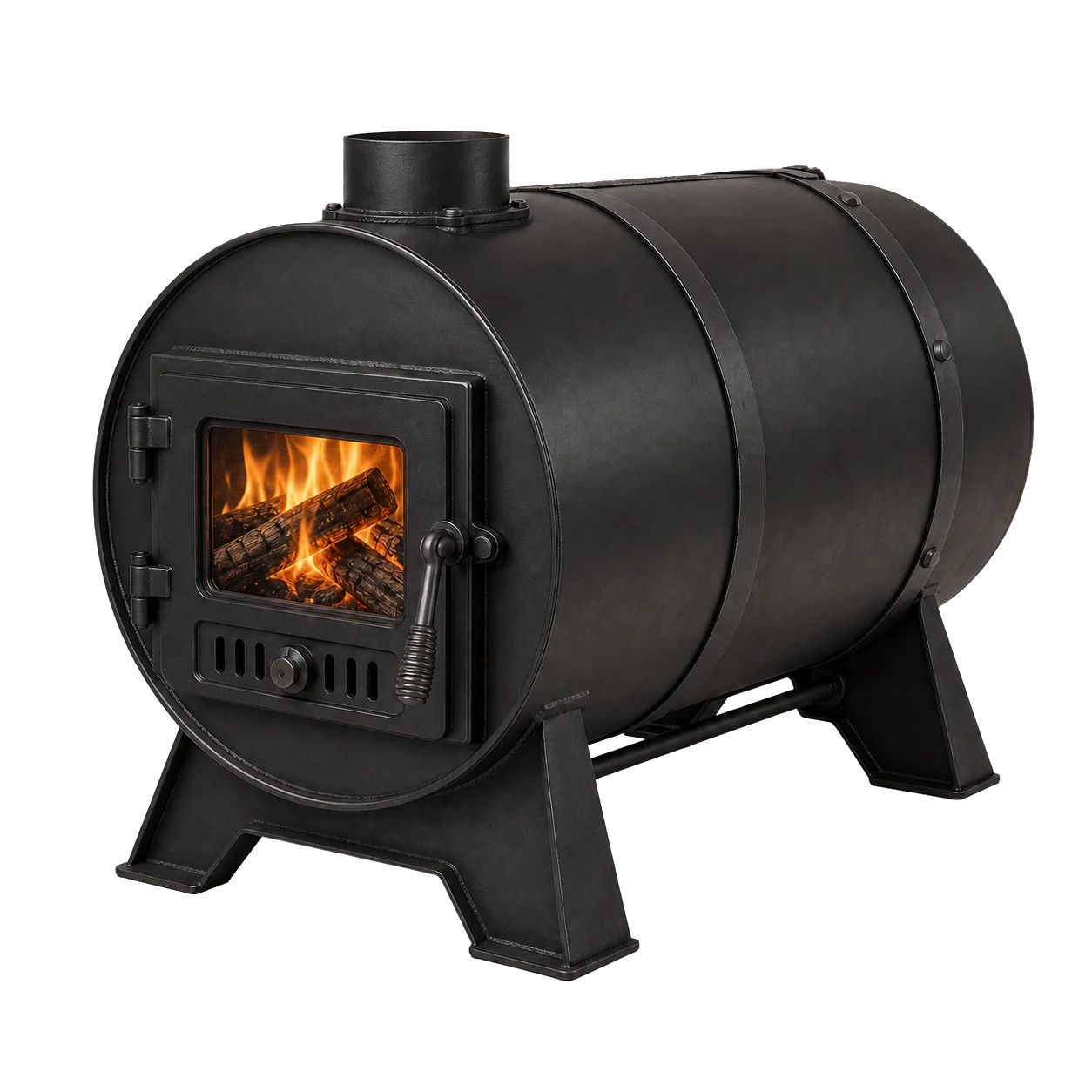
These barrel stoves combine a cylindrical shell schedule, documented loading-door frame and leg structure specified for the nominated load and hearth contact.
Product Focus
Barrel stoves use a direct cylindrical construction. Shell gauge, longitudinal joint, door-frame support, leg contact and installed heat protection define the selected utility model.
The loading cutout removes shell material, so frame, hinge and latch loads are included in the documented heat-and-operation cycle.
Usable log length and door clearance are stated separately from total cylinder volume.
Floor protection, shielding, outlet location and workplace rules form part of the installation specification.
Design Details
The cylinder, door opening, legs and outlet are checked under the nominated fuel load and installation duty.
Shell material, thickness, longitudinal joint and local reinforcement are documented for the selected model.
Door-frame condition, hinge attachment and latch engagement are inspected before and after the documented heat-and-operation cycle.
Legs and bracing are checked with the stove and nominated fuel load on the specified hearth contact.
The flue collar and any compatible shield attachment carry dimensions and references tied to the exact model.
Specifications
The building, fuel, shell construction, door and installed protection establish the product specification.
Materials & Finish
The long shell, loading frame and legs do not automatically share one thickness or duty.
The cylinder uses a declared steel grade, thickness, longitudinal joint and local support schedule.
Frame, hinge, latch, leg and brace materials are specified against the concentrated loads and handling method of the selected model.
Black or dark-grey finishes carry substrate preparation, use-limit, storage and repair guidance.
Applications
The format suits supervised working environments only where fuel and installation conditions are documented.
Permitted agricultural buildings can specify log loading, service access, hearth and chimney around the selected model.
Model selection must account for workplace fire risks, stored materials, ventilation, insurance conditions and documented output.
Only a documented shelter installation should be described; a generic barrel stove is not suitable for improvised enclosed use.
OEM & Private Label
Private-label development can vary shell size, door, legs and compatible protection while keeping each configuration documented.
FAQ
Shell dimensions alone do not define fuel capacity, output or installation suitability.
Only clean, suitable wood allowed by the model guidance and local rules should be used. Treated or coated waste must not be implied.
State diameter, length, material, thickness, joint method and any local reinforcement for the selected model.
The cutout reduces shell continuity while hinges and latches add concentrated loads. The frame should address those conditions.
Only where product documentation, local rules, stored materials, ventilation and insurance conditions permit the installation.
Only compatible model-specific shields and attachment arrangements should support any installation claim.
Provide prepared log length, shell dimensions, door format, leg and hearth arrangement, outlet and shield requirements, finish, destination and quantity.