Fuel Length and Door Access Shape the Firebox
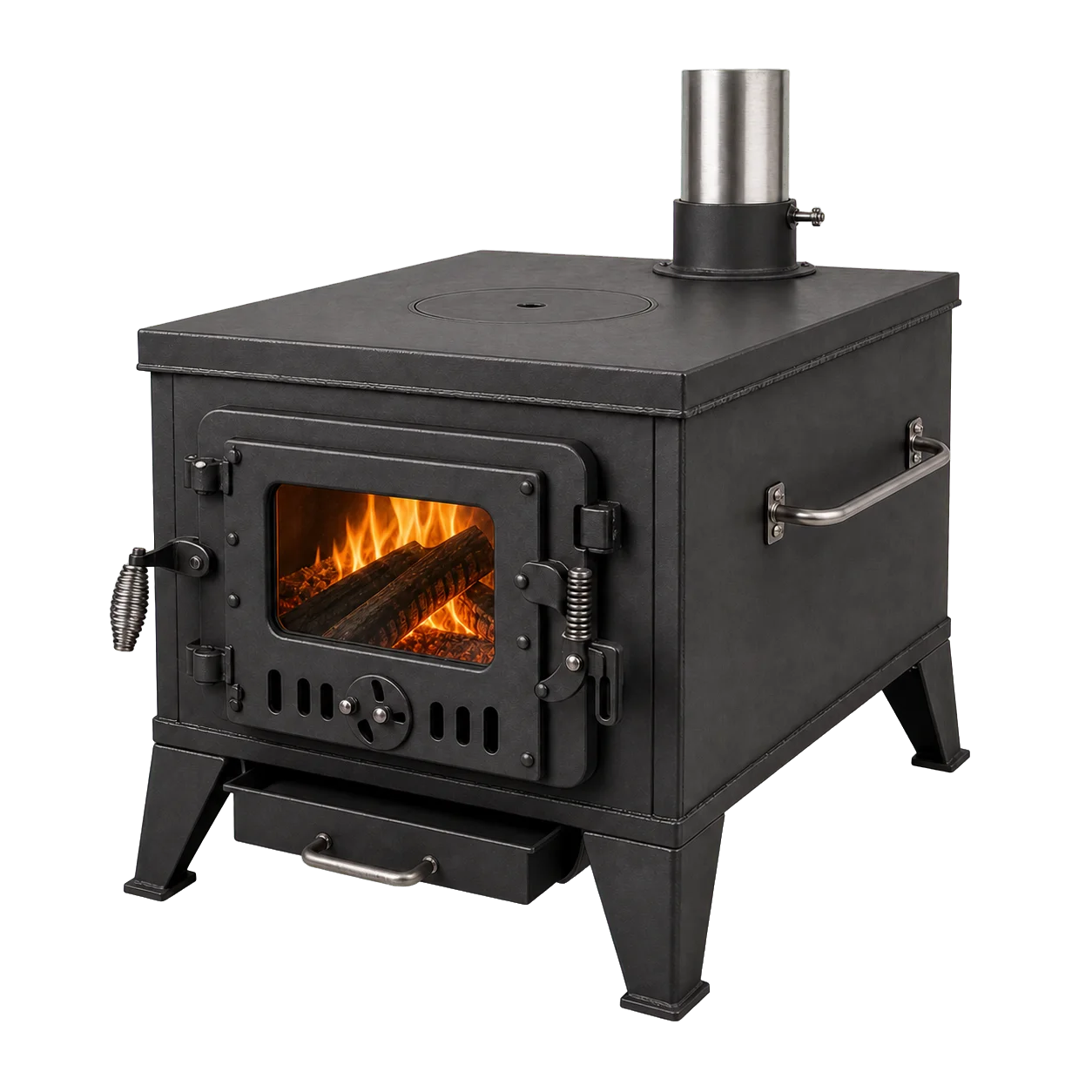
The chamber is sized around practical split wood used by the outfitter, with loading access that does not destabilize cookware or the pipe.
Wholesale Tent Stoves
These wall tent stoves combine declared split-wood length, reinforced cooking surfaces, field-serviceable hardware and matched supported flues for seasonal camps.
Product Focus
Wall-tent stoves typically travel by vehicle or pack animal and serve shelters that remain erected for extended periods. Firebox length, panel gauge, cooking area and pipe service should reflect repeated loading and cleaning, while the installation still follows strict clearances, ventilation and carbon-monoxide controls.
The chamber is sized around practical split wood used by the outfitter, with loading access that does not destabilize cookware or the pipe.
Straightforward latches, grates, dampers and fasteners can be inspected and replaced without proprietary adjustment far from a service counter.
Ash access, collar geometry and pipe sections support scheduled inspection throughout camp occupancy and dry storage between seasons.
Design Details
A wall-tent stove must match the declared split-wood length, nominated cookware and supported flue route used in a long-stay camp. Door hardware, declared-gauge panels and the pipe collar remain accessible for inspection and field service.
Door, grate and chamber proportions accommodate the declared split-wood length without overloading the opening.
Declared gauge and bracing carry nominated vessels while preserving flue and door operation.
Support geometry accounts for fuel loading, cooking forces and operating mass on the specified protected floor area.
Sections, damper, supports and terminal are configured for the compatible wall-tent route and routine cleaning.
Specifications
Log length, body thickness, installed weight and pipe set should reflect long-stay camp routines. Straightforward service parts matter where replacement support is distant.
Materials & Finish
Heavy carbon steel supports the traditional wall-tent use case, while selected stainless fittings can reduce coating dependence at corrosion-prone interfaces. Hardware and weld access should support practical field maintenance.
Coated carbon steel supports vehicle- or animal-transported systems when gauge, weld access, coating limits and seasonal corrosion care are explicit.
Selected grate, fastener, ash or pipe parts may use stainless where corrosion exposure justifies a mixed-material schedule.
Flue sections, latch, damper and replacement fasteners are identified for repeat seasonal service.
Applications
Wall-tent stoves suit long-stay canvas camps where supported transport, prepared longer fuel and a documented seasonal inspection routine shape the equipment choice.
The format suits trained operators using compatible wall tents and vehicle-supported equipment.
Field-serviceable hardware and nominated cooking surfaces support managed long-stay camps with established maintenance routines.
Declared packed component weights, serviceable hardware and a complete supported flue suit remote wall-tent camps where equipment arrives by pack animal.
OEM & Private Label
Firebox length, reinforced cooking surface, drying racks, pipe kit and replacement hardware can be configured for retailers and operators serving long-stay camps.
FAQ
Practical fuel size, serviceable hardware, flue maintenance and seasonal storage provide the basis for standardizing a camp stove.
It prioritizes firebox capacity, cooking area and replaceable working parts over low carried weight, and is generally intended for supported transport.
Fuel must still match the declared chamber, door, grate and operating guidance. Practical split-wood dimensions should be stated rather than described simply as large.
Latch parts, grate, damper, selected fasteners and pipe sections are useful service items when model interfaces are controlled.
Operators should inspect the door, collar and pipe before use and at intervals defined by condition and manufacturer guidance, remove ash as instructed and clean the flue when deposits or restricted draft are observed.
It must not operate unattended or while occupants sleep. Ventilation, CO monitoring and all installation controls remain necessary whenever it is in use.