Carried Weight Includes the Full Flue Package
A bare-body number is not used to represent the stove system. Every component needed for installation and storage belongs in the stated figure.
Wholesale Tent Stoves
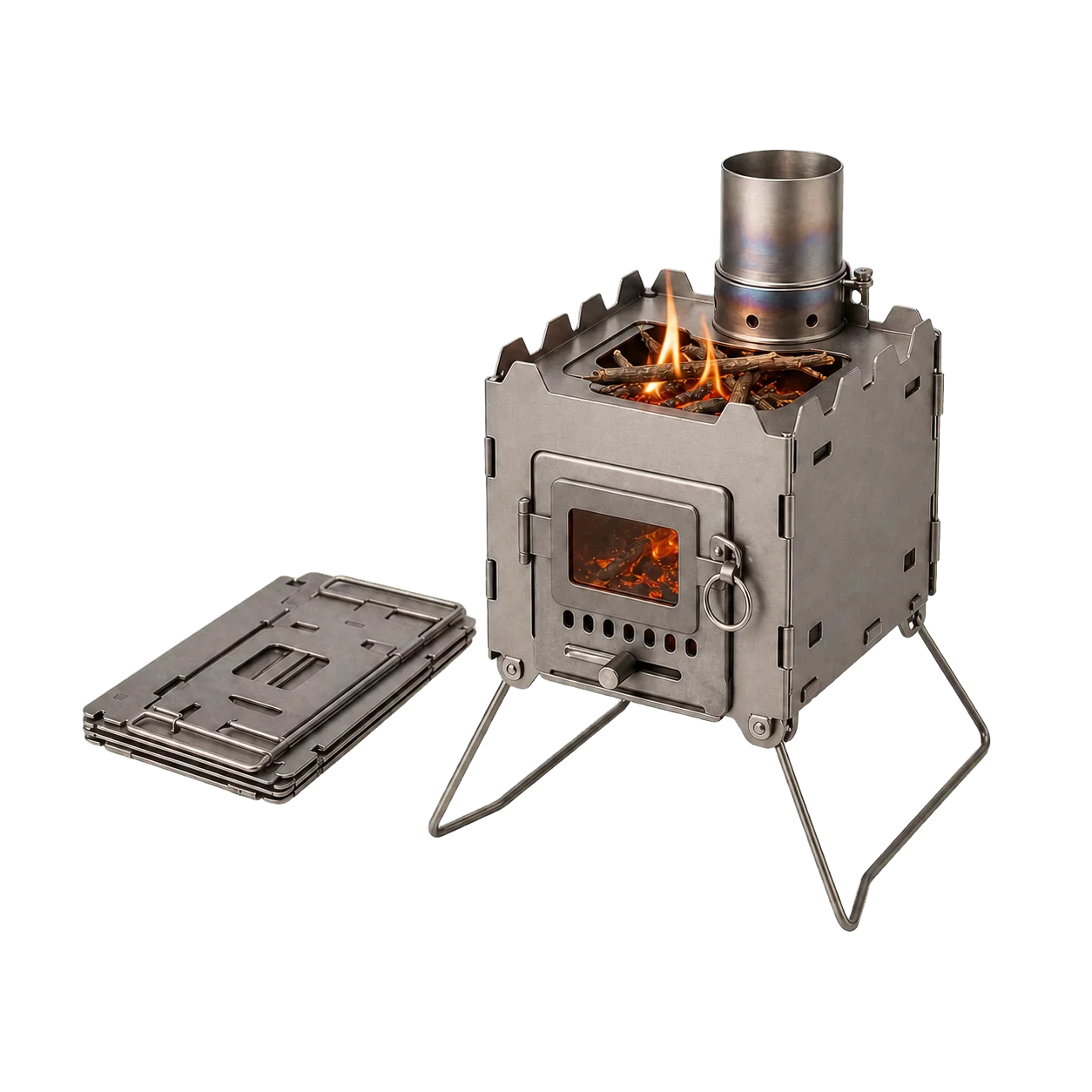
These low-mass stove systems combine a published complete-kit weight, short prepared fuel, supported thin panels and a compact roll or sectional flue for compatible minimalist shelters.
Product Focus
An ultralight tent stove is more than a thin firebox. The published kit must include pipe, damper, terminal, supports, hardware and storage, with interfaces protected so the complete set can be assembled after remote travel. Weight reduction never removes the requirements for a compatible shelter, ventilation, carbon-monoxide monitoring and continuous supervision.
A bare-body number is not used to represent the stove system. Every component needed for installation and storage belongs in the stated figure.
Panel reinforcement, edge protection and heat movement are explained so customers understand the trade-off behind lower mass.
Roll-flue rings, damper, supports and fasteners have defined pouch positions and model references for inspection before firing.
Design Details
A low-mass stove is defined by the full carried system, not a bare body on a scale. Thin panels, roll-up flue, compact supports and storage protection must work together after transport and field assembly.
Titanium or stainless sheet uses bends and localized support around door, top, leg and collar loads.
Door and grate dimensions are stated with a practical split-wood length for active tending.
Roll or sectional pipe is assembled with all required rings, supports and terminal components.
Dedicated storage separates soot-bearing panels, pipe edges and small fittings after full cooling and cleaning.
Specifications
Buyers should compare body weight, flue weight, complete packed dimensions, sheet thickness and setup time. The intended tent size and short-fuel requirement must remain visible beside the headline weight.
Materials & Finish
Titanium and thin stainless offer different complete-kit mass, cost, fabrication and handling profiles. Declared grade, gauge, reinforcement, edge treatment and storage protection provide the basis for comparing the two routes.
Declared titanium grade and thickness can support low-mass systems with documented heat-color and movement expectations.
Thin stainless offers a different material-cost, fabrication and corrosion-care profile while complete-kit weight and gauge remain explicit.
Pipe, rings, supports and pouch materials remain included in the component and weight specification.
Applications
These models suit snow trekking, bikepacking and remote backpacking customers who compare a stated complete-kit mass with the small firebox, short-fuel requirement and active tending routine.
The category suits experienced travelers carrying a compatible shelter and complete vented stove system over distance.
Compact pipe and body storage can fit limited luggage where the route permits managed solid-fuel use.
Published component weights, inspection points and spare-part references support operators managing low-mass stove systems on supervised remote trips.
OEM & Private Label
A complete-kit weight target guides the roll flue, panel package, small-part organization and protective packing for human-powered winter travel.
FAQ
The key questions are how the stove packs, how thin material behaves under heat and what the user must carry, assemble and inspect in remote conditions.
The label should be used only with a published complete-kit weight that includes the stove body, legs, collar, full pipe, damper, terminal, supports, hardware and storage required for use.
Thin sheet can move and discolor under heat. The product should retain functional assembly and operation within stated condition limits, and damaged parts should not be forced into use.
Only fuel within the declared split-wood length and feed-opening limits should be used; compatibility cannot be assumed from the category name.
No. The supported flue, required terminal and supports, compatible stove-jack interface, floor protection, ventilation and working CO alarm remain necessary.
It suits experienced human-powered winter travelers who understand active tending, remote inspection and local restrictions on solid-fuel use.