Choose an Integrated or Pipe-Oven Layout
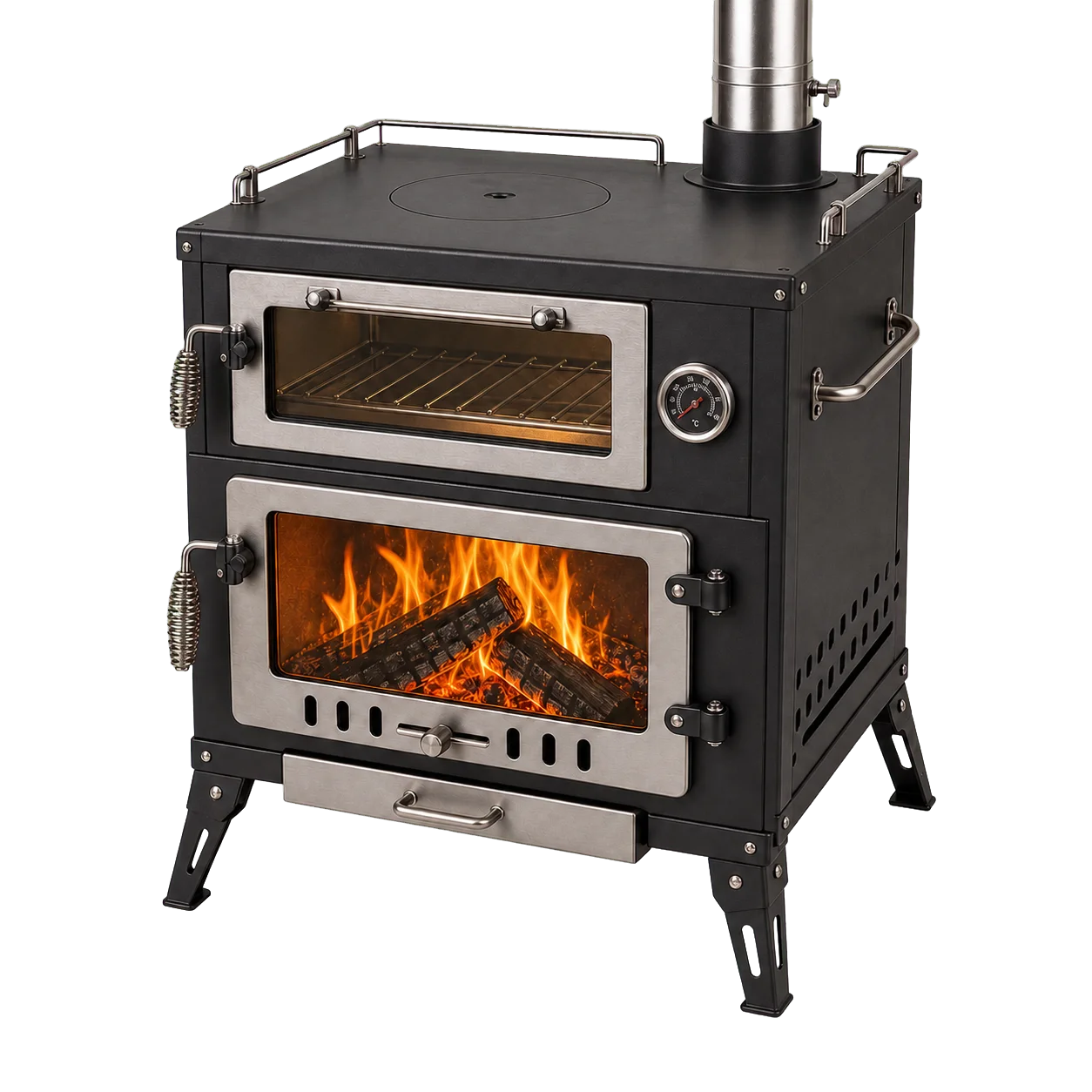
An integrated oven has a dedicated chamber within the stove design. A removable pipe oven offers separate packing but must be compatible with the selected flue and complete installation.
Wholesale Tent Stoves
Add baking or roasting to a compatible basecamp stove setup. Choose an integrated oven or a compatible pipe-oven configuration, with usable rack space, temperature monitoring and cleaning access suited to your menu.
Product Focus
An oven adds a cooking chamber, weight and cleaning needs to the stove installation. Compare the usable rack area, heat path and temperature indication separately from the firebox. Wood-fire heat varies with fuel, loading and draft, so cooking requires active attention and does not offer the same temperature control as a thermostatic home oven.
An integrated oven has a dedicated chamber within the stove design. A removable pipe oven offers separate packing but must be compatible with the selected flue and complete installation.
The door frame, walls and heat path reduce usable space. Compare internal rack dimensions and loading clearance with the cookware you intend to use.
The flue path and cooking chamber need suitable inspection and cleaning access. Follow the model's removal and cleaning sequence without disturbing critical joints.
Design Details
The oven's position, heat path, temperature indicator and cleaning access need to work with the stove and chimney.
Fuel, loading, airflow and draft determine the heat available. The oven does not respond like a thermostatically controlled appliance.
An integrated heat path or compatible pipe-oven connection transfers heat to the chamber. The complete flue must retain its required draft, support and cleaning access.
Rack dimensions, load limits and the door opening need to suit the intended cookware and meals.
Use the model's temperature indication and controls as instructed. Monitor cooking actively and keep the required cleaning points accessible.
Specifications
Choose the oven format, usable rack area and cookware requirements for your camp. Contact us for chamber dimensions, temperature-monitoring details and complete flue compatibility.
Materials & Finish
The body, oven shell and racks serve different purposes. Choose their materials and finishes separately, with suitable food-contact information and cleaning instructions for the selected configuration.
Carbon steel or stainless steel may be used for the firebox and oven shell, depending on heat exposure, weight and cleaning requirements.
Racks, trays and other direct food-contact surfaces need suitable materials and finishes. Do not infer their suitability from the stove's exterior coating.
Ask which hinges, latches, seals and temperature indicators can be replaced on the selected model.
Applications
For longer stays, an oven can add cooking options to a compatible installation. Account for the additional weight, active temperature management and cleaning.
Oven function suits camps where active wood-fire management and more complete meal preparation justify the additional kit.
For a vehicle-supported camp, a compatible pipe oven can offer separate packing. Confirm rack capacity, flue compatibility and soot-cleaning access for the complete setup.
Selected systems may support trained operators who control food hygiene, flue maintenance and continuous stove supervision.
OEM & Private Label
Coordinate chamber format, racks, temperature indication, door hardware and instructions with the selected stove and the meals you plan to cook.
FAQ
Compare usable cooking space, temperature management, materials and cleaning access.
No. Wood fuel, loading, air setting, draft and weather produce variable heat, so active monitoring and recipe adaptation are required.
Use internal usable dimensions and rack area after accounting for door frame, wall clearance and the heat path.
An integrated oven provides a dedicated chamber; a pipe oven can pack separately. Choose based on complete weight, cooking needs and confirmed compatibility with the stove and chimney.
Racks, trays and any other direct food-contact surfaces need suitable materials and finishes, with documentation required for the destination market. Exterior stove coatings are a separate specification.
Cooking may keep you operating the stove longer, but all installation and safety requirements still apply: ventilation, CO monitoring, clearances, flue maintenance and continuous supervision. Never operate it while occupants sleep.