Grade Is Declared Where It Is Used
304, 430 or another specified alloy is assigned by component. Mixed grades remain acceptable when the schedule is transparent and each selection fits its duty.
Wholesale Tent Stoves
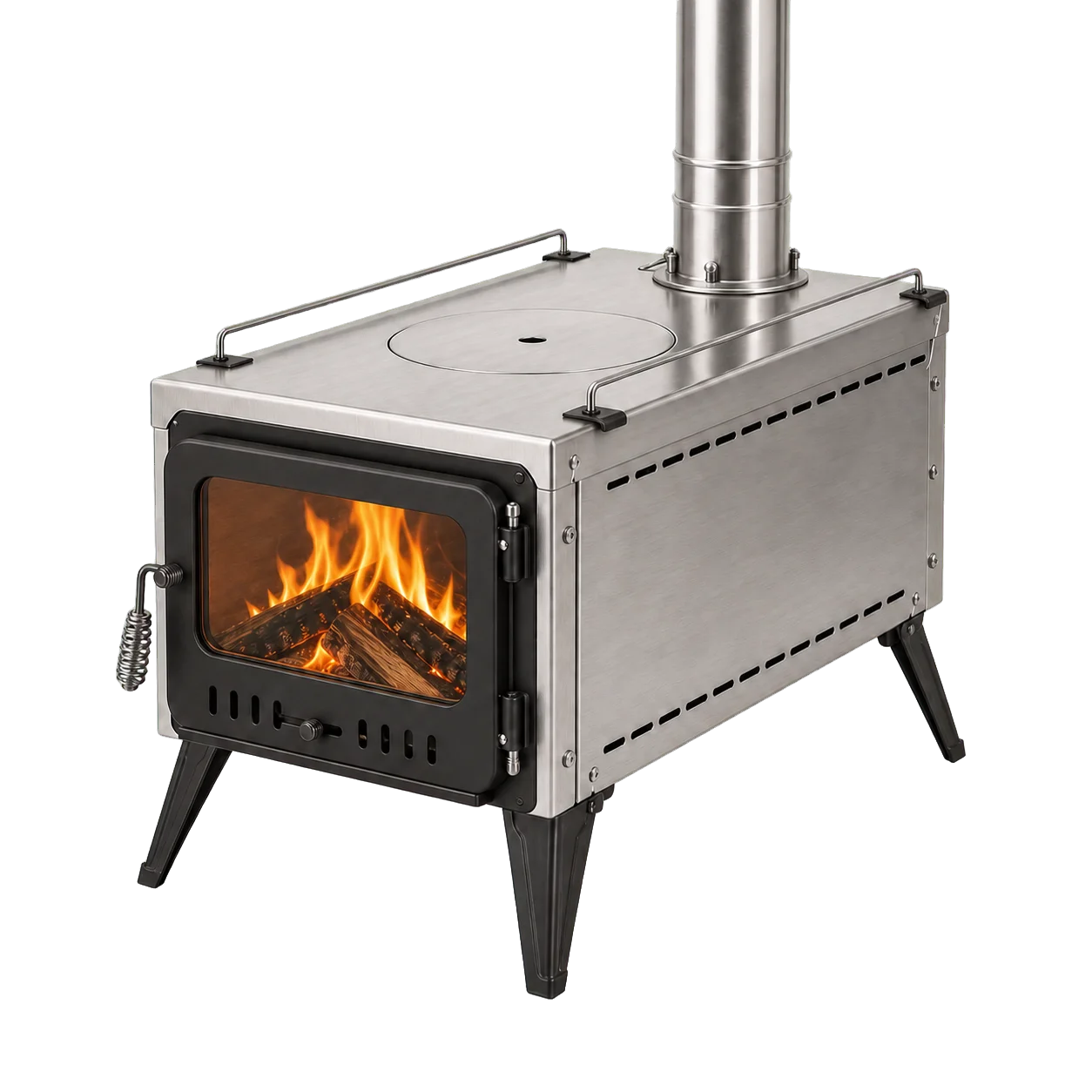
These stainless tent stoves combine component-level alloy specifications, controlled door and collar geometry, and protected pipe systems for compatible shelters.
Product Focus
A stainless headline does not establish firebox stiffness, flue compatibility or corrosion performance by itself. Grade and gauge should be stated for the body, top, grate, fasteners and pipe components, while weld finishing, heat tint and storage care are addressed as part of the finished product.
304, 430 or another specified alloy is assigned by component. Mixed grades remain acceptable when the schedule is transparent and each selection fits its duty.
Corrosion resistance cannot compensate for a weak latch, uneven gasket pressure or a pipe collar that distorts under the installed flue.
Brushing direction, weld cleanup and protective packing are defined together with realistic guidance on discoloration around high-temperature zones.
Design Details
A stainless tent stove should translate material choice into controlled joints, allowance for thermal movement and alloy-specific exposure guidance. Grade selection matters, but weld quality, formed edges and heat-zone reinforcement also influence how the stove ages.
Gauge, bends and reinforcement are matched to chamber span and the expected cookware and flue loads.
Hinge, frame, latch and gasket work as one serviceable assembly through repeated heating and cooling.
Declared diameter, engagement and joint direction prevent a generic stainless body from being paired with an undefined flue.
Cooled ash removal, dry packing and cleaning guidance reduce deposits and trapped moisture around seams and components.
Specifications
The stainless grade, sheet gauge, firebox capacity and flue configuration need to be visible in the same specification, so buyers can distinguish a vehicle-carried family-camping model from a lighter occasional-use stove without relying on appearance alone.
Materials & Finish
304 and 430 stainless address different corrosion and cost expectations. Surface finish, joint method and protective packing should remain consistent with the declared component grades.
304 may suit body or heat-path components requiring stronger corrosion resistance, subject to the actual exposure and care routine.
430 can serve cost-conscious component choices where its magnetic behavior, lower corrosion resistance and intended environment are communicated accurately.
Flue sections, grate, fasteners and latches carry their own declared materials rather than inheriting the main body headline.
Applications
Stainless models suit family camping, seasonal winter trips and humid storage conditions when the declared alloy, cleaning routine and dry-storage guidance match the exposure.
Visible material specifications and cleanable unpainted surfaces support scheduled inspection and care between winter trips.
Appropriate grades, cleaning and dry-storage guidance help manage deposits and trapped moisture when equipment moves between cold and damp conditions.
Model-referenced doors, gaskets, pipe sections and hardware support operators with scheduled inspection, cleaning and parts control.
OEM & Private Label
Grade, body proportions, door design, pipe hardware and brushed-finish protection can be coordinated across multiple sizes as one clearly specified stainless product family.
FAQ
These answers clarify grade, surface expectations, maintenance and the cost implications of the selected stainless construction.
No. The component specification should identify the grade used for body panels, top, grate, pipe, fasteners and accessories separately.
No. Alloy, salt or chemical deposits, crevices, heat and storage conditions still affect corrosion. Grade and care must match the environment.
Heat tint and other discoloration can occur. Appearance limits and cleaning guidance should distinguish normal heat effects from fabrication or corrosion defects.
The order can define supplier records or component-level verification appropriate to the components and value.
No. They still require a compatible stove-jack shelter, specified flue, clearances, ventilation, floor protection, continuous supervision and a working CO alarm.