Practical Fuel Length Sets the Body Proportion
Door opening, grate and chamber depth are matched to the split wood customers will actually prepare, while the loading path remains clear.
Wholesale Tent Stoves
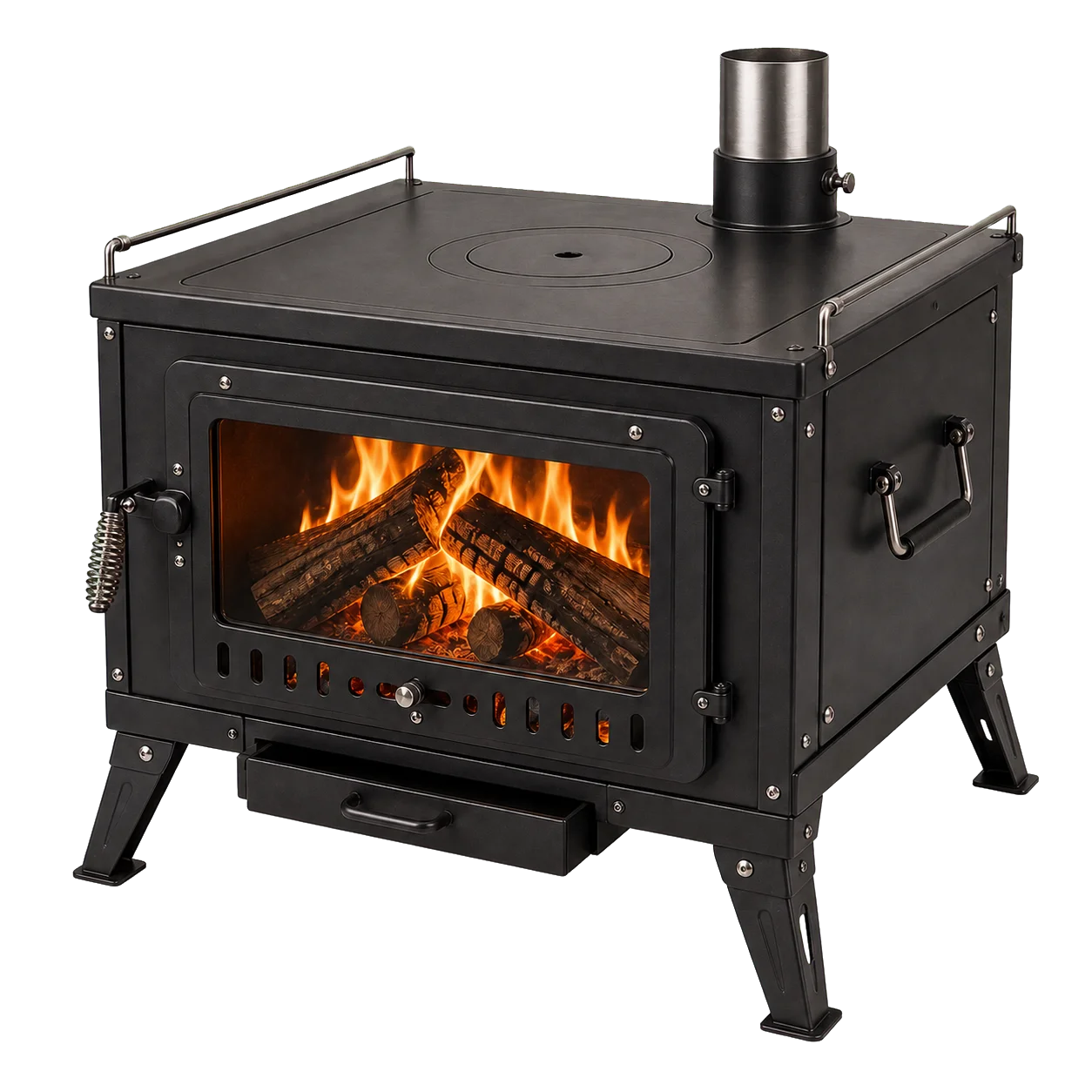
These large tent stoves combine practical log capacity, reinforced cooktops, stated installed loads and a supported flue package for compatible long-stay shelters.
Product Focus
A larger stove can accept more or longer wood, but it also adds body mass, fuel load, surface area and chimney demand inside the shelter. The product should be selected from the actual tent, operating routine and transport method, not from an undefined promise of longer burn time or higher heat.
Door opening, grate and chamber depth are matched to the split wood customers will actually prepare, while the loading path remains clear.
Panel gauge, reinforcement and leg spread support filled cookware, firebox and pipe without relying on excessive sheet thickness alone.
Door hardware, grate, ash route and pipe sections are identified for inspection and replacement during an extended camp season.
Design Details
A large stove must accept the declared longer fuel while its door, top plate and chimney collar carry the documented operating loads. Simply enlarging a compact box adds weight and panel span without defining a suitable basecamp system.
Firebox length and door geometry accept the nominated split wood without forcing logs against the opening.
Formed returns or internal support control large spans under cookware and chimney loads.
Leg geometry accounts for the operating mass and the compatible shelter’s protected floor area.
Collar, damper, pipe sections and cleaning access are selected as one supported exhaust route.
Specifications
Practical split-wood length, structural loads, flue route and complete handling mass define the configuration of a vehicle-supported stove.
Materials & Finish
Carbon steel supports cost-conscious models with stated gauge and coating, while stainless steel can reduce coating dependence and provide a clean metallic finish. Larger panels require careful gauge and bracing decisions in either material.
Declared-gauge carbon steel suits vehicle-carried systems when welds, coating limits and seasonal corrosion care are specified.
Declared stainless can provide uncoated selected components, with grade, gauge, heat tint and corrosion care recorded by component.
Flue sections, collar, latch and grate receive model-specific service references rather than remaining anonymous hardware.
Applications
Large models fit multi-person canvas tents, wall tents and camps where the stove remains installed for longer periods and users prioritize capacity over carry weight.
Larger models suit compatible shelters where transport is vehicle-supported and cooking or heating routines are actively managed.
Serviceable parts and scheduled flue cleaning support long-stay operators with defined user responsibilities.
Selected systems can serve managed accommodation when installation, clearances, supervision and maintenance are controlled.
OEM & Private Label
Firebox length, reinforced top plate, leg structure, pipe set and cooking accessories are configured around the shelter sizes and fuel practices of the destination market.
FAQ
Shelter class, practical fuel length, complete-kit weight, carton format and tending expectations provide the basis for comparing large tent stoves.
No. Fuel species, moisture, split size, loading, air setting, draft and operating conditions all affect burn duration.
Compare the complete packed kit and the installed stove with all required pipe and supports; operating fuel and cookware loads should also be considered separately.
Not by assumption. The compatible shelter, clearances, floor protection, flue route and manufacturer instructions determine suitability.
Door latch, gasket, grate, ash components, collar, damper and pipe sections should remain inspectable and replaceable.
Cleaning frequency depends on fuel, operation and manufacturer guidance. Operators need a documented inspection routine and should clean whenever deposits or restricted draft are observed.