Shelter Interface Leads the Configuration
Stove-jack height and position establish the required pipe sections and supported route. Nominal tent capacity is not a substitute for an installation drawing.
Wholesale Tent Stoves
These hot tent stove packages combine a controllable firebox, supported chimney route and complete installation guidance for compatible stove-jack shelters.
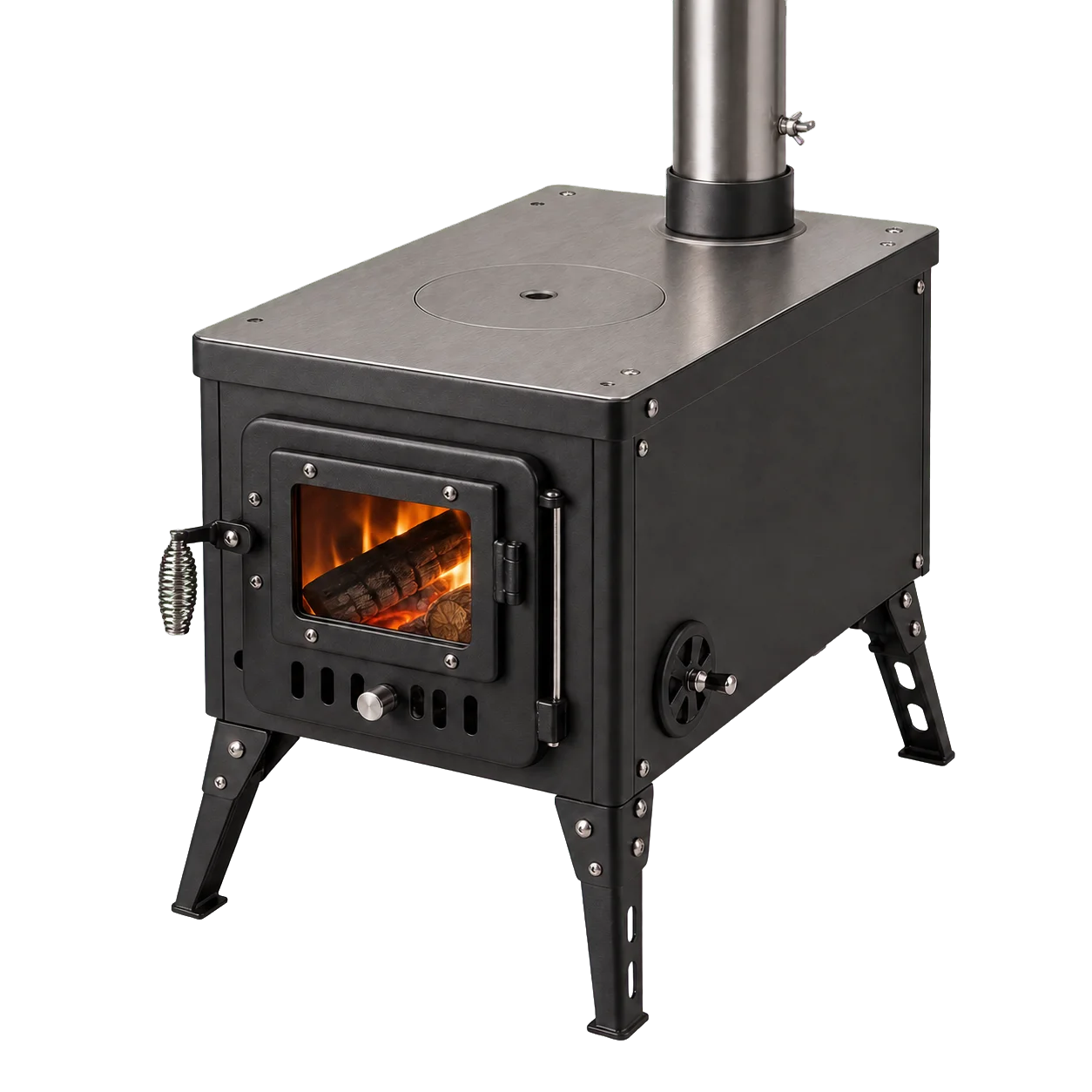
Product Focus
A hot tent stove cannot be specified from the firebox alone. Shelter volume, stove-jack position, floor protection, pipe diameter and supported terminal route determine the complete installation. The product remains a continuously supervised solid-fuel appliance requiring ventilation, clearances and a working carbon-monoxide alarm.
Stove-jack height and position establish the required pipe sections and supported route. Nominal tent capacity is not a substitute for an installation drawing.
Door latch, primary air control and damper are arranged so the operator can tend the fire without disturbing the flue or reaching across unstable cookware.
Collar, sections, damper, terminal, supports and storage protection are identified by model revision, reducing incompatible replacement parts after sale.
Design Details
For a general-purpose winter stove, buyers need a firebox sized for the declared fuel, a top plate specified for nominated cookware and a chimney system whose components and controls remain accessible from ignition through shutdown.
Chamber length, grate and door opening are matched to practical split wood rather than an unspecified fuel volume.
Inlets and damper provide usable adjustment while instructions retain the need for active supervision and adequate ventilation.
Diameter, engagement and joint direction connect the firebox to the supplied pipe without improvised adapters.
Section count, shelter exit, supports and terminal position follow the compatible tent and stove manufacturers' requirements.
Specifications
Firebox volume, pipe diameter, stove-jack height and accessory coverage must match the intended shelter sizes. The finished specification makes the installation envelope and supplied kit clear before purchase.
Materials & Finish
Carbon steel, stainless steel and titanium serve different weight, corrosion and fabrication priorities. Each component is specified for its actual duty and storage environment.
Carbon steel or stainless construction is specified with gauge, reinforcement and complete-kit mass appropriate to vehicle or carried use.
Pipe material, thickness, joint direction and damper components are listed separately from the stove body because the flue has its own heat and handling duties.
Compatible heat-protection components are selected for the named shelter system and never treated as permission to reduce required clearances.
Applications
This category suits customers who need one supervised stove package with a heating firebox, nominated cooking surface and organized chimney kit for winter camping.
The system suits purpose-designed stove-jack shelters whose dimensions, ventilation and installation instructions are available.
Heavier fireboxes and full pipe kits fit basecamps where complete system weight is less restrictive.
Identified components and maintenance schedules support operators who control setup, user instruction and flue cleaning.
OEM & Private Label
The private-label package aligns the firebox, flue set, heat-control hardware, accessories and instructions with the intended shelters so buyers receive one coherent heating system.
FAQ
Shelter compatibility, fuel length, flue routing and kit completeness provide the basis for selecting a model.
No. It requires a compatible stove-jack shelter, the stated clearances and floor protection, continuous ventilation, a working CO alarm and installation according to both manufacturers' instructions.
The supported route, stove-jack height, required terminal position and section engagement determine length; firebox size alone does not.
No. Shelter conditions, fuel, tending, ventilation and clearances all matter. No heating-capacity claim should be made without defined test conditions.
Straight sections, collar parts, damper, terminal and supports can carry model-specific service references to prevent incompatible mixing.
The component inventory, compatible shelter interface, assembly route, clearances, ventilation, CO monitoring, fuel, cleaning and shutdown instructions should all be present.