Visible Area Follows Door Stiffness
Pane size is set after the frame retains adequate material around hinges, latch and gasket land; a larger opening is not automatically a better window.
Wholesale Tent Stoves
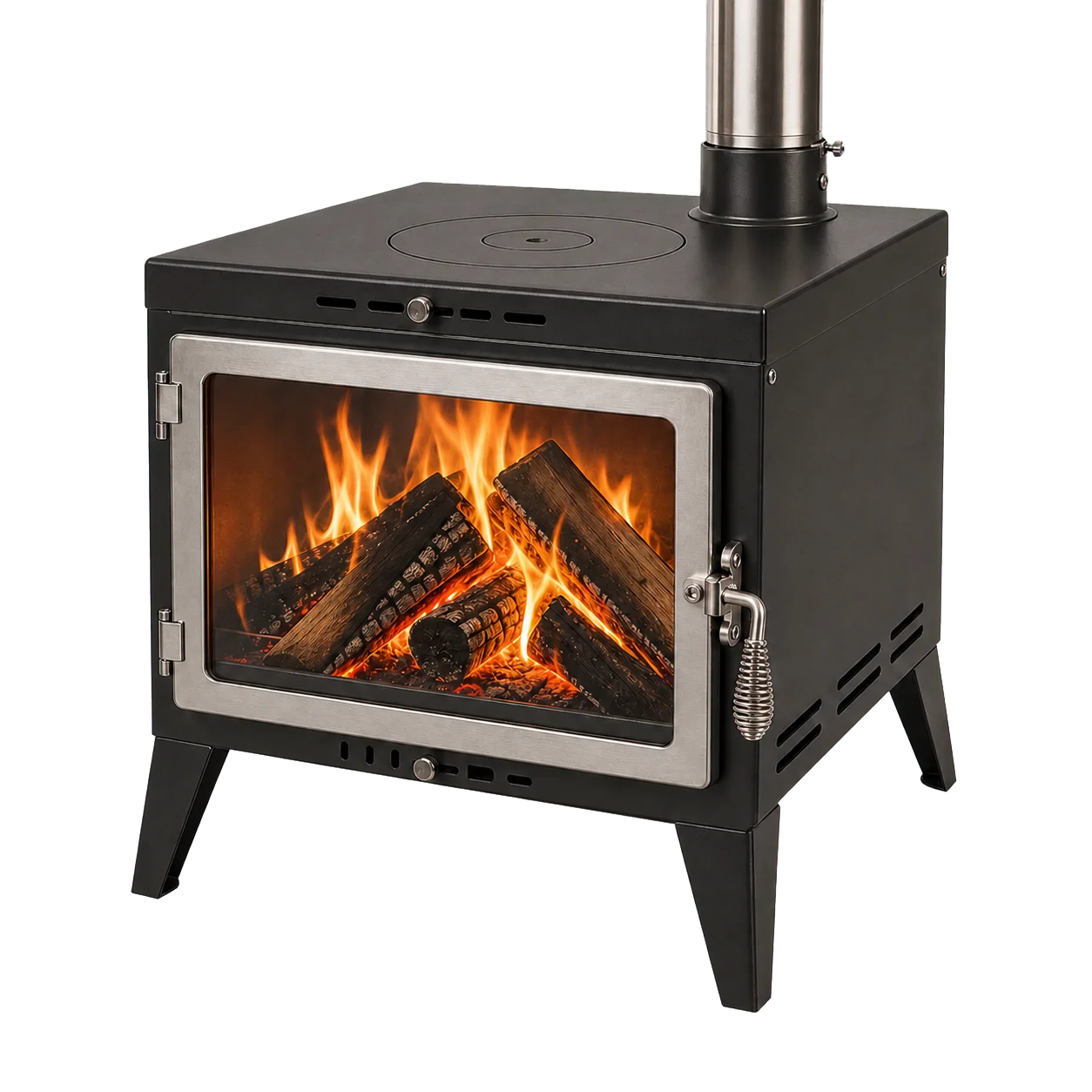
These flame-view tent stoves combine a stable door frame, specified heat-resistant pane, controlled gasket compression and protected packaging for optional spare glass.
Product Focus
A viewing pane depends on the surrounding frame, gasket, retainers, latch and combustion-air route remaining correctly aligned under heat. The glass should be replaceable without bending the door, and its packaging must prevent point loads from pipe sections or loose hardware.
Pane size is set after the frame retains adequate material around hinges, latch and gasket land; a larger opening is not automatically a better window.
Pane material, edge condition, compression and fastening sequence are specified as one assembly rather than unrelated components.
Fuel quality, air settings and tending influence soot. Cleaning access and realistic care guidance support the feature without unsupported self-cleaning claims.
Design Details
A viewing window remains useful only when the glass is secure, the frame retains its intended alignment and the gasket controls air leakage. Window proportion, latch pressure and replacement access must be developed as one assembly.
Formed or reinforced metal holds the hinge and latch loads around the visible area.
A compatible profile cushions the pane and provides even compression without hard point loading.
Fasteners and clips hold the glass securely while allowing service without prying or distorting the door.
The specified inlet arrangement supports the firebox and viewing zone without guaranteeing a clear pane under every fuel condition.
Specifications
Glass type, visible area, frame construction, gasket format and replacement method are specified alongside the firebox and chimney interfaces. Together they determine serviceability, inspection and replacement planning.
Materials & Finish
The glass specification must match the frame and body material through repeated heating. Stainless, titanium and coated steel each require an appropriate mounting and packing strategy.
Pane type, dimensions, edge finish and replacement reference are documented for the actual door.
Stainless or carbon-steel construction is reinforced around the opening and matched to the hinge, latch and gasket.
Seal profile, clips and fasteners are selected for the assembly’s heat and expansion conditions, not substituted as generic hardware.
Applications
Window models suit customers who value flame visibility and easier fire observation, provided the complete door remains serviceable and correctly sealed.
A viewing pane allows direct fire observation in compatible family hot tents while the serviceable door and matched flue remain part of the complete installation system.
Selected models can suit supervised compatible shelters with documented cleaning, inspection and spare-glass procedures.
Window models can support supervised basecamp routines where operators maintain the flue, inspect the glazing and control ventilation and CO monitoring.
OEM & Private Label
Window shape, frame finish, latch geometry, spare-glass provision and protective packaging can be developed as a model-specific system with documented replacement parts.
FAQ
Pane specification, mounting, cleaning and replacement should be clear before a door format is selected.
Not automatically. A larger opening changes frame stiffness, hinge and latch loads, gasket length and combustion-air behavior.
The pane type, exact dimensions, edge finish, gasket, retainers and fastener sequence should be documented and accessible without bending the frame.
Not under every condition. Fuel moisture, loading, draft and air settings affect soot, so cleaning and operating guidance should set realistic expectations.
It needs rigid, labeled protection isolated from pipe sections, hardware and point loads in the complete export package.
No. Compatible shelter installation, clearances, floor protection, ventilation, CO monitoring, flue maintenance and continuous supervision remain required.