Assembly Order Is Part of the Product
Keyed panels, retained hardware and permanent orientation marks reduce incorrect setup without relying on trial and error in cold conditions.
Wholesale Tent Stoves
These packable wood stoves combine a repeatable panel sequence, stated installed loads, protected chimney components and clear cold pack-down guidance for winter camping.
Product Focus
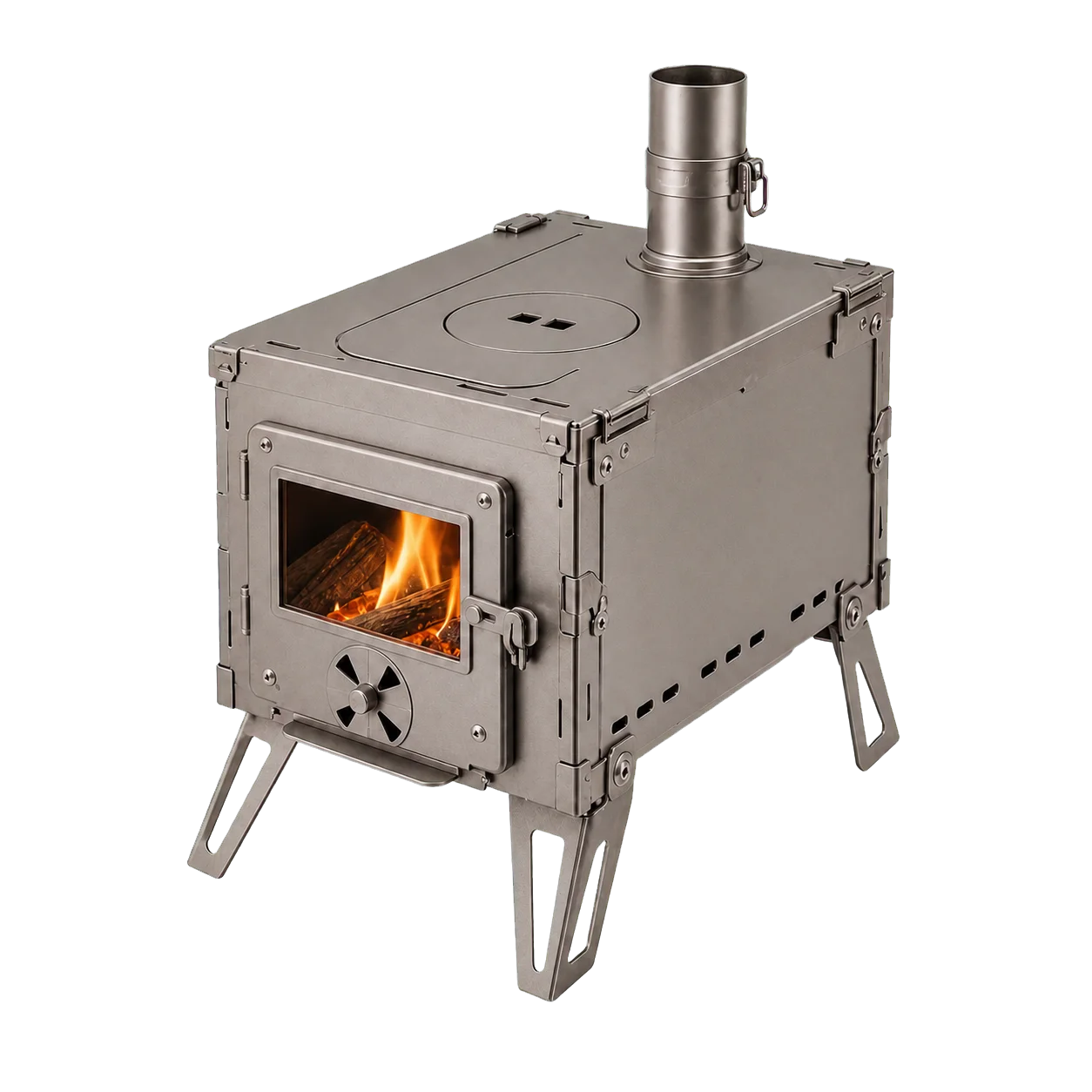
Folding legs or panels reduce transport volume only when the assembled stove carries cookware, door forces and the flue without loose alignment. The design must remain understandable with gloves, account for thermal movement and return every fully cooled component to a protected pack after use.
Keyed panels, retained hardware and permanent orientation marks reduce incorrect setup without relying on trial and error in cold conditions.
Leg locks, corner joints and top support are considered under the complete stove and pipe load, not only while the product is cold and empty.
A divided case protects thin panels and pipe sections while keeping fully cooled residue-facing parts away from clean equipment after cleaning.
Design Details
A foldable stove requires a clear deployment sequence, joints that locate without force and an assembled body that carries the documented stove and flue loads. Hinge design and panel registration are functional specifications, not packaging details.
Legs and lower supports deploy in a defined sequence and lock before the firebox or chimney is loaded.
Slots, hinges or fasteners transfer vessel and door loads without sharp exposed interfaces.
The installed top remains stable under the supplied flue route rather than relying on the tent fabric for structural support.
Panel relief, pouch layout and part order account for normal heat movement so the cleaned kit can return to storage without forced joints.
Specifications
The folded envelope belongs with panel gauge, leg locking and chimney-section length. A compact carton has value only when every component has a protected storage position and the assembly sequence is clearly marked.
Materials & Finish
Stainless steel balances material cost, joint durability and packability, while titanium prioritizes lower complete-kit mass. Grade and sheet thickness should be specified together with joint wear, thermal movement and the required packed dimensions.
Stainless sheet supports an unpainted packable body when grade, gauge, joint wear and edge finish are specified together.
Titanium can reduce complete-kit mass, with thin-panel handling and expected heat movement documented for the selected construction.
The storage case organizes fully cooled panels, pipe and hardware; it does not serve as a hot-stove or ash container.
Applications
Foldable models suit winter travel where packed dimensions, vehicle or sled storage and complete-kit mass influence model selection alongside the installed stove and flue arrangement.
Folded volume benefits customers whose equipment space is limited but who can carry a complete supported flue system.
A clearly marked assembly sequence and complete supported flue suit remote camps where every joint can be inspected before the stove enters a compatible shelter.
Keyed parts and replaceable hardware suit operators who inspect every installation and maintain a controlled component list.
OEM & Private Label
The private-label system brings panel order, locking details, component pouch and illustrated setup guidance together for a clear transition from packed kit to installed stove.
FAQ
Assembly tolerance, installed rigidity, thermal movement and packed protection determine whether a folding model remains practical across repeated setup cycles.
Heat movement can occur, especially in thin sheet. The cooled panels should still assemble, support the installed load and return to storage without forcing damaged joints.
A complete operating kit includes the body, legs, collar, pipe set, supports, damper, terminal, hardware and storage matched to the intended stove-jack route.
Loose panels may pack thinner and be individually replaceable; hinges simplify part management. The intended journey and service model determine the better route.
No. Use the full specified chimney kit and compatible stove-jack installation; omitting sections, supports or the terminal can change draft, clearance and exhaust behavior.
Component checks should prioritize collar, pipe seams, leg locks and support fasteners after every cycle because repeated assembly changes fit.