The Port and Duct Are One Interface
Connection diameter, engagement, temperature duty and retention are specified together so a generic flexible hose is not improvised at the campsite.
Wholesale Tent Stoves
These external-air tent stoves combine a defined intake interface, protected duct route and matched flue while retaining full ventilation, CO monitoring and supervision requirements.
Product Focus
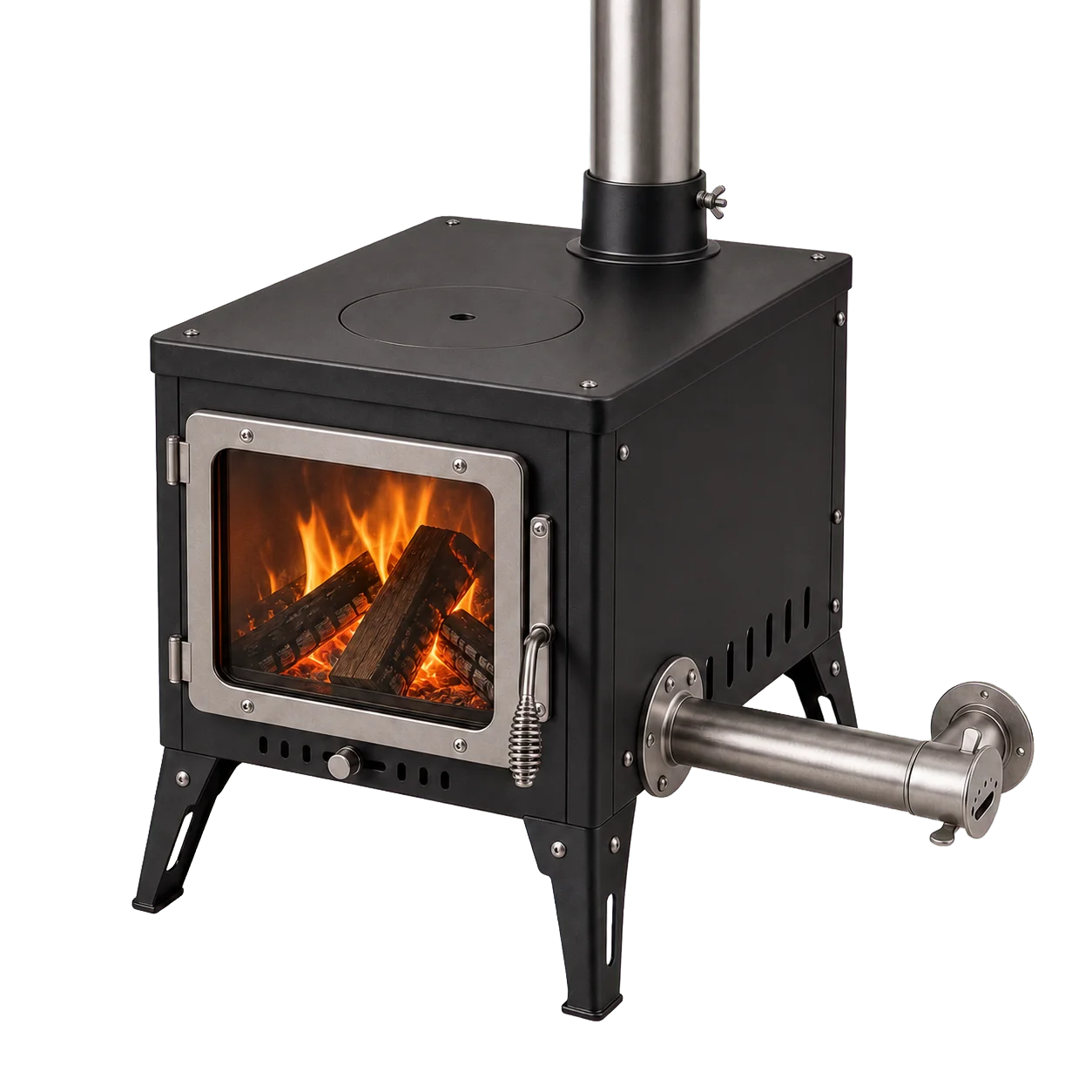
A dedicated duct can supply combustion air from outside the shelter when the stove and tent are designed for that connection. Port diameter, hose material, route and protection must remain compatible with the firebox. The feature does not make the appliance room-sealed and never replaces shelter ventilation or carbon-monoxide controls.
Connection diameter, engagement, temperature duty and retention are specified together so a generic flexible hose is not improvised at the campsite.
The intake route avoids foot traffic, sharp bends and contact with hot stove or flue surfaces while preserving the manufacturer’s required opening.
External supply may change where combustion air enters, but occupants still need the ventilation and installation controls stated for the compatible shelter.
Design Details
A dedicated external intake defines where combustion air enters the stove. Port diameter, duct routing, retention and draft behavior must work with the chimney without implying room-sealed operation.
A defined connection retains the specified duct without restricting its clear internal area.
Duct length, bends and termination follow the supported shelter layout and remain clear of snow, fabric and debris.
The inlet arrangement works with the stove’s damper or air control rather than bypassing normal combustion management.
A separate, correctly assembled chimney remains essential regardless of where the combustion air originates.
Specifications
Intake length and diameter must be specified with firebox volume, chimney height and damper travel. Clear routing limits and connection details are required for the intended shelter architecture.
Materials & Finish
The stove body may use stainless or carbon steel, while the intake pipe needs defined joints, retention hardware and handling protection. The complete air path should be specified, not treated as a loose accessory.
The connector material and its attachment to the firebox are specified for the expected nearby temperature and repeated installation.
Duct material, diameter, length and operating limits are matched to the system rather than sourced as an unspecified accessory.
Pipe, collar and supports retain their own material and installation schedule independent from the intake.
Applications
External-air models suit purpose-designed shelters whose intake opening and stove-jack route are documented as one compatible installation.
The product suits shelters with a supported intake opening and stove-jack route documented by the relevant manufacturers.
A defined inlet may assist controlled air routing where the duct termination can remain unobstructed, positioned away from snow accumulation, fabric and foot traffic, and inspected during use.
Model-specific ducts, connectors and flue parts support operators who inspect the full intake and exhaust route before every compatible shelter installation.
OEM & Private Label
Port position, intake length, connector geometry, flue configuration and installation guidance are matched to the vent locations and floor plan of the intended shelter.
FAQ
Shelter interface, duct routing, connector retention and flue behavior determine whether the intake system is compatible.
No. Unless a tested product specifically proves otherwise, an external intake only defines a combustion-air path and does not guarantee sealed operation.
No. Diameter, temperature duty, material, length, retention and route must match the specified stove and shelter system.
Yes. Follow both manufacturers’ ventilation requirements and use a working CO alarm as an additional warning measure.
Snow, fabric, debris, tight bends, crushing and an incorrectly positioned termination can restrict the route and require immediate correction.
Only when the body, controls, duct route and shelter opening are designed for that position; changing sides is not a cosmetic revision.