Short Fuel Is a Core Operating Condition
The product specification states practical split-wood length and feed opening so customers understand preparation and tending before purchase.
Wholesale Tent Stoves
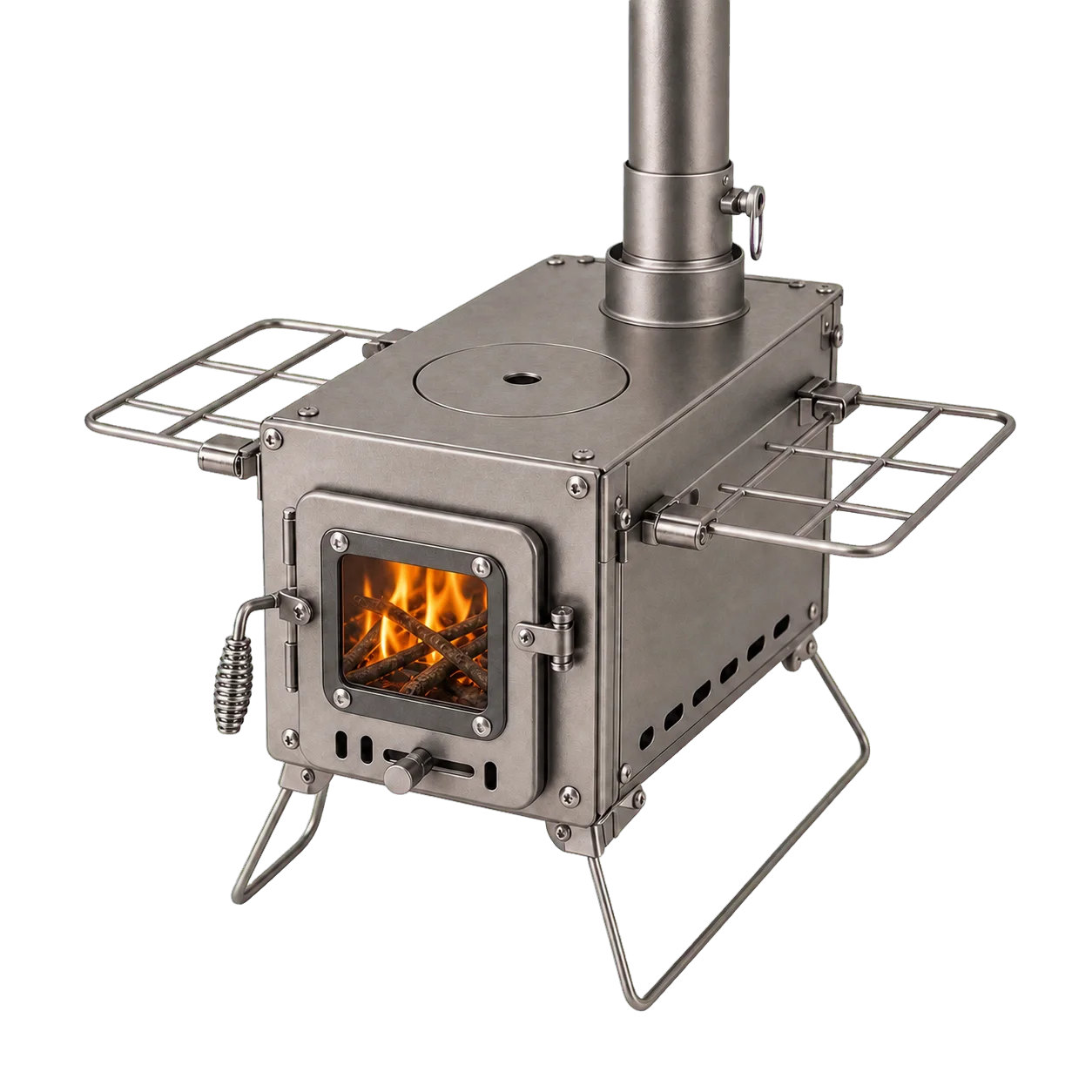
These compact solo stove kits combine short prepared fuel, one-person packing constraints, a stable narrow footprint and a complete flue for compatible shelters.
Product Focus
Compact solo stoves save space but accept shorter wood and require more frequent tending than larger basecamp models. Pot support, door access, leg spread and pipe storage must remain usable at reduced scale, while every safety requirement of a vented solid-fuel stove still applies.
The product specification states practical split-wood length and feed opening so customers understand preparation and tending before purchase.
Leg geometry, door force and cookware position are considered together on the protected floor area of the intended shelter.
Pipe rings, damper, supports and tools receive fixed storage positions because lost hardware is harder to replace in remote travel.
Design Details
A solo stove must support its short fuel, cookware and complete flue without carrying unnecessary group-camp hardware. Every operating component remains part of the packed system.
Door opening and grate support match the stated fuel length without requiring oversized pieces to protrude.
Accessible inlet and damper settings help the operator manage a small active fuel load under continuous supervision.
Support spread accounts for door opening and the nominated small cookware load.
Collar, sections, supports and terminal pack compactly while reaching the compatible stove-jack installation.
Specifications
The specification states compatible shelter dimensions, short-fuel requirements, total kit weight and packed dimensions together. Clear limits avoid implying that a small firebox suits every winter tent.
Materials & Finish
Titanium can reduce complete-kit mass for solo travel, while stainless steel offers a lower material-cost option with different handling and corrosion-care requirements. Grade and gauge should be specified together with installed loads, joint wear, thermal movement and transport conditions.
Declared stainless grade and gauge support an unpainted compact body with documented corrosion care.
Declared titanium grade and gauge can reduce carried mass where thin-sheet handling and heat movement are communicated clearly.
Pipe and storage materials are stated separately, with the pouch intended only for fully cooled, cleaned components.
Applications
Compact models suit solo hot tents, motorcycle luggage and small winter camps where every packed component competes for space.
The format suits one-person compatible shelters where the user accepts short fuel and active tending.
Compact packing supports winter travel with a complete chimney and installation kit rather than a bare micro firebox.
A narrow packed system can suit motorcycle luggage when the complete flue and every specified or supplied installation component remain accounted for.
OEM & Private Label
Short pipe sections, compact supports, fuel tools, storage pouch and setup guidance are coordinated around the packing constraints of one-person travel.
FAQ
The right model depends on realistic tent volume, fuel length, carry method and the user's willingness to manage a smaller fire more actively.
Frequency varies with fuel, loading and air setting, but a small chamber generally requires more active attention than a larger stove. No fixed duration should be promised without defined testing.
Usually the wood must be split and cut to the practical length stated for the firebox and door opening.
Include the stove body, legs, collar, full pipe, supports, damper, terminal, hardware, tools and storage required for operation; optional accessories should be listed separately.
No. A compact shelter still needs a compatible stove-jack route, clearances, floor protection, ventilation and a working CO alarm.
No. A solo tent stove must not be left burning while occupants sleep or while the fire is unattended.