Working Fill, Vent and Free Space
Normal minimum and maximum water levels, open vent geometry, expansion space, refill, overflow and drain paths are identified without implying pressure containment.
Wholesale Stove Accessories
Each tank is specified as an open atmospheric water vessel on a named stove, with working fill, wetted construction, filled mounting load, dispensing route and low-water procedure documented together.
Product Focus
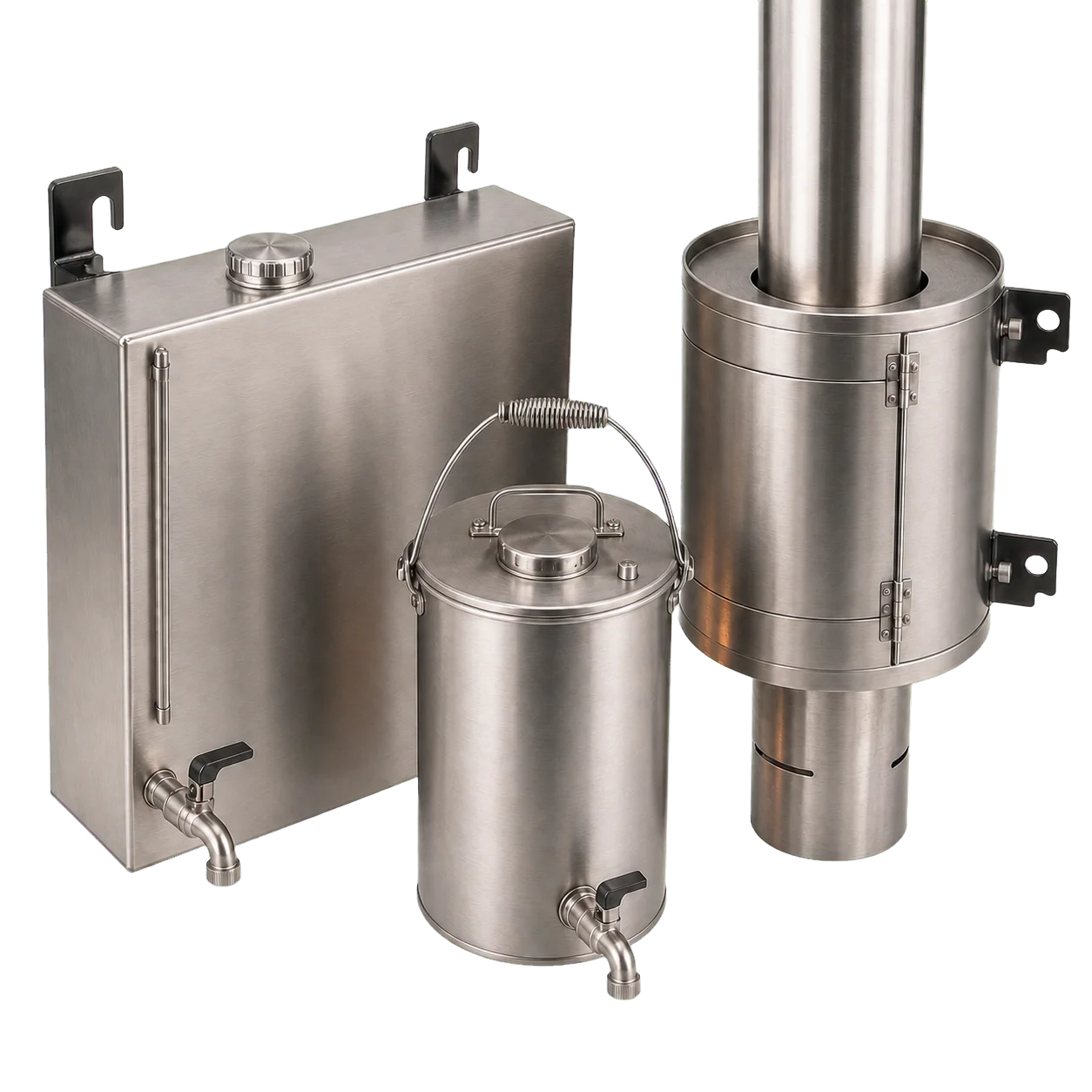
A side-mounted tank receives heat from the stove while its water mass loads the host panel and brackets. The product record therefore separates shell volume from working fill, identifies a permanently open vent and free space, and limits heating or potable-water claims to supported materials, manufacturing and test evidence.
Normal minimum and maximum water levels, open vent geometry, expansion space, refill, overflow and drain paths are identified without implying pressure containment.
Shell grade and thickness, seams or welds, seals, fittings and tap materials are declared separately from painted brackets or the stove body.
Empty and working-filled mass, bracket reactions, host contact, minimum level and shutdown, cooling or inspection after dry heating are documented.
Design Details
The tank is specified from installation and filling through heating, dispensing, draining, complete cooling, cleaning and removal.
Tank shell, maximum working water, tap and attachments are applied through documented brackets and host contact points without relying on unsupported panels or pipework.
Every operating state preserves atmospheric communication and the stated free space, with refill and spill routes kept away from fuel loading and controls.
Outlet height, lever path, receiving-vessel size, flow condition and operator reach are checked against nearby stove doors and hot surfaces.
Minimum level, low-water response, complete cooling, drainage, internal access and material-specific cleaning are documented for the selected tank.
Specifications
The specification connects one tank revision and water-use declaration to the named stove, working fill, wetted components, operating routine and maintenance access.
Materials & Finish
Water-contact shell and joints, structural brackets, and tap and fittings receive separate material, load, temperature and service records.
Material grade, sheet thickness, seams or weld method, internal finish, intended water contact, inspection and cleaning instructions are stated for the vessel.
Material, section, joints, finish limits, contact geometry and reactions under the maximum working-filled mass are documented for the named stove.
Materials, joining method, temperature condition, flow path, disassembly, cleaning and model-specific replacement references are confirmed by component.
Applications
The relevant tank follows the named stove, water use, working volume, refill and dispensing routine, operator access and cooled maintenance plan.
A tank can be specified around the exact stove, washing or other declared service-water volume, receiving vessels, refill route and supervised hot-water handling.
A removable configuration records full tank and bracket mass, vehicle storage, cooled draining, tap protection and an operating sequence that separates service fittings from cookware and cleaning tools.
Repeated service requires documented refill responsibility, outlet temperature procedure, cleaning and inspection schedule and spare tap or seal references.
OEM & Private Label
Private-label development can coordinate working water range, atmospheric path, wetted assembly, full-load mounting, dispensing and low-water instructions with the named stove.
FAQ
Water capacity and heating claims belong to an open atmospheric tank, named stove, working fill, wetted assembly and supervised operating cycle.
No. The described configuration remains open to atmosphere through all operating states and carries no sealed or pressure-rated claim.
Only model-specific wetted materials, manufacturing controls, cleaning instructions, testing and destination requirements can support a potable-water declaration.
Usable volume is the normal working range between the documented minimum and maximum levels while preserving the open vent and required free space, not total shell volume.
The instructions state the minimum level and required shutdown, complete cooling and inspection response; automatic dry protection is not implied.
No. Bracket geometry, host contact and panel structure, filled reactions, doors and controls, heat relationship and removal path must match the named stove.
Tank specification covers the host stove interface, water-use range, working level, wetted materials, vent and drain routes, and maintenance interval.