Distinguish Replacement Legs from a Complete Stand
Individual legs inherit the original appliance attachment and joint design; a stand introduces its own frame, host seating and load path. Their compatibility records are not interchangeable.
Wholesale Stove Accessories
Each support is developed for one host revision and working configuration, carrying the stove, fuel, cookware and supported accessories through controlled attachments, braced members and feet suited to the declared surface.
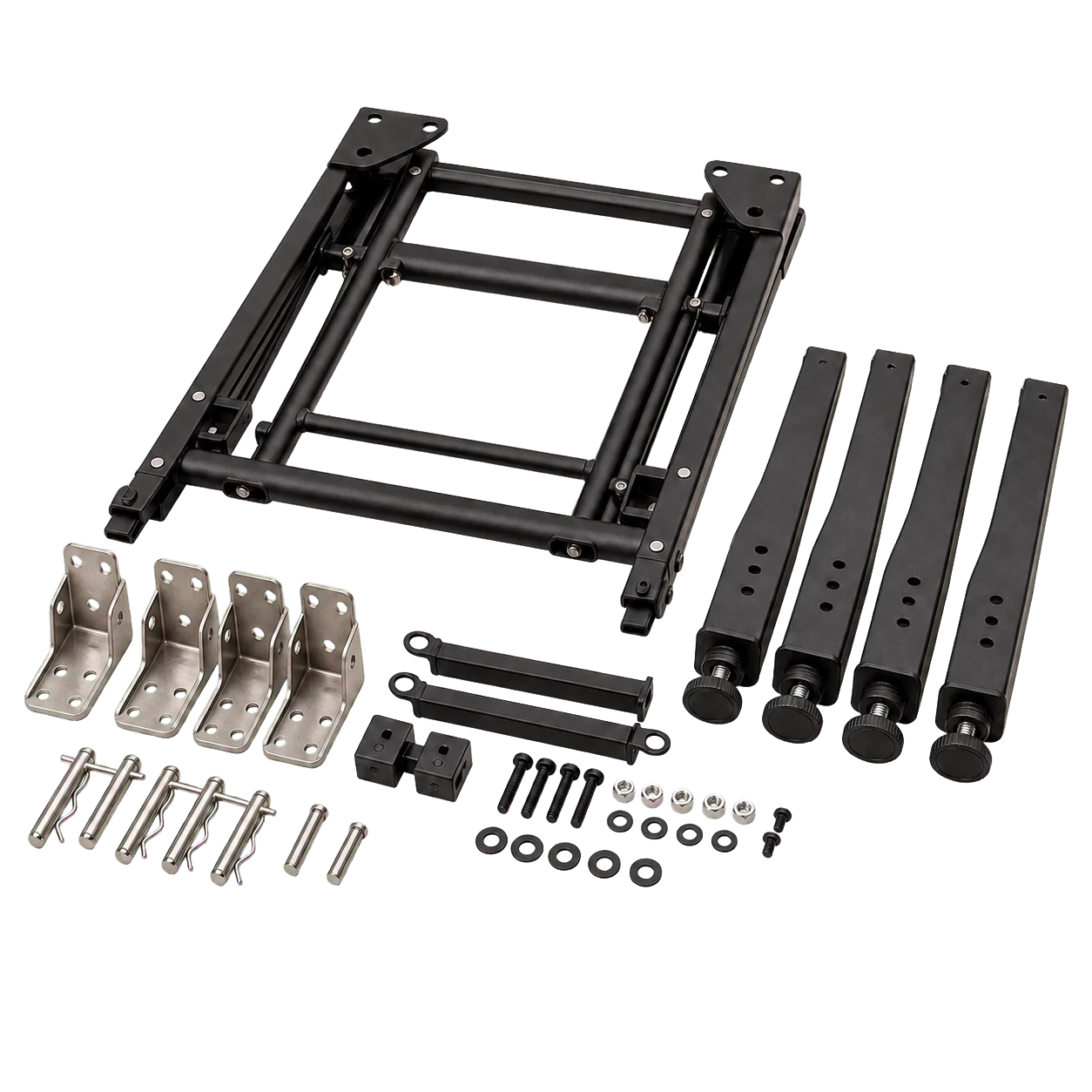
Product Focus
Raising a stove changes leverage, door-opening reactions and the position of cookware or side-mounted accessories relative to the feet. A replacement leg or complete stand is therefore selected from the host structure, worst documented working-load case, support spread and actual floor or ground condition.
Individual legs inherit the original appliance attachment and joint design; a stand introduces its own frame, host seating and load path. Their compatibility records are not interchangeable.
The working cases include fuel and cookware mass, permitted tanks or accessories, door or ash-service forces and any supported flue reaction rather than the empty appliance alone.
Foot area, spacing, leveling allowance and slip or penetration condition are defined for the named hearth, hard floor, tent-floor arrangement or prepared outdoor ground.
Design Details
The complete support is specified from the appliance interface to each ground contact under the nominated operating cases.
Holes, tabs, sockets, rails, brackets and body reinforcement are matched by revision so reactions enter intended appliance structure rather than unsupported sheet.
Leg sections, joints, cross-bracing, fasteners and any deployed lock carry the documented vertical, offset and operating-action cases in the approved setup.
Height, center-of-mass positions, foot spread and contact area are checked on the named level or permitted uneven surface, including any stated leveling method.
The support leaves operating and floor-protection zones accessible, and folding or removal follows a controlled sequence only after the appliance is extinguished and completely cool.
Specifications
The specification links one support revision to the appliance structure, complete working configurations, deployed geometry, contact surface and assembly or replacement method.
Materials & Finish
Material and finish are recorded at the load-entry points, spanning members, moving joints and feet rather than summarized as one stand material.
Steel grade, tube or formed section, welds, braces, coating system, heat exposure, corrosion-care limits and inspection points are stated for the approved working cases.
Alloy or specification, section and thickness, joints, surface finish, dissimilar-metal contacts and exposure care are documented without implying maintenance-free service.
Material, size, engagement, wear surfaces, deployed lock indication, foot contact area, leveling parts and model-specific replacement references are confirmed by component.
Applications
The selected support follows the exact host, operating load, floor or ground construction and all appliance installation requirements.
A folding or removable set can be specified around the stove, fuel and cookware load, deployed locks, protected floor arrangement and fully cooled pack-down sequence.
A fixed stand can provide the documented working height on a named level hearth while preserving required floor protection, appliance clearances, flue support and service access.
A complete frame can carry a named body and offset cookware or accessory loads when its seating, foot polygon, surface reaction and operator actions are included in the stability record.
OEM & Private Label
Development coordinates host connections, deployed and packed geometry, structural members, feet and instructions around the buyer's complete appliance configuration.
FAQ
Attachment, complete working-load cases and the intended surface should be defined before height, folding format or finish is selected.
Not necessarily. Hole or socket geometry, brackets, reinforcement, reaction paths and service clearances can differ between appliance revisions.
Include the appliance, maximum nominated fuel, cookware and food, permitted tanks or accessories, any support-carried flue reaction and door, ash or other operating actions.
A height change alters leverage, center-of-mass position, foot polygon requirements and attachment reactions, so the complete host, load cases and surface must be reconfirmed.
No automatic change is implied. The appliance, hearth or floor protection, clearances, flue arrangement and applicable installation requirements remain controlling.
Only where the original assembly provides a controlled part reference and the mating joint, lock, fasteners and remaining structure can be inspected and returned to the documented condition.
Please provide the host model and structural drawing, connections, complete load cases, required working height and service envelope, surface, deployed and packed targets, quantity, branding and destination market.