Lower and Upper Mating Interfaces
Actual inside and outside dimensions, wall construction, insertion direction and depth, overlap and locks are recorded at both chimney connections.
Wholesale Stove Accessories
Each pipe oven is specified as an additional load and heat-extraction component in one named stove-and-flue route, with connections, support, food chamber and service paths recorded together.
Product Focus
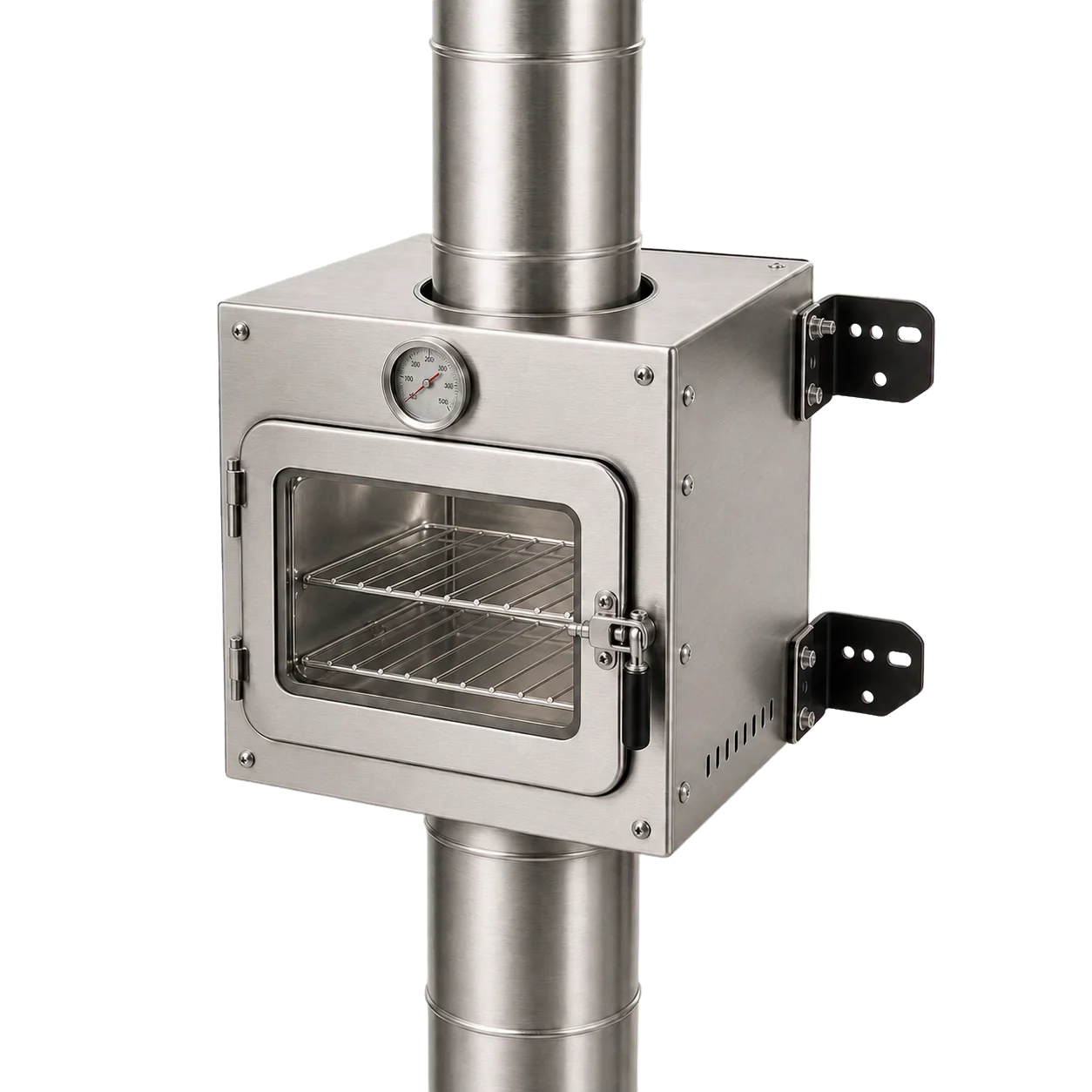
Adding a chamber introduces two joints, body and food mass, door-opening forces and heat extraction into the chimney system. The selected oven is therefore specified around the exact stove, adjoining pipe sections, external support, operating fuel and full route before any baking or temperature claim is made.
Actual inside and outside dimensions, wall construction, insertion direction and depth, overlap and locks are recorded at both chimney connections.
Oven body, racks, food, door and operator actions are carried through a documented bracket or support rather than assumed to rest on pipe joints.
The named stove, fuel, route and operating cycle accompany chimney observations, while soot inspection, cleaning and oven removal remain accessible.
Design Details
The installed assembly is specified from the stove outlet through the oven body and upper connection to the remaining chimney route.
The inlet is checked against the controlled adjoining section for mating geometry, overlap, stop, lock, orientation and soot path.
Brackets, feet or another stated structure carry body, racks, nominated food and door-operation forces without transferring an unverified load to the flue joints.
Usable rack dimensions, supported food mass, door swing and tray or utensil movement are demonstrated within the planned operator and support clearance.
The outlet continues the named system while preserving access to upper and lower joints, flue surfaces, chamber cleaning and controlled disassembly.
Specifications
Host system, chimney interfaces and installation support must be confirmed before chamber dimensions are selected.
Materials & Finish
Pipe interfaces, structural chamber, cooking-zone components and any window or indicator receive separate material, temperature and service records.
Material grade, wall thickness, seams, flue-interface geometry, heat exposure, structural load condition and external finish are stated for the selected body.
Material, grade, finish, cooking-zone status, supported food load, removal, cleaning and replacement references are declared by component.
Material, mounting, temperature duty, viewing or measurement limitations, cleaning and replacement are documented only where the ordered model includes these parts.
Applications
The accessory is relevant where stove, chimney, support, food load, operator space and soot-service responsibilities can be specified as one system.
A tent application is limited to the named stove, adjoining pipes, external oven support, complete route, stove-jack detail, supervision and shelter-safety instructions.
A fixed outdoor setup can be specified around the exact support, trays and food load, operator route, measured cycle and cooled transport arrangement.
A station records installed load, door and serving actions, temperature observations, soot and food-zone cleaning and replacement-part access for the selected route.
OEM & Private Label
Private-label development coordinates both chimney interfaces, external support, chamber and food load, operating cycle and service access around the buyer's named stove-and-flue route.
FAQ
Compatibility and capacity belong to the complete named stove, chimney route, external support, food load and service arrangement.
No. Both connections depend on actual mating dimensions, wall construction, tolerance, insertion orientation and depth, locks, adjoining sections and support.
Yes. Added joints, heat extraction and route geometry require confirmation with the exact stove, fuel, full chimney and documented operating cycle.
Usable rack dimensions, supported food mass, door swing and tray or utensil movement are recorded; outer shell volume is not treated as baking capacity.
No. Only an exact compatible stove, pipe family, external support, complete route and stove-jack shelter system with its safety instructions is covered.
The installed arrangement preserves access to both joints, adjoining pipe interiors, chamber surfaces and removal order after shutdown and complete cooling.
Support details include stove model and fuel, lower and upper pipe interfaces, route geometry, service access, load, and replacement sequence for the selected installation.