Map Every Support and Insertion Constraint
Rails, ledges, tabs, corner radii, stops, insertion angle and hot-position clearance define the replacement interface and prevent the food load from bearing on unintended host parts.
Wholesale Stove Accessories
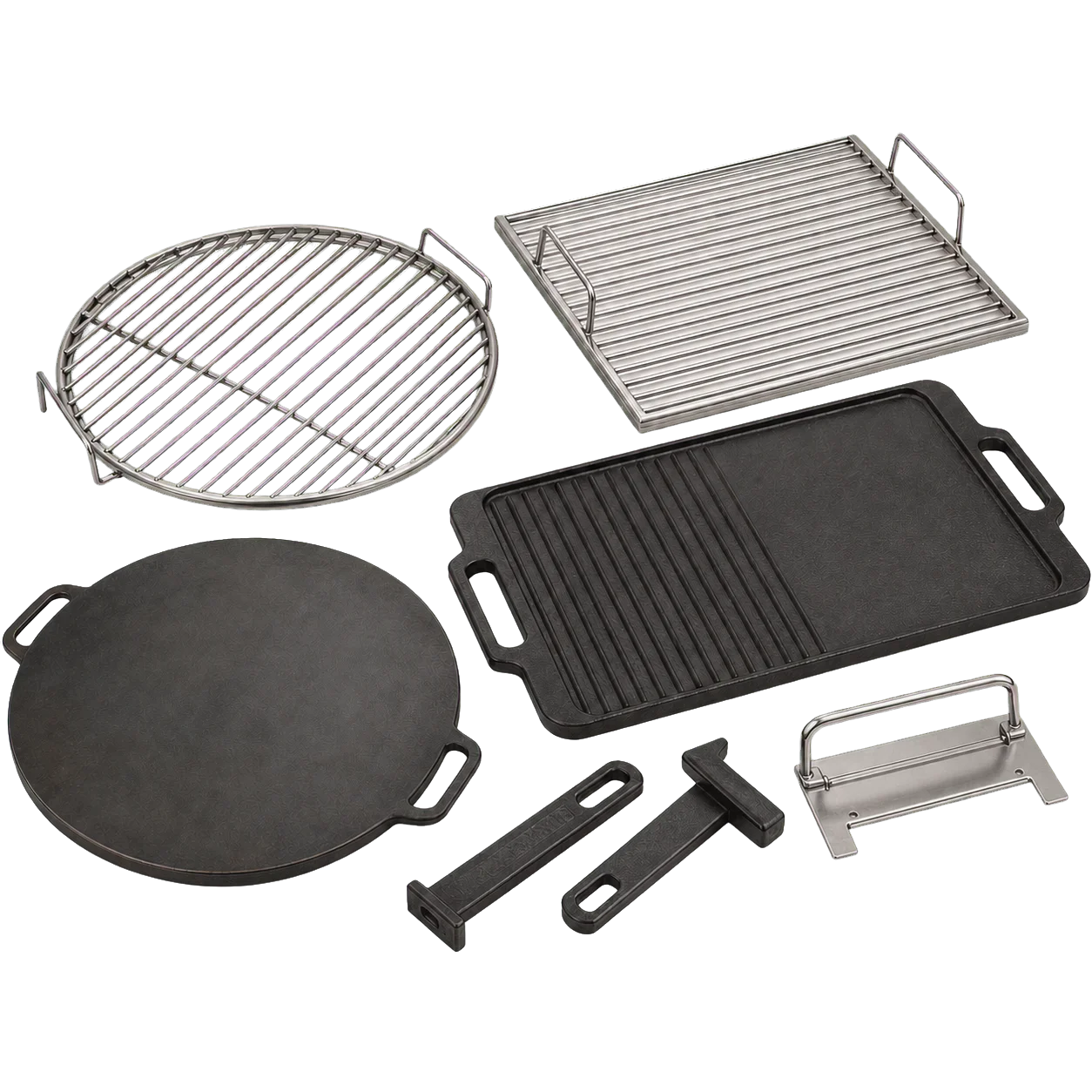
Each cooking surface is developed for a named grill, stove or fire-pit support, with its seating points, span, working food area, heat-source relationship, menu load and grease or cleaning route recorded together.
Product Focus
A surface can bind during insertion, rock on the rails, sit at the wrong height or direct grease toward the fire even when length and width appear correct. Selection therefore begins with the host interface and intended menu before bar spacing, plate texture or material is chosen.
Rails, ledges, tabs, corner radii, stops, insertion angle and hot-position clearance define the replacement interface and prevent the food load from bearing on unintended host parts.
The approved drawing identifies the loaded span and excludes frame, handles, drains, unsupported edges and other non-cooking features from the stated usable area.
Open bars, flat plates, ribbed faces and reversible products require different portion sizes, utensil movement, oil use, drainage direction and collector capacity.
Design Details
The complete part is matched to its operating position with the nominated menu and the actual grease and removal paths.
Contact points, stops, insertion sequence, level and movement are checked against the controlled host revision and heat-source position.
Bars, plate and frame carry the nominated distributed and local loads across the documented supports without counting handles or unsupported margins as food area.
Bar spacing, flat or ribbed texture, reversible-side identity, slope, drain opening and collector relationship follow the selected foods, tools and cooking cycle.
Handles and clearances permit removal only after cooling, while seasoning, washing, drying, oiling, inspection and protected storage follow the declared material.
Specifications
A model-specific part record connects the original host supports and heat position to the cooking-surface revision, nominated menu, complete load and maintenance method.
Materials & Finish
Material selection follows the menu, host heat condition, section geometry and maintenance capability rather than a generic ranking of durability.
Alloy or specification, bar and frame section, joints, surface finish, food-contact declaration, corrosion exposure and cleaning method are stated for the selected grid without implying universal corrosion immunity.
Casting specification, support faces, cooking texture, accepted surface condition, seasoning, drying, oiling, storage and replacement criteria are documented for the named host and menu.
Steel grade, plate thickness, flatness condition, formed slope or channels, food-contact finish and ongoing seasoning and corrosion-care routine are recorded for the production surface.
Applications
The relevant surface follows a named support and heat source and the food, cookware, grease and service routine expected in its sales channel.
An open grid restores the documented rail contact, cooking height, working area and grease path for the original grill revision, supported by a clear replacement code.
A plate can be specified around the exact stove top, distributed breakfast or pan load, handle clearance, grease collector and completely cooled transport arrangement.
A grate or plate requires a controlled rim or bracket interface, fuel-bed separation, stable loaded span, operator access and a route for grease that does not create an unstated universal fit.
OEM & Private Label
Development starts with the host interface and a representative cooking cycle, then coordinates surface geometry, food-contact records, load, grease management and care documentation.
FAQ
Fit, food-contact scope and cooking performance belong to the complete host-and-surface configuration, not to nominal dimensions or material name alone.
Not necessarily. Rails, tabs, stops, corner geometry, insertion angle, operating height, heat clearance and grease route must also match the named host.
The working zone excludes frame, handles, drains, unsupported margins and any section not intended for direct food contact; its load remains tied to the documented supports.
Selection follows the menu, heat condition, section geometry, corrosion exposure and the operator's cleaning, seasoning, drying and storage routine. No one material is universally maintenance-free.
A food-contact statement applies only to the actual material and finish supported for that use. Painted host frames or unspecified treatments are outside the declaration.
Only where each host supports the same seating, load, operating height, hot clearance, orientation, grease route and cooled removal conditions for both declared faces.
Please provide the host drawing or sample, support and insertion geometry, heat-source position, intended foods and cookware, usable area, complete load, grease route, material target, quantity, branding and market.