Select the Format before the Material
The host opening, projections, storage duration and handling routine determine whether the requirement is a flexible full-body cover, a fitted top cover or a supported rigid lid.
Wholesale Stove Accessories
Each cover or lid is developed for one clean, dry and fully cooled product, with its own fit method, water route, restraint or lift points and contact surfaces documented for the intended storage environment.
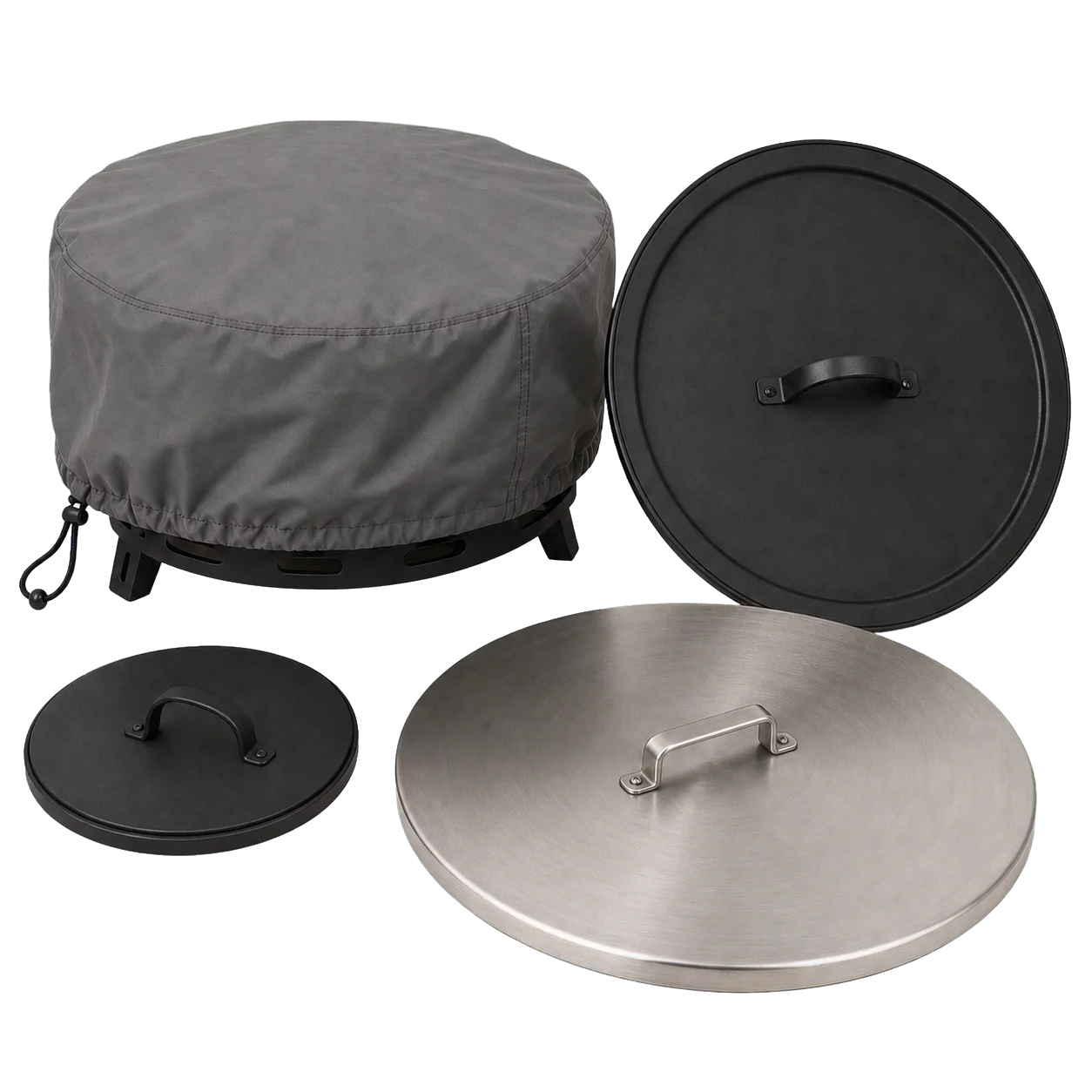
Product Focus
A fitted fabric shell depends on pattern allowance, seam position, ventilation and wind retention. A rigid lid depends on supported seating, slope, edge drainage and safe lifting. Neither format eliminates condensation or substitutes for product cleaning, drying and site-specific storage care.
The host opening, projections, storage duration and handling routine determine whether the requirement is a flexible full-body cover, a fitted top cover or a supported rigid lid.
Panel slope, seam or edge position, vents and uncovered lower zones are arranged around the actual host so rainfall does not pool and trapped humidity is not presented as preventable in every climate.
Lining, seam allowances, buckles, magnets, lid edges and support pads are located against the declared paint, stainless or weathering surface and carry realistic inspection and care limits.
Design Details
The four design records differ by cover format but remain tied to the same named host and storage condition.
Textile patterns include projections and fitting allowance; rigid-lid drawings identify the bearing rim, stops, overlap, clearances and the opening they cover.
Slopes, supported spans, seams, edges, vents and lower openings establish where external water leaves and how residual moisture can escape under the documented placement.
Hems, straps and buckles suit the textile cover and host base, while lid grips, mass, balance and parking position follow the stated manual-handling method.
Contact pads, lining, seams and hardware protect vulnerable surfaces, with cleaning, drying and damage checks completed before repeated storage use.
Specifications
A model-specific quotation identifies the cooled host geometry and finish, chosen cover format, expected exposure, water route and normal fitting or lifting sequence.
Materials & Finish
Material declarations follow the actual accessory supplied and do not transfer textile claims to metal lids or rigid-lid behavior to fabric covers.
Fiber, fabric construction or weight, coating, color, seams, vents and care method are recorded together; any water-resistance statement applies to that finished configuration and exposure.
Metal grade, thickness, formed slope, seams or joints, bearing points, edge finish, grips and external finish are documented for the named opening and cooled handling duty.
Contact-material composition, seam or pad placement, straps, buckles, magnets or handles, fasteners, corrosion exposure and replacement references are stated by component.
Applications
A suitable accessory follows the product's exact shape and finish and the buyer's actual exposure, fitting frequency and moisture-management routine.
A fitted textile top or supported rigid lid can cover the named bowl or table opening while preserving its drainage detail and avoiding unsupported spans over decorative surfaces.
A full-body textile pattern can accommodate handles, controls, side shelves and fixed chimney features with seam, vent and retention positions kept clear of vulnerable contact zones.
After the host is serviced and fully dried, a documented cover can form part of indoor or sheltered storage preparation with periodic moisture and surface inspection.
OEM & Private Label
Development begins with a production host or controlled dimensional model and treats textile patterns and rigid lids as separate engineering and approval routes.
FAQ
The host must be fully cold, clean and dry, and the accessory format must be matched to its geometry and storage environment before color or branding is selected.
No. The fire must be extinguished and the complete host must be fully cooled, cleaned as required and dry before either accessory is installed.
No. Condensation depends on humidity, temperature change, host condition, ventilation and site drainage. The accessory can manage defined water routes but cannot eliminate moisture in every environment.
Please provide the complete envelope, all fixed projections, shelves, handles, legs and top features, base and retention points, preferred fitting direction and practical closure allowance.
The drawing must identify the covered opening, bearing rim, overlap, stops, supported span, drainage slope, grip positions, lid mass and the safe lift and parking sequence.
Only when each host revision remains inside the approved interface, contact, retention or lifting and drainage conditions; a loose visual fit is not sufficient.
Please provide the host sample or controlled drawing, finish, selected accessory format, storage climate and duration, water route, handling method, material target, quantity, branding and destination market.