One Recorded Position for Every Component
The approved layout locates the cooled body, pipe sections, legs, tools and optional cooking parts, including projections and the allowance needed to close the bag without forced compression.
Wholesale Stove Accessories
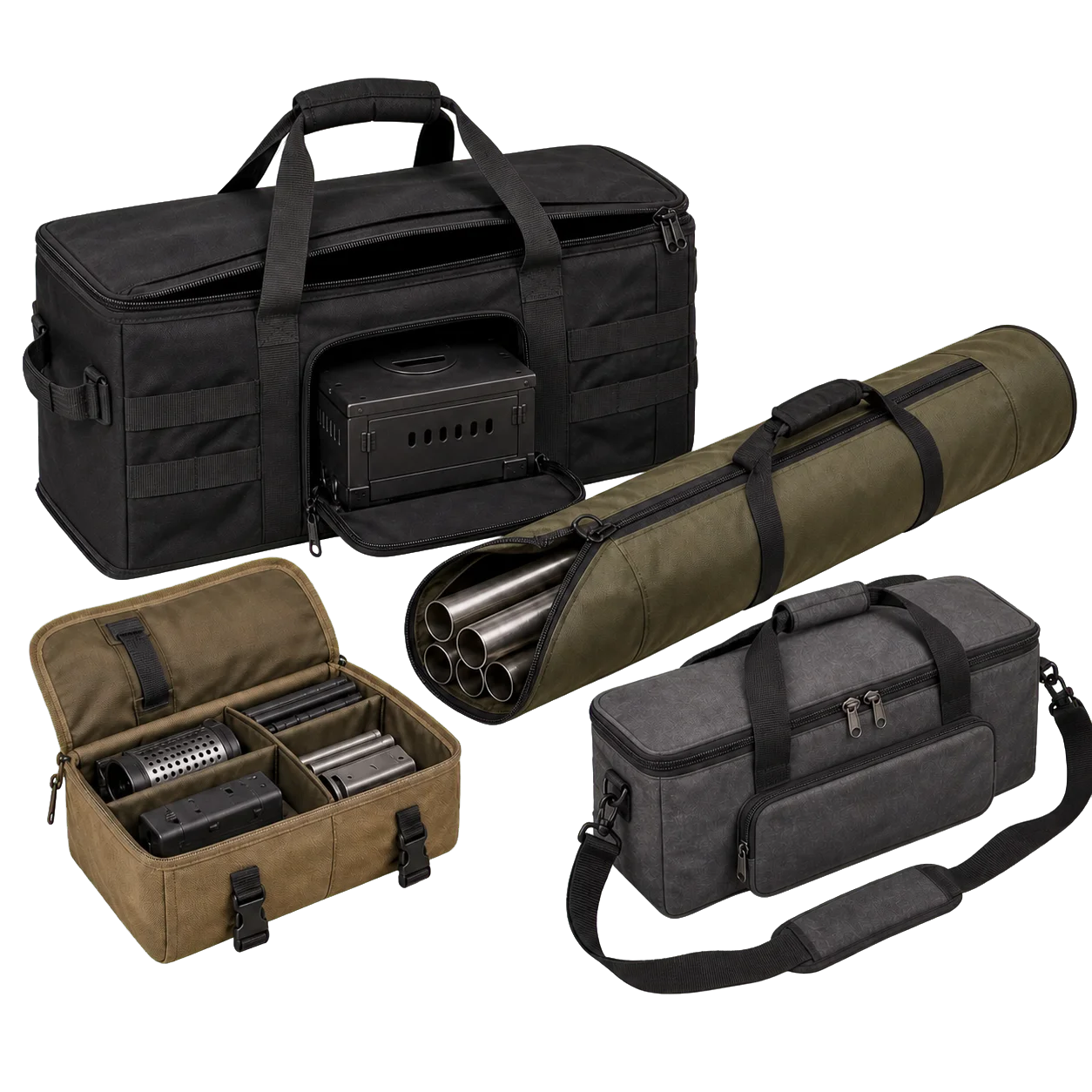
Each bag is developed around one cooled stove or fire-pit set, with every pipe, leg and tool assigned a protected position and the complete carry mass transferred through reinforced base, seams and handles.
Product Focus
Two kits sold under the same stove model can have different pipe lengths, detachable legs, tools and cooking parts. The product record therefore defines every packed item, its orientation and residue condition, the full lifted mass and the normal loading sequence used for the textile pattern.
The approved layout locates the cooled body, pipe sections, legs, tools and optional cooking parts, including projections and the allowance needed to close the bag without forced compression.
Handle webbing continues through reinforced side and bottom zones so the quoted load applies to the assembled bag, not to an isolated strap or fabric swatch.
Removable sleeves, dividers or wipe-clean zones isolate soot-bearing pipework and abrasive edges from coated panels, cooking accessories and vehicle interiors.
Design Details
Pattern geometry, internal restraint, structural stitching and service access are developed from the same packed-kit record.
Panels follow the approved component arrangement, projections and closure path while limiting movement that can abrade finishes during vehicle or hand transport.
Pipe lengths, loose legs and tools receive shaped compartments or tie points selected for their mass, edges and contamination risk.
Webbing termination, seam type, reinforcement patches and bottom construction form a continuous route for the documented complete-kit mass.
Zip or flap direction follows the expected unpacking order, and residue-facing liners remain reachable for material-appropriate cleaning after the contents are removed.
Specifications
A quotation becomes model-specific when the component inventory, arranged envelope, lifted mass and transport routine are supplied together.
Materials & Finish
The exterior, residue barrier and structural webbing are specified separately because they answer different wear, cleaning and load conditions.
Fiber, weave or knit, weight or denier, coating, color and the applicable abrasion or weather evidence are recorded for the selected production textile.
A wipe-clean liner or dedicated pipe sleeve uses compatible seams and attachment points so fully cooled soot-facing parts can be separated and the barrier can be serviced without dismantling the load structure.
Webbing width and route, thread and stitch construction, reinforcement patches and bottom panel are linked to the complete approved carry mass and lift arrangement.
Applications
These bags suit supply programs that can define the delivered kit and maintain the same component arrangement through packing, use and after-sales replacement.
A body compartment and measured pipe sleeves keep the matched chimney, supports and setup tools together while isolating their cooled soot-facing surfaces.
A fitted opening sequence lets operators remove the stove before smaller parts and helps prevent loose metal components from marking the vehicle or clean cookware.
Panel slots and separate food-surface sleeves organize flat-pack bodies, supports and cooking parts for retail delivery, event fleets or seasonal storage.
OEM & Private Label
OEM work starts with a physical kit or controlled drawings and closes only after fit, lifting, compartment access and label positions are approved on the assembled bag.
FAQ
Fit and durability are checked against the exact cooled pack-out rather than a nominal stove size or an isolated textile sample.
The pipe, legs, tools and optional cooking parts alter the envelope, internal restraints, closure path and lifted mass. Stove body dimensions alone cannot define the finished bag.
No. The equipment must be fully extinguished, cooled and prepared according to its own instructions before it contacts any textile, liner or closure.
The stated condition applies to the complete approved contents and assembled load route, including handles, webbing, seams, reinforcement and base, under the documented lift arrangement.
Yes, but only when each model's arranged envelope, projections, component positions and complete mass stay within the approved pattern and load record.
Not automatically. Any weather claim must reflect the selected fabric and coating together with the actual seams, zip or flap and openings used in production.
Please provide the physical kit or controlled component drawings, preferred pack-out, complete mass, residue-separation needs, transport routine, textile target, order quantity, branding and destination market.