Feedstock Grade and Batch Fill
Particle size, moisture, density, fines, batch mass and fill depth are recorded for the selected pellets, chips or prepared biomass.
Wholesale Rocket Stoves
These TLUD stoves are specified around a graded feedstock batch, documented top ignition, defined operating end point and a cooled residue-handling method.
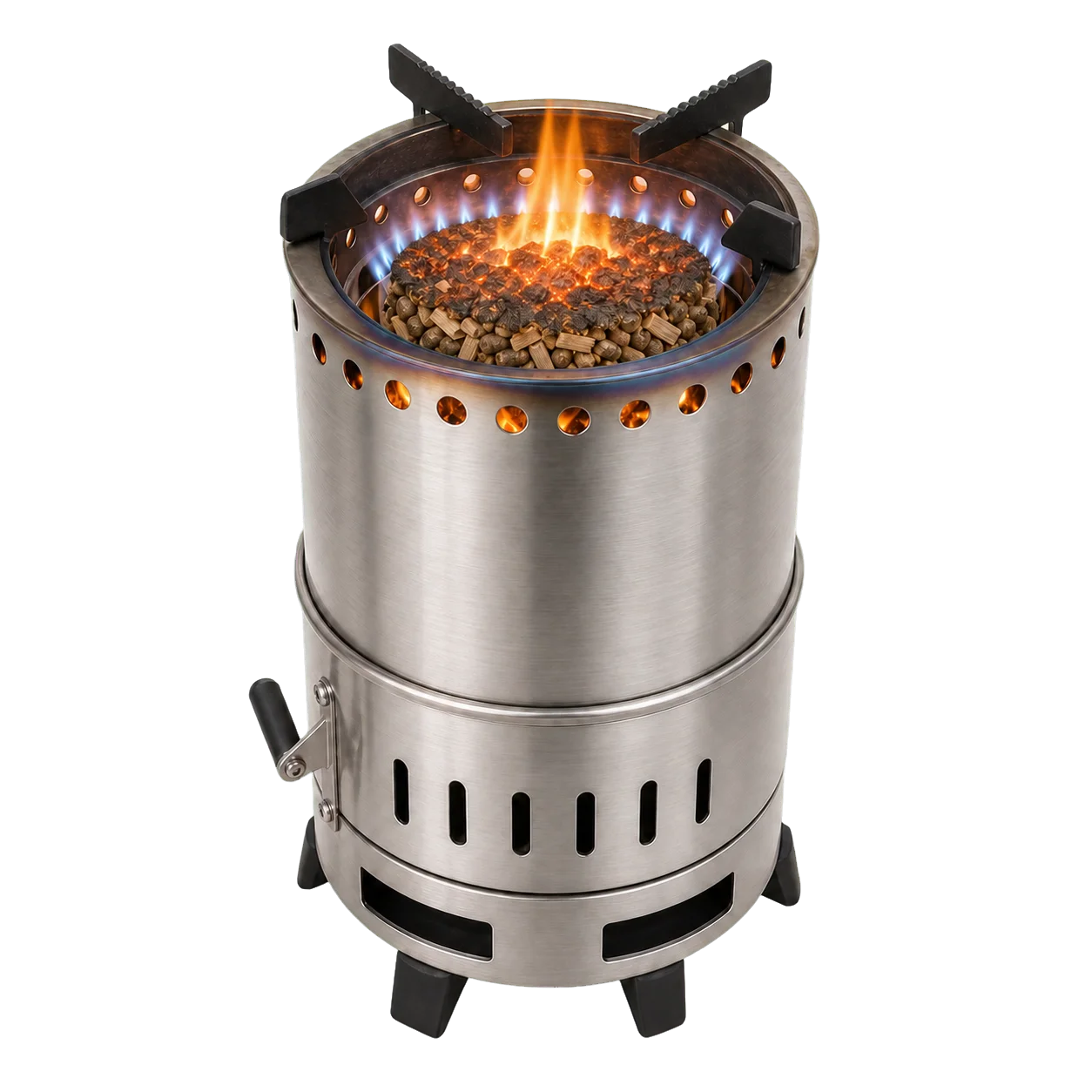
Product Focus
A TLUD designation describes a top-lit updraft batch arrangement, not a guaranteed emissions or char result. The model record identifies feedstock grading, fill depth, primary and secondary air geometry, ignition method and the selected stopping point.
Particle size, moisture, density, fines, batch mass and fill depth are recorded for the selected pellets, chips or prepared biomass.
The instructions identify the observable stopping condition and the steps used to extinguish, cool and remove residue.
Any emissions, char-yield or cooking result remains tied to the exact model, feedstock, batch, vessel, procedure and measurement basis.
Design Details
The product record connects feedstock grading and fill depth with the ignition sequence, documented air routes and complete-cooling procedure.
The selected configuration records feedstock properties, batch mass and fill depth rather than assuming all pellets, chips or biomass behave alike.
Ignition begins at the upper surface under the stated preparation and air conditions for the selected model.
Inlet, passage and outlet dimensions are recorded without assuming secondary combustion or emissions performance from geometry alone.
The procedure identifies the operating end point, extinguishing method, cooling condition and removal tools for the intended residue outcome.
Specifications
The commercial specification includes feedstock properties, batch fill, air geometry, operating end point and residue method alongside chamber volume.
Materials & Finish
Inner chamber, outer shell and residue tools receive separate material, thickness and handling specifications.
Grade, thickness, perforation and joint details are declared for the selected chamber without inferring hot-zone performance from material name alone.
Outer-shell material, thickness, finish location, mass and storage guidance are stated for the selected construction.
Lids, quench arrangements or removal tools are included only where the model documentation defines their extinguishing, cooling and handling method.
Applications
The product suits users who can follow and maintain a defined batch operating procedure.
A fixed model, recorded feedstock batch and stated measurement basis provide a defined comparison for documented runs.
Project teams can document a fixed feedstock batch, user instruction set, measurement basis and residue-handling method before field comparison or procurement.
The specified TLUD model is for teams that can prepare the declared fuel batch and execute ignition, end-point control and cooled-residue handling as required.
OEM & Private Label
OEM work can coordinate batch chamber, air jacket and instructions once feedstock and project metrics are known.
FAQ
Feedstock, batch conditions and the chosen end point define the cooking and residue evidence applicable to a model.
TLUD identifies a documented top-lit updraft batch arrangement. It does not by itself prove upper-gas combustion, low emissions or a particular char outcome.
No. Particle size, moisture, density and fines affect the batch and must remain within the documented feedstock specification.
No. Feedstock, end point, extinguishing method, contamination controls and intended char use require a defined measurement basis and relevant assessment.
A standard TLUD is treated as a batch system unless the selected design and operating documentation explicitly support a refill method.
Record the model, feedstock, batch mass and depth, moisture, vessel, operating steps, measurements, end point and residue method.
Provide feedstock, batch target, cookware, desired metrics, char method, materials, quantity and destination.