Vessel Profile and Filled Mass
The product record includes base geometry, diameter, empty mass and maximum nominated filled load rather than vessel volume alone.
Wholesale Rocket Stoves
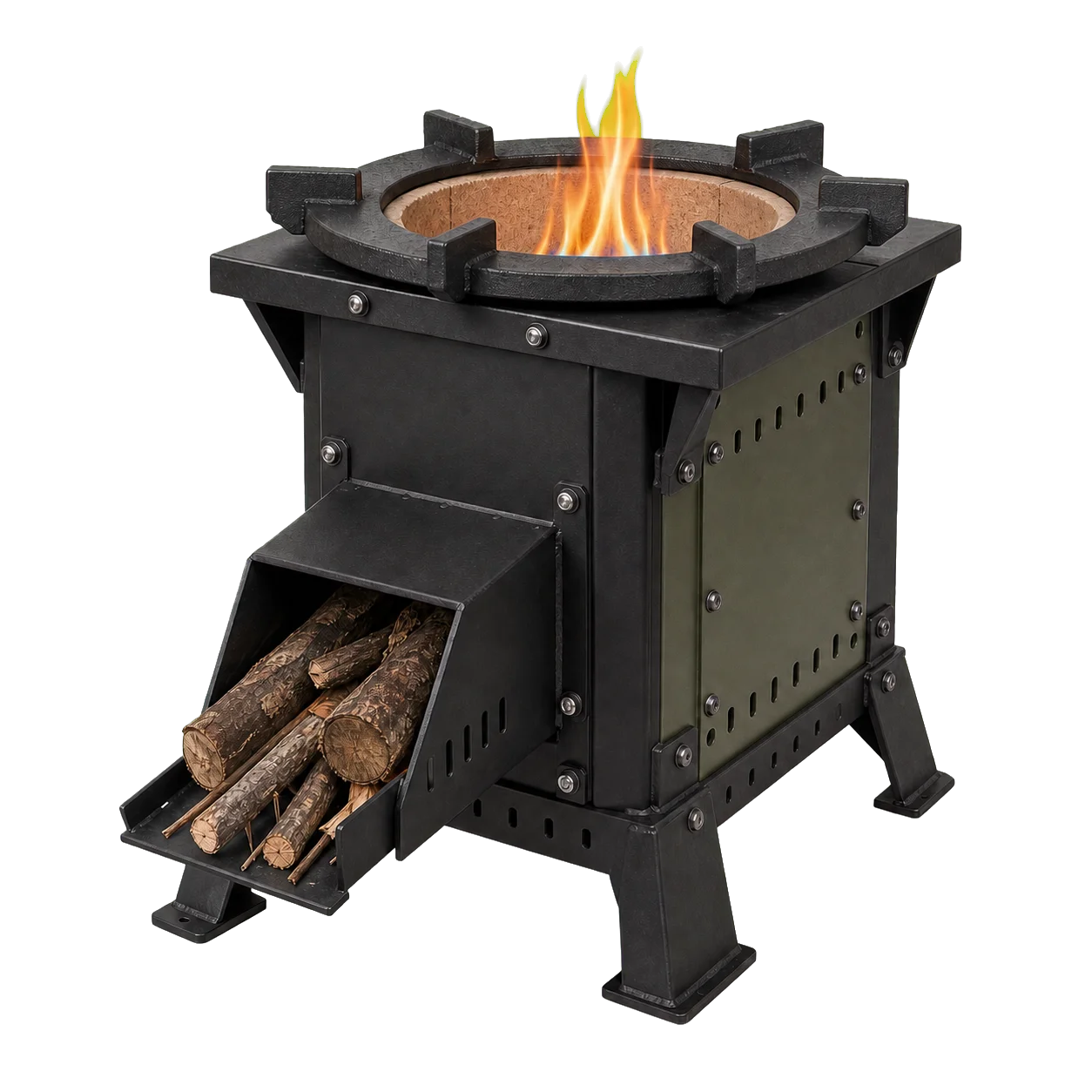
These heavy-duty rocket stoves are specified by the nominated filled vessel, operating duration, structural load path, chamber duty and confirmed service-part plan.
Product Focus
Large cookware introduces structural, handling and circulation requirements that body weight alone cannot describe. The selected model is specified around the nominated vessel, filled mass, stirring routine, operating duration and specified ground condition.
The product record includes base geometry, diameter, empty mass and maximum nominated filled load rather than vessel volume alone.
Menu, operating duration, refill method, ash interval and operator circulation define the chamber and access conditions for the selected duty.
Availability and replacement references for pot rings, grates, liners, handles and controls are confirmed for the selected construction.
Design Details
The specification follows the filled vessel load from the pot interface through the frame and footing while recording fuel, ash and wear-part access.
Base contact and movement are checked with the complete stove and filled vessel on the declared ground condition.
Contact points, reinforcement, joints and body deflection are recorded under the nominated static and handling load.
Fuel opening, chamber material, ash accumulation and any liner are documented over the documented cooking interval.
The service specification records removal access and part references for components intended for field replacement.
Specifications
Cookware, operating duration, fuel routine and ground condition provide the basis for structural and chamber evidence.
Materials & Finish
Frame, cookware contact, chamber, grate and optional liner receive separate material and load specifications.
Steel grade, section, thickness, reinforcement and joint method are documented with the nominated vessel load and chamber span.
Material, section, contact geometry and deflection acceptance are stated for the selected cookware and filled load.
Where included, liner material, thickness, mass, installation, inspection and replacement method are declared for the selected chamber.
Applications
The format suits supervised settings that can define cookware load, fuel routine, operator circulation and service support.
A configuration can be specified around regional cookware, filled mass, local fuel and the intended handling routine.
Meal-service duration, refill access, ash interval, working height and operator circulation can be documented for the selected station.
The procurement record can combine vessel load, duty cycle, training, wear parts and project-specific evidence for the intended site.
OEM & Private Label
OEM development begins with filled cookware and duty, then defines support, chamber and service parts.
FAQ
Filled vessel load and operating duty define the product more clearly than the words heavy duty.
Use the vessel base, filled mass, support contact and complete stove footprint; liters alone are insufficient.
No. Strength and stability depend on geometry, section, reinforcement, joints, load path, footing and the documented load condition.
Only when the selected chamber and service plan justify its material, mass, installation, inspection and replacement requirements.
Only when duty-cycle evidence covers the exact model, fuel, refill and ash routine, maintenance intervals and operating method.
Availability depends on the construction and order. Pot rings, grates, liners, handles or controls require model-specific references and removal instructions.
Provide vessel dimensions and filled load, menu, duty cycle, fuel, site condition, working height, material preference, quantity and destination.