Prepared Stick Dimensions
Each selected model can document the branch or stick diameter, length and preparation used for the product record.
Wholesale Rocket Stoves
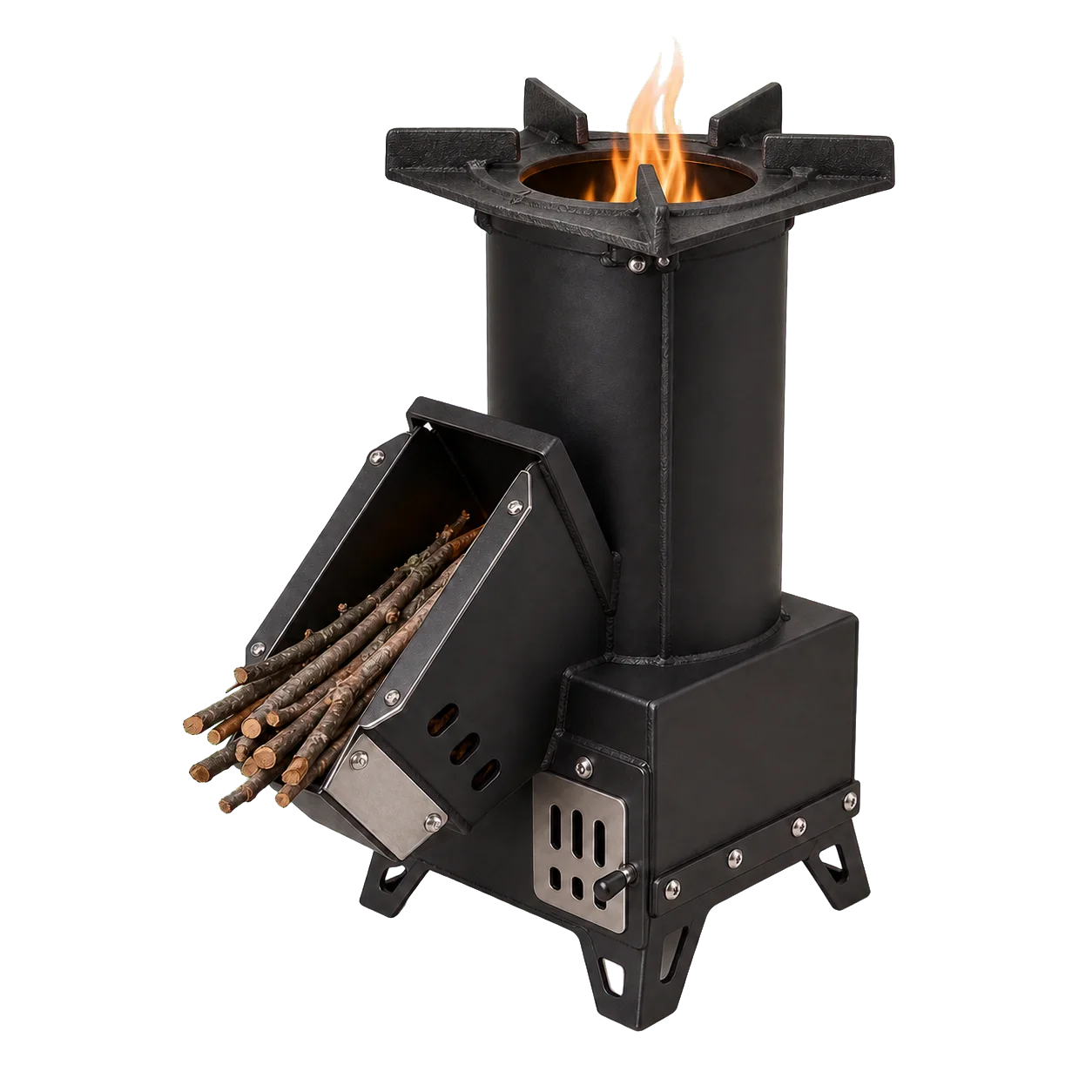
These gravity-feed rocket stoves pair a declared stick range and feed angle with nominated cookware loads and a documented manual-tending routine for supervised outdoor cooking.
Product Focus
An angled chute does not guarantee self-feeding. Stick diameter, length, dryness, support and ember position determine how the fuel advances and how often the operator must intervene.
Each selected model can document the branch or stick diameter, length and preparation used for the product record.
Feed-side clearance is checked with the nominated vessel and filled load, including the operator's approach to the fuel opening.
The product record states how the support locates prepared sticks and how accumulated ash affects the intended ember zone.
Design Details
The product record connects the chute geometry and fuel support to a declared stick range, cookware load and supervised tending routine.
The chute is specified around declared stick dimensions and does not imply automatic or unattended fuel delivery.
The selected grate or shelf is documented with the prepared fuel position, air openings and expected ash accumulation.
Chamber height, outlet position and vessel clearance are recorded for the nominated cookware configuration without transferring performance claims to other setups.
Verification with the nominated filled vessel records access clearance, any vessel movement during tending and the cooled residue-removal sequence.
Specifications
Fuel preparation and tending frequency should be considered alongside body size, cookware and the feed-chute geometry.
Materials & Finish
The chute, ember support and cookware interface receive separate material and thickness decisions according to abrasion, temperature and load.
The carbon-steel grade, sheet thickness and finish location are declared for the selected feed and chamber geometry, including uncoated heat-exposed areas.
The stainless grade and thickness are stated by component so buyers can compare an uncoated body route without assuming identical wear or thermal behavior across grades.
Where the construction permits replacement, the grate or shelf receives its own material, dimensions and service reference rather than being treated as a universal part.
Applications
The format suits programs that can prepare fuel to a stated range and communicate the required tending and cooled-cleaning procedure.
A selected model can be specified around the buyer's prepared stick supply, packed-volume target and nominated camp cookware.
Procurement can define the available fuel dimensions, expected tending interval and cookware load for a fixed supervised setup.
Branch fuel is considered only within the declared dimensions, preparation method and applicable local open-fire rules.
OEM & Private Label
Private-label development begins with stick dimensions, cookware and the operator's access path.
FAQ
Fuel preparation and operator attention determine whether the feed arrangement matches the intended use.
No unattended feed is claimed. The angled chute may assist movement of prepared sticks, but the documented routine still requires supervision and manual tending.
The diameter and length range must be matched to the selected chute and chamber, then recorded with the dryness and preparation used during product record.
Only branches that meet the declared dimensions and preparation requirements belong in the stated fuel range. Irregular pieces may bridge or fail to reach the intended ember position.
The nominated vessel is filled to the declared load, and the product record states vessel movement, feed-side clearance and whether tending requires lifting or repositioning it.
The model instructions should identify the ash space, fuel support and chamber access, together with the cooling condition and inspection interval for residue removal.
Provide local fuel dimensions, cookware, tending routine, body material, packed size, intended application, quantity and destination.