Complete Panel Inventory
The component list records each panel, retained part, assembly position and packed location.
Wholesale Rocket Stoves
These folding rocket stoves combine a documented panel sequence, practical joint fit and expected cold reassembly in a stated carry envelope.
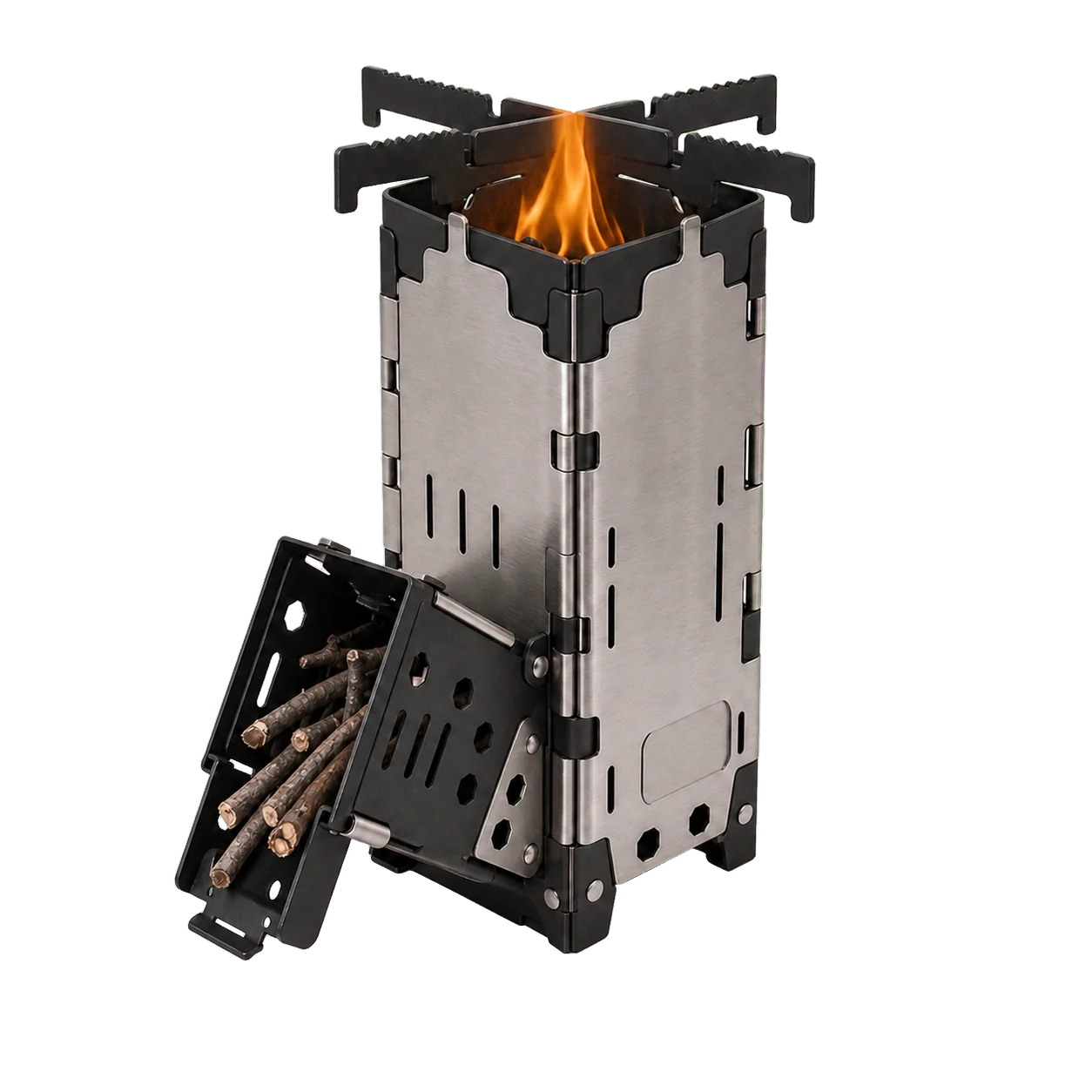
Product Focus
Low carton thickness is useful only when orientation, edge condition, joint fit and cooled reassembly are documented after the nominated heating cycle.
The component list records each panel, retained part, assembly position and packed location.
The specification describes cooled panel condition, joint engagement and practical reassembly after normal heating and cooling.
The pouch layout and transit inspection record panel-edge contact, residue separation and any abrasion at adjacent components.
Design Details
Panel geometry, joint engagement, loaded support and cooled storage are documented for the complete flat-pack system.
Slots, tabs, hinges and markings are recorded in the final assembly instructions and component inventory.
Joint engagement, body condition and footing are specified around the nominated fuel setup and filled cookware.
Material, thickness and relief geometry are selected so the panels can move under heat and still return to storage after full cooling.
After full cooling and cleaning, panel fit, edge contact, pouch layout and packed completeness remain clear to the user.
Specifications
Folded thickness, panel count, assembly sequence, vessel load and cold reassembly provide the key buying inputs.
Materials & Finish
Thickness, spring, edge condition and heat response matter together in a folding product.
Stainless grade, thickness, edge condition and cooled joint fit are stated for the selected model.
Carbon-steel grade, thickness, coating limits and wear at tabs or slots are specified for the selected panel system.
Sleeve positions, edge contacts and residue separation are included in the packed-kit and transit inspection.
Applications
The format suits trips where low packed thickness justifies active assembly and fuel tending.
Flat panels store beside cookware and provide a natural-fuel option where open fires are permitted.
Compact storage can suit users who accept assembly time and prepared small fuel.
Accountable component inventories and storage-appropriate printed instructions support scheduled kit inspection and occasional outdoor deployment.
OEM & Private Label
OEM work can improve panel order, markings, pouch layout and replacement references without making unsupported performance promises.
FAQ
Used-panel condition and reassembly are as important as new-product pack thickness.
No thin metal is immune to heat movement. Material, thickness and relief geometry should be checked together on the selected model.
That depends on the intended trip and setup routine, but every piece should have a clear purpose, assembly position and storage location.
Include all panels, pot supports, fuel shelf and pouch required for the advertised setup.
Replacement is possible only where the selected model has position-coded panels and confirmed service-part availability.
Check new assembly, hot operation, full cooling, cleaning and refit across the nominated cycle count.
Provide the packed envelope, complete-kit mass target, cookware, fuel, panel material, pouch format, quantity and destination.