Stored Component Inventory
The kit list identifies every stove part, support, fuel insert, tool, pouch and instruction required for the advertised setup.
Wholesale Rocket Stoves
These emergency rocket stove kits are specified by an accountable component inventory, declared storage conditions, realistic fuel configurations and outdoor-only deployment procedures.
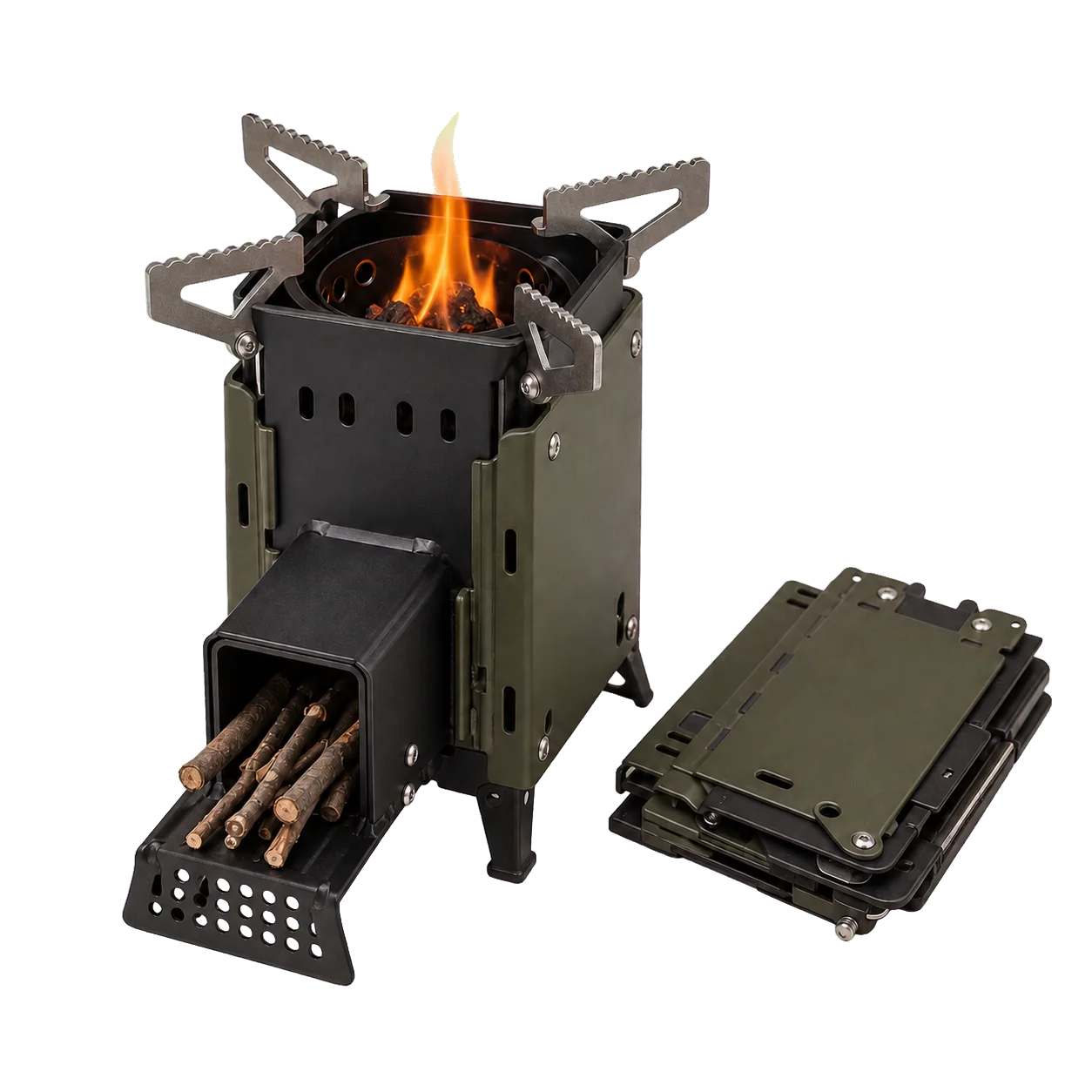
Product Focus
A preparedness stove may remain unused until a person unfamiliar with the product needs it. The commercial record therefore connects storage climate and inspection interval with the exact component list, fuel setup, cookware load and documented instruction sequence.
The kit list identifies every stove part, support, fuel insert, tool, pouch and instruction required for the advertised setup.
Wood, twigs, charcoal or biomass are listed only with the parts, preparation and operating method required by the selected model.
Instructions retain ventilation, carbon-monoxide, ground-condition and fire-safety limits regardless of the emergency context.
Design Details
The preparedness record links stored condition and component accountability with user-tested setup, nominated cookware and post-use inspection.
Material, finish, inner packing and inspection checks are specified for the stated temperature, humidity and storage duration assumptions.
Final components, identifiers and illustrated steps are specified around representative users under the intended deployment conditions.
Support contact and footing are checked with nominated pots or kettles, filled loads and the specified outdoor surface.
Instructions identify shutdown, complete cooling, cleaning, component inspection and any replacement required before storage.
Specifications
The specification records shelf environment, intended users, cookware, fuel plan, inspection interval and training requirements.
Materials & Finish
Material grade, finish, component identification and packaging are documented against the declared storage climate and scheduled readiness checks.
Stainless grade, thickness, joint construction and storage inspection requirements are stated without assuming immunity to every humid environment.
Steel grade, thickness, coating location, dry-packing condition and corrosion inspection points are declared for the selected kit.
Pouch, wrap or partition materials and contact points are specified, then checked for abrasion, component movement and instruction condition under the stated packaging review.
Applications
Household, institutional and relief deployments require different inventories and documentation depth.
The stored specification can define component inventory, inspection interval, nominated cookware and a documented outdoor deployment sequence.
The procurement record can include inspection schedules, multilingual instructions, training responsibility and component accountability.
Packaging, distribution, user validation, training and representative local-fuel data can be documented for the intended deployment system.
OEM & Private Label
Private-label work can coordinate stove, fuel parts, instructions and storage around the intended response system.
FAQ
A complete kit explains storage, deployment and outdoor safety before making performance claims.
No. Emergency conditions do not make combustion safe in a tent, vehicle or enclosed space. Operate only outdoors in accordance with the selected model's instructions.
The answer depends on destination rules, shelf requirements and the stove configuration. Stored fuel, required inserts and instructions must describe one compatible operating setup.
The interval is established from material, finish, packaging, storage climate and procurement policy, with checks for corrosion, missing components and document condition.
Representative users evaluate the final labeled components and illustrated sequence under the intended language, lighting, time and deployment conditions.
The accountable list includes every stove part, support, fuel insert, tool, pouch and instruction required by the advertised configuration.
Provide storage climate and duration, users and languages, fuel plan, cookware and loads, training, inspection policy, quantity and destination.