Declared Briquette or Lump-Charcoal Range
The selected configuration states the fuel dimensions, batch mass and preparation used for its product record.
Wholesale Rocket Stoves
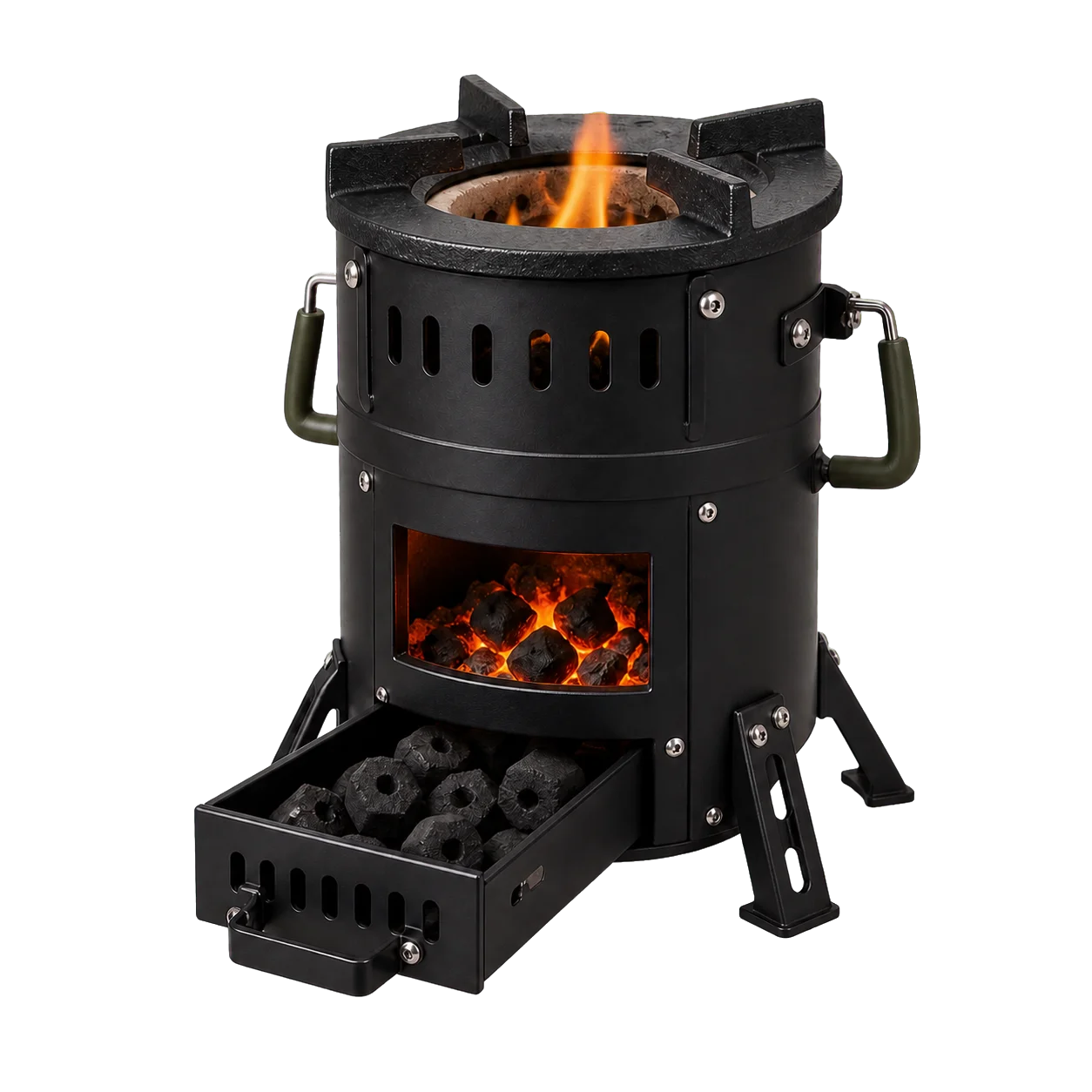
These charcoal rocket stoves are documented around a declared briquette or lump-charcoal range, fuel-bed geometry, filled cookware load and cooled ash routine.
Product Focus
Briquettes and lump charcoal differ in size, density and ash. The selected basket depth, under-fire openings and residue clearance are documented with the nominated fuel and cooking duty.
The selected configuration states the fuel dimensions, batch mass and preparation used for its product record.
Grate position and residue space are recorded with the nominated fuel bed and intended service interval.
Pot-ring contact, base footing and operator access are checked with the nominated vessel and filled mass.
Design Details
The configuration record connects fuel-bed depth and lower-air openings with ash allowance, cookware contact and cooled service access.
Basket dimensions and retention features are recorded with the nominated briquette or lump-charcoal range and batch mass.
Opening area and grate height are documented for the selected fuel bed without implying efficiency or output beyond recorded evidence.
The top interface is checked with the nominated vessel base, filled mass and normal operator approach.
The service record identifies residue capacity, access steps and the full-extinguishing and cooling condition required before removal.
Specifications
Fuel dimensions, batch mass, vessel duty and ash behavior provide the basis for basket and body selection.
Materials & Finish
Body, grate, top and optional liner are specified by their actual duty.
The carbon-steel grade, thickness and coating limits are tied to the selected chamber and outdoor-care routine.
Cast-iron components are specified by section, nominated load and replacement strategy rather than by a general wear claim.
A liner is described only where included, with handling and replacement expectations stated separately.
Applications
The format suits customers with a known charcoal supply and supervised outdoor cooking routine.
The selected support can be specified around nominated simmering, boiling or wok-style cookware, the declared charcoal load and normal operator access.
Pot support and any grill interface are specified as separate documented configurations with their own fuel load and contact points.
A planned open-air backup setup can coordinate stored briquettes, cookware, fuel inventory, local rules and operating instructions.
OEM & Private Label
Private-label work can coordinate basket depth, air, ash service and top support with the destination fuel.
FAQ
Fuel form, basket geometry and cookware load determine which configuration and evidence apply.
Only when both fuel ranges are documented for the selected model. Their size, density and ash behavior differ, so shared compatibility should not be assumed.
Basket geometry, fuel dimensions, batch mass and the intended cooking duty establish the documented fill range for a configuration.
The lower openings and grate position form part of the recorded fuel-bed arrangement; grate condition and ash accumulation still require routine inspection.
Cookware must remain within the declared pot-ring contact range and filled-load condition documented for the selected model.
Only when it appears in the selected model's component list. Optional liners change mass, handling and replacement requirements.
Provide charcoal form and dimensions, batch mass or cooking duty, cookware, ash-service preference, materials, accessories, quantity and destination.