Representative Destination Fuel
Product records use the expected field material and preparation, with fuel type, dimensions, moisture, density and ash recorded in the product file.
Wholesale Rocket Stoves
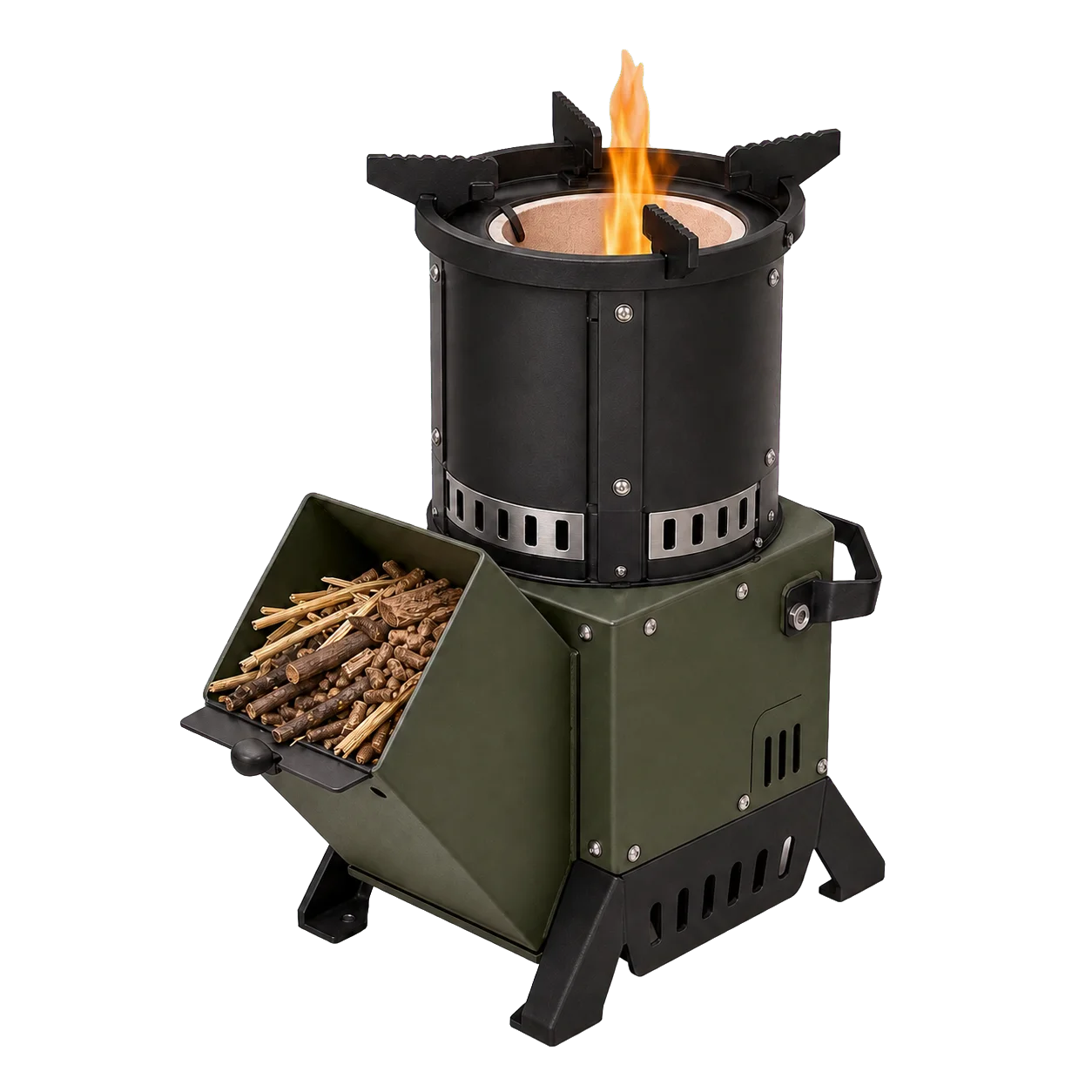
These biomass rocket stoves are configured around representative local feedstock, cookware and maintenance capacity rather than an undefined biomass claim.
Product Focus
Crop residue, twigs and pellets vary in preparation, moisture, bulk density and ash. A well-defined project identifies representative fuel, cookware, meal sequence and user maintenance before selecting the stove configuration.
Product records use the expected field material and preparation, with fuel type, dimensions, moisture, density and ash recorded in the product file.
The field brief documents vessel sizes, filled loads, meal sequence, refuelling method and normal user posture.
Inspection access, wear-part strategy and replacement logistics are specified against the tools and service capacity available locally.
Design Details
The product configuration links representative feedstock and cooking practice to chamber details, cookware contact and a documented maintenance plan.
The project records fuel type, dimensions, moisture, density and preparation used for the product record.
Grate, air openings and any insulation are documented with the documented material rather than an unrestricted biomass claim.
Pot support, feed access and controls are checked with the nominated vessels, filled loads and observed cooking sequence.
Ash removal, inspection steps and replacement references are matched to local tools, skills and parts distribution.
Specifications
The project specification covers feedstock, cookware, user routine, maintenance, field environment and destination performance evidence.
Materials & Finish
The chamber, body and wear parts should fit the project's fuel, maintenance capacity and supply chain.
Steel grade, gauge, joint method and coating limits can be specified alongside the local inspection and repair plan.
Stainless grade, thickness and component duty are declared for selected grates, baskets or wear parts, with replacement logistics tracked separately.
A liner is specified only for models that include it, with fragility, mass and field replacement addressed.
Applications
Household, relief and institutional programs use separate fuel, cookware, duty and support specifications.
Model selection can use documented local meals, fuel preparation, user feedback, cookware and service access.
The delivery specification can coordinate component inventory, stored condition, training materials and replacement logistics with the planned cooking duty.
Institutional vessels and duty cycles receive their own filled-load, chamber, operator-access and service plan rather than a scaled household assumption.
OEM & Private Label
OEM work can translate field data into a defined stove, accessory set and documentation package.
FAQ
Representative fuel, cooking practice and service capacity establish the evidence relevant to a proposed configuration.
No. Feedstocks vary widely and may require different preparation or support components. Only documented materials and conditions should be listed.
Representative samples should record fuel type, dimensions, preparation, moisture, density, ash behavior and seasonal availability.
Only when destination-relevant evidence supports that claim for the exact configuration and fuel.
Durability evidence should cover representative fuel, cookware, duty cycle, cleaning, transport, local maintenance and replacement parts over a defined period.
No universal benefit is assumed. A liner changes thermal behavior, mass, cost and service requirements and is checked for the documented model and project.
Provide fuel data, meals, cookware, users, duty cycle, performance targets, service plan, quantity and destination environment.