Usable Rack Space and Tray Fit
Clear width, depth, height, rack levels and door-removal clearance are documented with the nominated trays and food load.
Wholesale Oven Stoves
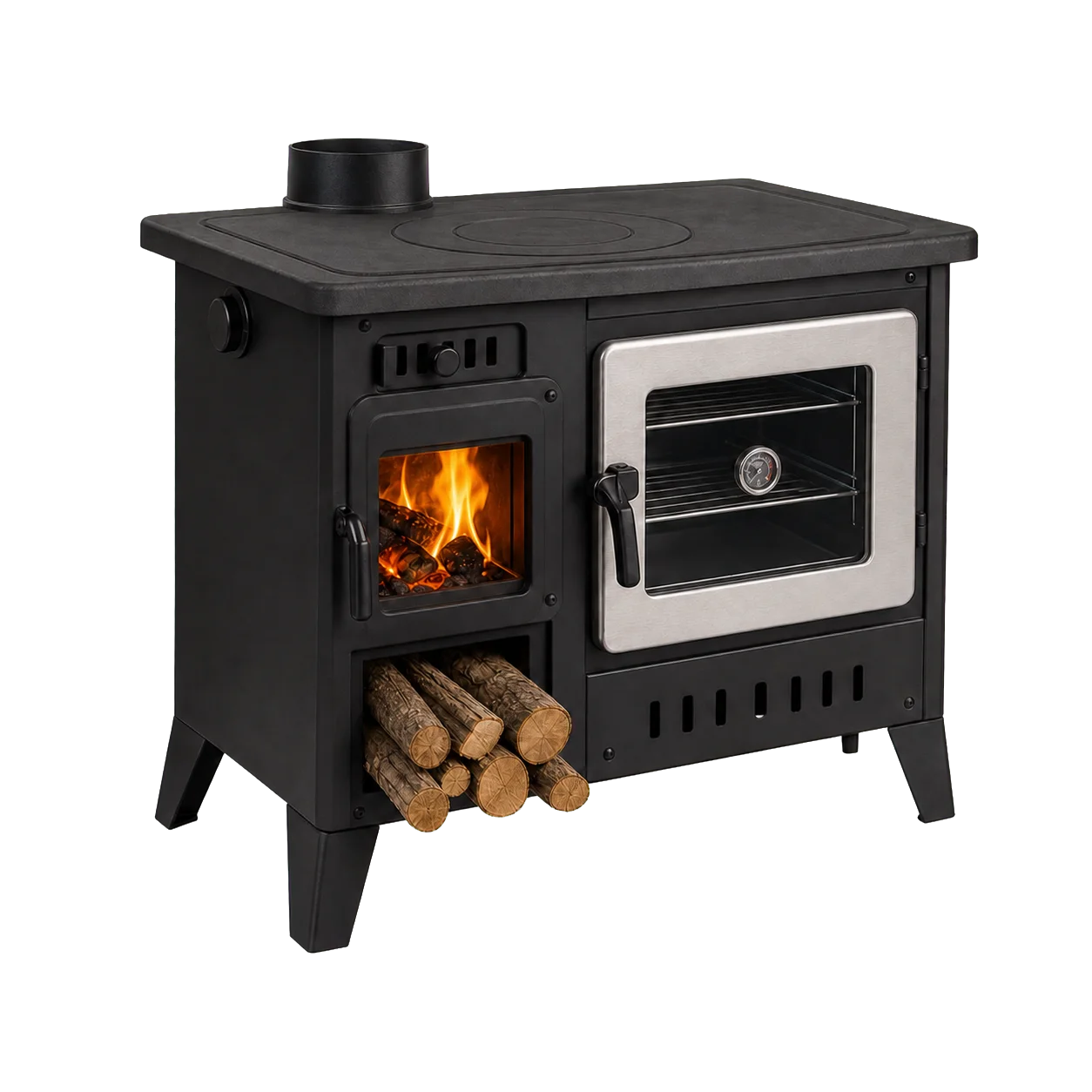
These wood-burning oven stoves are specified around nominated trays and cookware, a prepared-log routine, usable chamber dimensions and a documented hearth and flue arrangement.
Product Focus
Exterior volume does not establish cooking capacity, and chamber heat alone does not prove even baking. The selected model records tray fit, rack clearance, food load, refuelling sequence, temperature-indication method and the complete installed envelope.
Clear width, depth, height, rack levels and door-removal clearance are documented with the nominated trays and food load.
The product record identifies the included thermometer or observation method and the conditions under which readings are taken.
Oven and cooktop operation are documented separately from any room-heating output or compliance claim.
Design Details
The complete appliance record connects prepared fuel and cooking loads with chamber access, food-zone care and the required hearth and flue route.
Usable log length, door opening, fuel charge and refill sequence are recorded for the nominated cooking cycle.
Tray clearance, rack support and the stated indication method are specified without assuming uniform chamber temperature.
Contact areas, filled cookware loads, handle clearance and interaction with oven access are checked for the selected layout.
The instructions identify removable racks, chamber surfaces, ash areas and the complete-cooling condition for cleaning.
Specifications
Selection should account for food format, trays, vessels, wood supply, operating sequence and installation.
Materials & Finish
Structural body, direct food-contact components and cookware-contact top receive separate grades, thicknesses and care requirements.
Steel grade, thickness, reinforcement, joint method and coating limits are declared for the selected body and firebox.
Grade, thickness, finish and food-contact status are stated for each chamber or rack component, together with its cleaning method.
Top material, section, contact areas, filled-load condition, surface preparation and care are documented for the selected layout.
Applications
Outdoor kitchens, cabins and vehicle-supported camps require separate installation, capacity and transport specifications.
Validation starts from trays, cookware and meal-service sequence, then confirms weather protection and the outdoor flue route for the selected installation.
Only a documented configuration with the applicable hearth, clearances, chimney route, ventilation and local requirements is considered for cabin use.
An outdoor-use model can be specified for transport restraint, packed tools, setup surface, cookware loads and cooled repacking.
OEM & Private Label
Private-label development can align chamber, racks, top and tools with the destination menu.
FAQ
Usable rack space, cooking loads, fuel routine and installation conditions define the capacity of a selected model.
Use clear rack width, depth and height, usable levels, door clearance and verified tray fit rather than exterior shell volume.
Only documented results under defined fuel, food load, rack position and operating method should be stated. Wood-fired cooking requires active management.
The product record identifies the specific racks, trays, chamber surfaces or cooktop components covered by the food-contact declaration.
Only when simultaneous use has been documented for the selected model, fuel charge, cookware loads and oven cycle.
Only a model documented for that setting and installed with the applicable hearth, clearances, flue, ventilation and destination requirements should be considered.
Provide menu, trays and food loads, cookware and filled loads, prepared logs, installation setting, material preferences, accessories, quantity and destination.