Cookware, Oven and Operator Movement
The loaded-layout specification records crossings between the fuel door, occupied cooktop positions, oven door, serving area and ash access.
Wholesale Oven Stoves
These wood-fired range ovens are specified around simultaneous cookware positions, nominated oven trays, a daily fuel-and-cleaning routine and the complete fixed-kitchen installation.
Product Focus
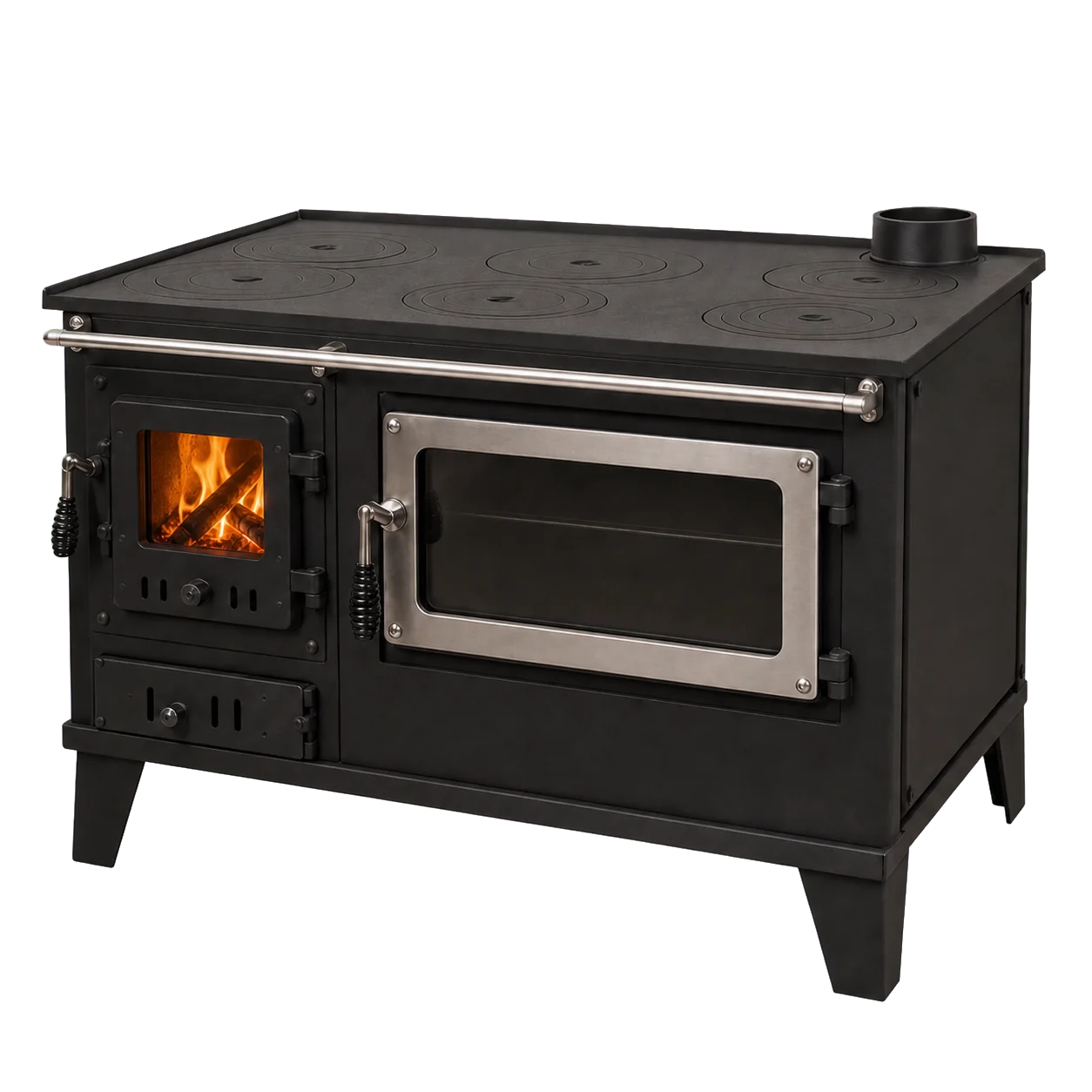
A range layout must be specified as an operator workflow, not as a collection of visible rings. The selected model records filled cookware positions, handle and door clearances, fuel tending, serving movement, cleaning access and the installed hearth and flue envelope.
The loaded-layout specification records crossings between the fuel door, occupied cooktop positions, oven door, serving area and ash access.
Any boil, simmer or warming description remains tied to the selected model, prepared fuel, firing method and nominated vessel.
Availability and replacement references for racks, seals, grates, rings, handles and controls are confirmed for the ordered range.
Design Details
A range starts with kitchen layout, vessel mix, cook cycle, and local hearth/flue reality, then confirms maintenance and ventilation conditions.
Door swing, prepared-log length, refill access and operator reach are checked with nominated vessels in their working positions.
Ring or plate contact, filled mass, handle clearance and observed heat behavior are recorded for each advertised position.
Rack dimensions, food loads, door swing and tray-removal clearance are checked within the installed kitchen layout.
The instructions separate cooled ash removal, oven cleaning and cooktop care according to component material and access.
Specifications
Selection should identify daily cookware, oven trays, prepared fuel, service capacity and the fixed installation.
Materials & Finish
Shell, firebox, cooktop, oven chamber, racks and visible trim receive separate material and care declarations.
Range shell and firebox materials are specified with their own thickness, reinforcement and finish requirements before declaring transfer to oven components.
Top material, section, ring construction, cookware-contact areas and filled-load condition are documented with surface-care requirements.
Grade, thickness, finish and food-contact status are declared for each chamber, rack or tray-support component.
Applications
The format is considered for kitchens with documented fuel supply, cookware, meal workflow, hearth, flue and service routines.
A selected configuration can be specified around the household cookware, trays, meal cycle, prepared logs and fixed installation plan.
Cabin use requires a documented model and the applicable floor protection, clearances, chimney route, ventilation and destination requirements.
Regional vessels, filled loads, longer meal cycles and local service capacity can define a farm-kitchen range specification.
OEM & Private Label
Private-label work can align top rings, oven, firebox and service parts with the destination cookware and menu.
FAQ
Daily workflow and documented cooking zones provide the basis for comparing range configurations.
Count only the vessel and tray positions that remain stable on the selected firebox, with confirmed handle reach and operator access after the first heat cycle.
Wood-fired temperature varies with fuel, load and operation. Only results for the selected model, rack position and documented method should be stated.
Treat kitchen-contact surfaces separately: cooktop, oven chamber, trays and racks each have independent food-contact declarations and service conditions.
Any room-heating statement requires model-specific performance evidence, installation conditions and the applicable compliance route.
Distributor stock should follow the selected revision and include only components whose wear and replacement intervals are explicitly proven in that configuration.
Submit kitchen dimensions, cookware workflow, tray count and installed chimney route before a final range model is fixed.