Pipe Construction and Joint Direction
The compatibility record states internal and external diameter, wall type, insertion direction, tolerances and connection method for both joints.
Wholesale Oven Stoves
These pipe ovens are specified as components of a named stove and chimney system, with documented connections, external support, food load and service access.
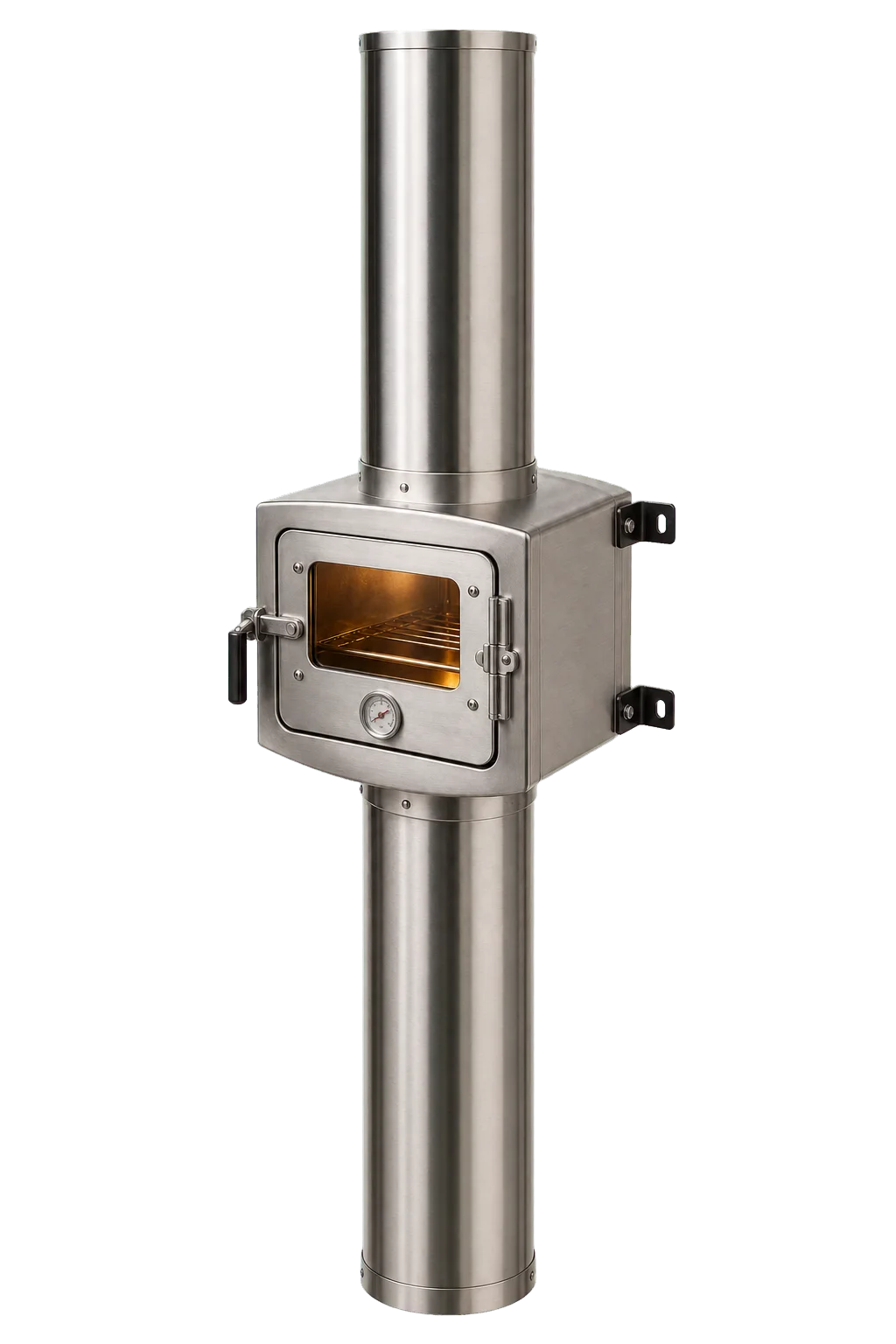
Product Focus
A pipe oven adds mass, joints and heat extraction to the chimney run before it provides baking space. Compatibility therefore depends on the exact host stove, outlet, pipe construction, joint direction, route, support and operating method, not nominal diameter alone.
The compatibility record states internal and external diameter, wall type, insertion direction, tolerances and connection method for both joints.
Oven mass, rack and food load, door operation and support reactions are documented without relying on thin chimney joints as the sole structure.
Flue behavior, inspection, sweeping and removal access are checked with the named stove, full chimney route, fuel and operating method.
Design Details
The system specification follows the chimney route through both oven connections while recording support reactions, food access and cleaning clearance.
Diameter, wall construction, insertion direction, tolerance and retention are recorded for both connections to the named pipe system.
Bracket or stand reactions and movement are checked with the oven, rack, nominated food load and open-door condition.
Door swing, rack movement, temperature indicator and food handling are checked against supports and the chimney without assuming stability.
The installed layout records the inspection route, cleaning tools, disassembly steps and cooled removal access for both systems.
Specifications
The compatibility record combines the exact stove, pipe geometry, chimney route, installed support, food load and cleaning method.
Materials & Finish
Hot pipe joints, structural body, food-zone surfaces and optional viewing parts receive separate material declarations.
Grade, thickness, joint construction and component function are stated separately for flue interfaces, structural panels and chamber surfaces.
Material, thickness, finish, food-contact status, support and cleaning method are identified separately from external pipe and bracket hardware.
Glass or mica material, frame, seal, temperature duty and confirmed replacement reference are declared only where included.
Applications
Each application requires an exact stove, chimney, support, food load and service arrangement.
The named stove, pipe, support, stove jack, clearances, ventilation and shelter requirements are specified as one installed system.
A fixed camp setup can specify transport restraint, external oven support, chimney route, food load and cooled service access.
The complete outdoor chimney and food workflow can be coordinated for joint fit, support, draft, sweeping and chamber cleaning.
OEM & Private Label
Private-label work begins with the host stove and chimney rather than a generic diameter request.
FAQ
Host-stove compatibility, installed support and chimney service access precede any cooking-capacity statement.
No. Internal and external diameter, wall type, joint orientation, tolerance, retention, support and the named host stove also determine compatibility.
Added joints, cross-section, heat extraction and the full flue route can change operation. Any effect must be documented with the exact stove, fuel and method.
Use clear rack dimensions, food load, door opening and tray-removal access rather than exterior shell volume.
No. Only an exact stove, flue, support, clearances and compatible stove-jack shelter installation should be documented for that setting.
The system record identifies inspection points, sweeping tools, removal steps and access required by both the host chimney and oven.
Provide host-stove model and outlet, pipe dimensions and wall type, joint direction, chimney route, support, food format and load, quantity and destination.