Representative Pellets
Agree dimensions, composition, density, moisture and fines for the intended fuel.
Wholesale Oven Stoves
Pellet oven stoves combine an oven with a model-specific pellet basket or feed system. Choose the fuel specification and loading method alongside tray size, food load and baking cycle.
Product Focus
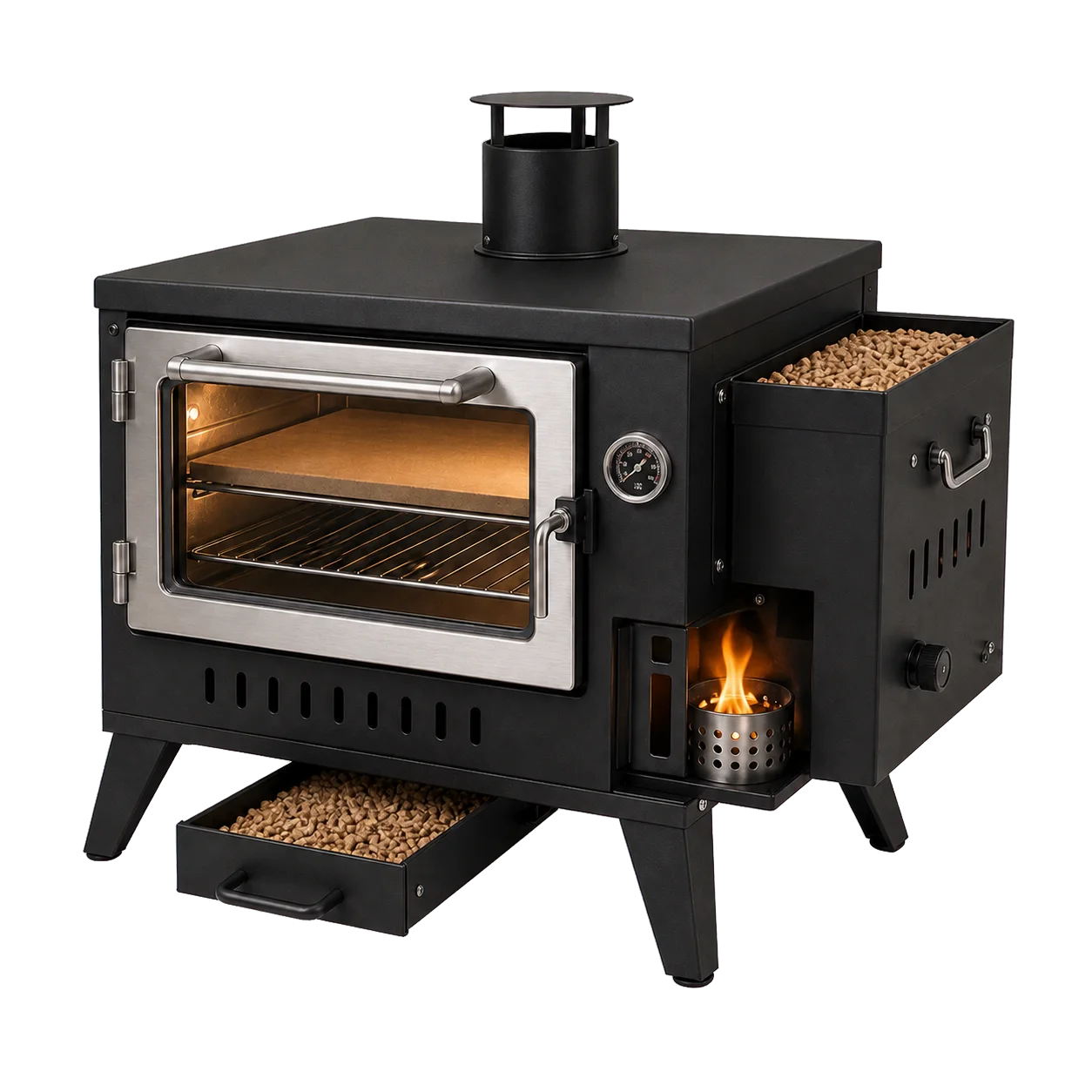
Pellet oven stoves combine an enclosed cooking chamber with a pellet basket or a model-specific feed system. The fuel unit supports and supplies the pellets, while racks or trays carry the food independently of that container’s capacity. Pellet properties and loading method affect the cycle; a side hopper-like assembly does not prove automatic feeding or unattended operation.
Agree dimensions, composition, density, moisture and fines for the intended fuel.
Confirm the actual basket or feed system, usable fill range and supervision requirements.
Use a hot-refill procedure only where the selected model specifically permits it.
Design Details
Keep fuel handling, oven capacity and cleaning specific to the chosen configuration.
The basket or feed components retain fuel and provide the openings used by the selected system. Pellet size and fines need to match that geometry to establish a suitable fuel specification.
A batch design starts with a set fuel charge, while other models may provide a supported feed arrangement. Supervision remains required, and hot refilling is allowed only under an explicit model-specific procedure.
Racks position the food within the chamber, and the door provides the handling route. Food capacity depends on those dimensions and loads, not on the apparent size of the pellet container.
Pellet combustion leaves ash in fuel-handling areas, while cooking leaves residue on racks and chamber surfaces. Those components need separate cleaning access after full extinguishing and cooling.
Specifications
Agree pellet properties, loading method, fill range, food load and any permitted refilling procedure.
Materials & Finish
Fuel-contact parts, structure and food-contact components have different requirements.
Confirm grade, thickness, perforation, joints and wear inspection needs.
Compare grade, finish limits and storage care for each construction.
Specify food-contact materials, supported loads and cleaning access by component.
Applications
Use a known pellet supply and a model-specific supervised operating routine.
Match the pellet specification and oven load to a supported outdoor cooking cycle.
Coordinate stored fuel, cooking components, packed inventory and cooled residue handling.
For a supported feed model, assess refill access, food load and ash intervals across the intended session.
OEM & Private Label
We can coordinate the fuel system and oven layout around your pellet sample and intended food loads.
FAQ
Confirm the loading method and supported pellet range before comparing runtime or capacity.
No. Pellet dimensions, composition, density, moisture and fines affect feeding and combustion. Use the specification supported by the model.
Confirm the actual fuel container, usable fill range and loading method. A hopper-like component does not prove automatic feeding.
Only if the model explicitly permits supervised hot refilling with defined access and hot-surface precautions. Otherwise finish the batch and allow full cooling before handling.
Use results that identify pellet specification, fuel weight, food load, rack position, ambient conditions, temperature measurement and operating sequence.
Follow the instructions for the fuel container, feed components, ash area, racks and chamber, including full cooling before service.
Provide representative pellet data or samples, recipes, food loads, cycle target, loading preference, chamber and rack needs, quantity and destination.