Open Vent and Non-Pressure Boundary
The documented tank remains open to atmosphere and carries no sealed or pressure-vessel claim unless separately engineered and approved.
Wholesale Oven Stoves
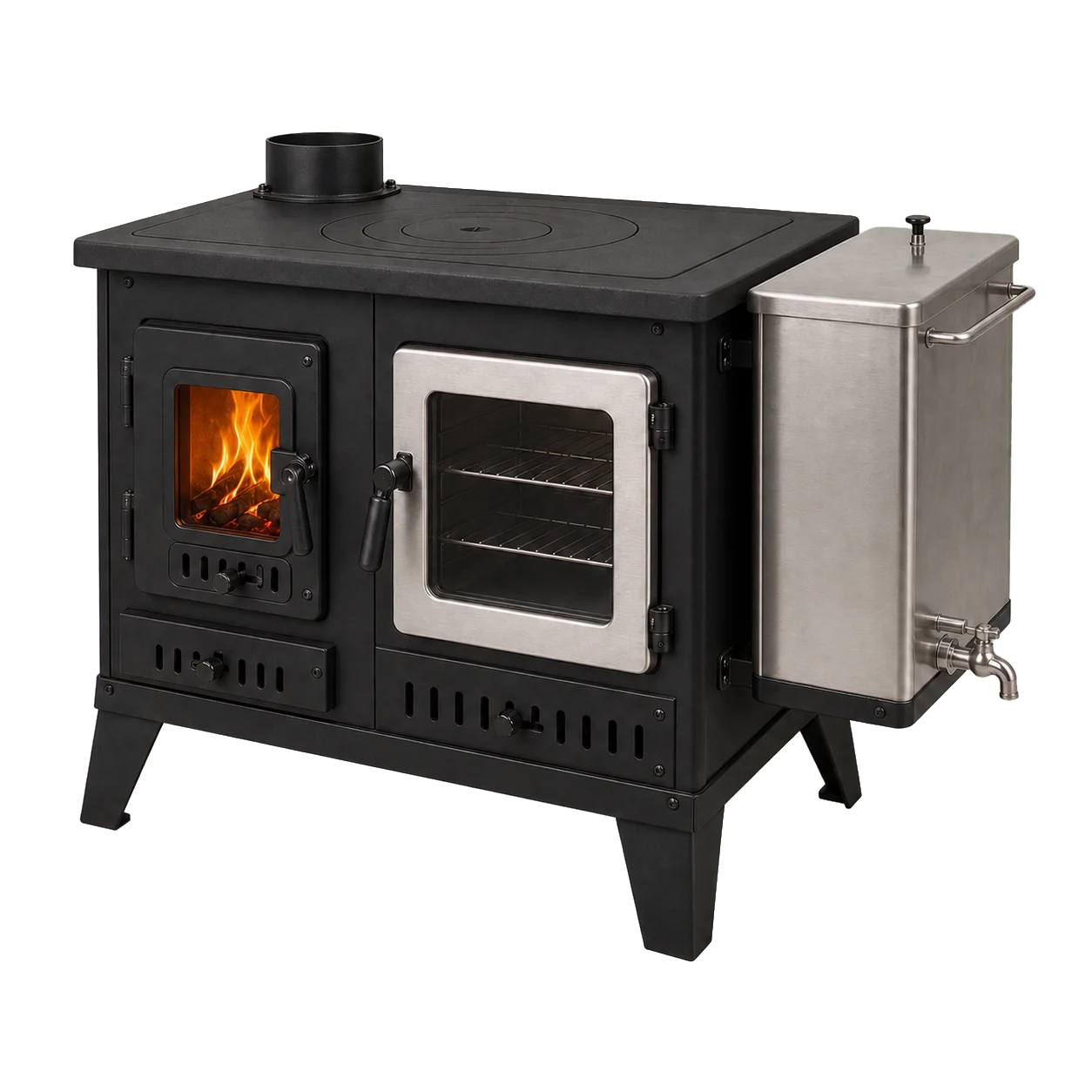
These oven stoves are specified around a nominated food load and an open atmospheric water tank with declared working volume, wetted components and supervised refill and dispensing procedures.
Product Focus
The water feature is documented independently from oven performance. The selected model records normal working fill, open vent, wetted materials and seams, refill and drain access, tap position, cleaning method and response to low-water or dry conditions.
The documented tank remains open to atmosphere and carries no sealed or pressure-vessel claim unless separately engineered and approved.
Every water-contact component is identified separately from the painted stove body, including grade, joining method and intended water role.
Instructions state the working fill range, refill condition and required action if water falls below the declared minimum.
Design Details
The combined-station specification records food loading separately from tank fill, heat contact, refill, dispensing, drainage and cleaning.
Rack dimensions, tray fit, food mass and cooking cycle are documented independently from the water-side function.
Tank location and contact area are recorded without inferring a universal heating rate or outlet temperature.
Vent path, normal fill range, refill access and spill route are inspected under the supervised operating procedure.
Reach, vessel placement, hot-surface clearance, drainage and cooled tank-cleaning access are checked for the selected layout.
Specifications
Food load, usable water volume, wetted materials, atmospheric venting and supervised operation should be defined together.
Materials & Finish
Firebox, oven food-contact surfaces, tank shell, seams, fittings and tap receive separate material declarations.
Steel grade, thickness, reinforcement, joint method and coating limits are stated for the structural and combustion components.
Wetted grade, thickness, seam or weld method, vent, intended water role, inspection and cleaning are declared for the selected tank.
Water-contact and food-contact materials, seals, replacement references and cleaning procedures are identified by component.
Applications
Each application requires a defined meal routine, water role, refill responsibility, cleaning plan and outdoor operating site.
A selected station can be specified around the nominated baking load, service-water volume, refill source, dispensing vessels and cleaning routine.
Vehicle storage, complete mass, tank draining, tap restraint, setup ground and outdoor-only operation can define an overland configuration.
Food-zone cleaning, water refill, outlet-temperature evidence, hot-water handling and operator responsibility can be documented for managed service.
OEM & Private Label
OEM development can coordinate usable water, chamber, tap and accessories after the intended water role is clear.
FAQ
Working fill, open venting, intended water role and supervised service define the water-side claim for a selected model.
No pressure capability is implied. The described tank is treated as open to atmosphere unless a separately engineered and documented system states otherwise.
Only when wetted materials, seams, manufacturing controls, cleaning method and destination requirements support a declared potable-water use.
The model instructions state the prohibited or controlled dry-heating condition, shutdown response, cooling requirement and inspection before refill.
Use the normal working fill below the vent or required free space rather than total shell volume.
Only when the selected model documents cooled removal, connection sealing, support and reinstallation inspection.
Provide intended water use, normal working volume, wetted-material requirements, refill and drain routine, oven food load, fuel, quantity and destination.