Primary Hotplate Position and Filled Load
The main and secondary plate areas are identified by firebox position and observations made with nominated cookware and fuel.
Wholesale Oven Stoves
These hotplate oven stoves are specified around nominated vessels and food loads, usable lower-rack space, observed plate and chamber behavior and the intended installation.
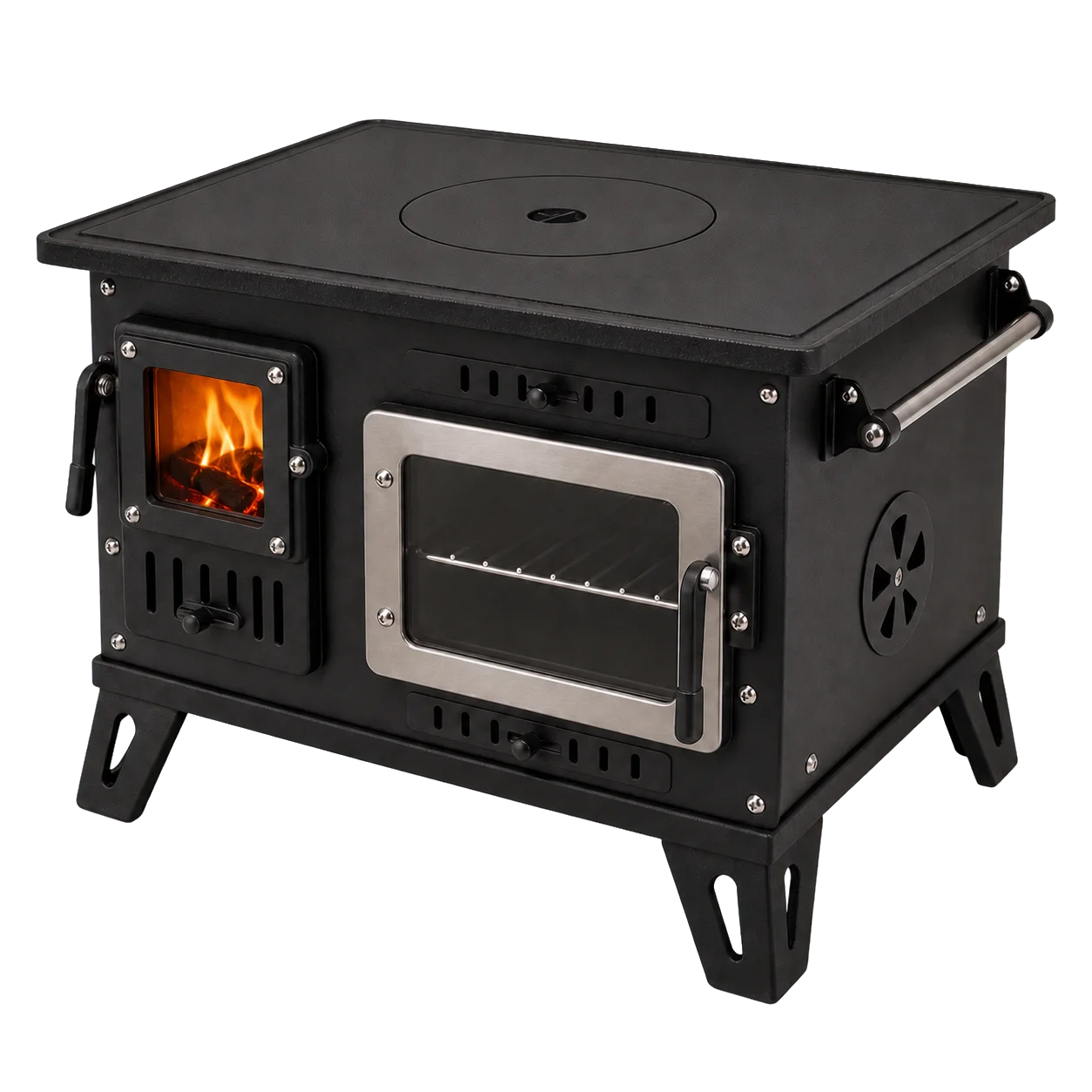
Product Focus
Top cooking and enclosed baking draw from the same firebox through different paths. The selected model records which task leads, the filled cookware and oven load, observed behavior during simultaneous use, fuel management and cleaning access.
The main and secondary plate areas are identified by firebox position and observations made with nominated cookware and fuel.
Clear chamber dimensions, rack positions, food load and tray-removal envelope define the lower oven capacity.
Any dual-use statement remains tied to the complete model, fuel charge, cookware and food loads, indication method and operating sequence.
Design Details
The product record states how fuel and heat-path geometry interact with loaded top cookware, the lower chamber and separate cleaning routes.
Fuel dimensions, door swing, refill route and chamber location are documented with the nominated top and oven loads in place.
Plate flatness, contact points, movement and observed heat behavior are checked with nominated filled vessels.
Rack fit, door clearance, food load and temperature-observation location are specified without assuming uniform temperature.
The instructions identify separate access, tools and complete-cooling conditions for ash, plate care and food-residue removal.
Specifications
Selection should identify the primary cooking task, vessel load, rack format, fuel and installed exhaust.
Materials & Finish
Material claims are segmented across the hotplate deck, oven chamber and frame, because cast-iron heat retention, steel support and insulation behavior are not interchangeable.
Steel grade, body and firebox thickness, reinforcement, joint method and finish limits are stated for the selected shell and working assembly.
Plate grade or casting, section, flatness, cookware-contact areas, filled-load condition and care are documented.
Material, thickness, finish and food-contact status are identified separately from painted exterior surfaces, together with the cleaning method.
Applications
Cabin, outdoor and off-grid settings receive separate cooking-load, installation and service specifications.
Cabin use requires a documented model with nominated cooking loads and the applicable hearth, clearances, chimney route, ventilation and local requirements.
An open-air configuration can be specified around the planned menu, loaded plate and oven access, ground condition, weather plan and local fire rules.
Prepared fuel, cookware, food loads, meal sequence and maintenance capacity can define the combined appliance configuration.
OEM & Private Label
Private-label choices can align plate positions, oven rack, fuel access and service parts with the target cuisine.
FAQ
The primary cooking task, simultaneous loads and installed configuration define the relevant plate and oven evidence.
Only when the complete model has been documented with the stated fuel charge, cookware and food loads, indication method and operating sequence.
Its location and observed behavior are recorded with the documented firebox position, fuel, operating method and nominated cookware.
Cast iron and steel have different seasoning, corrosion and cleaning requirements. Selection follows the menu and maintenance routine.
Use clear rack width, depth and height, usable positions, food load, door opening and tray-removal clearance.
Only when the selected model, grate, air arrangement and instructions explicitly document a charcoal configuration.
Provide vessel bases and filled loads, oven trays and food loads, primary task, simultaneous-use need, fuel, indication method, installation, materials, quantity and destination.