Briquette or Lump-Charcoal Batch
Fuel dimensions, batch mass, tray depth and preparation are stated for the selected configuration rather than grouped into one charcoal claim.
Wholesale Oven Stoves
These charcoal oven stoves are specified around a declared briquette or lump-charcoal batch, fuel support, roasting load, chamber conditions and cooled ash routine.
Product Focus
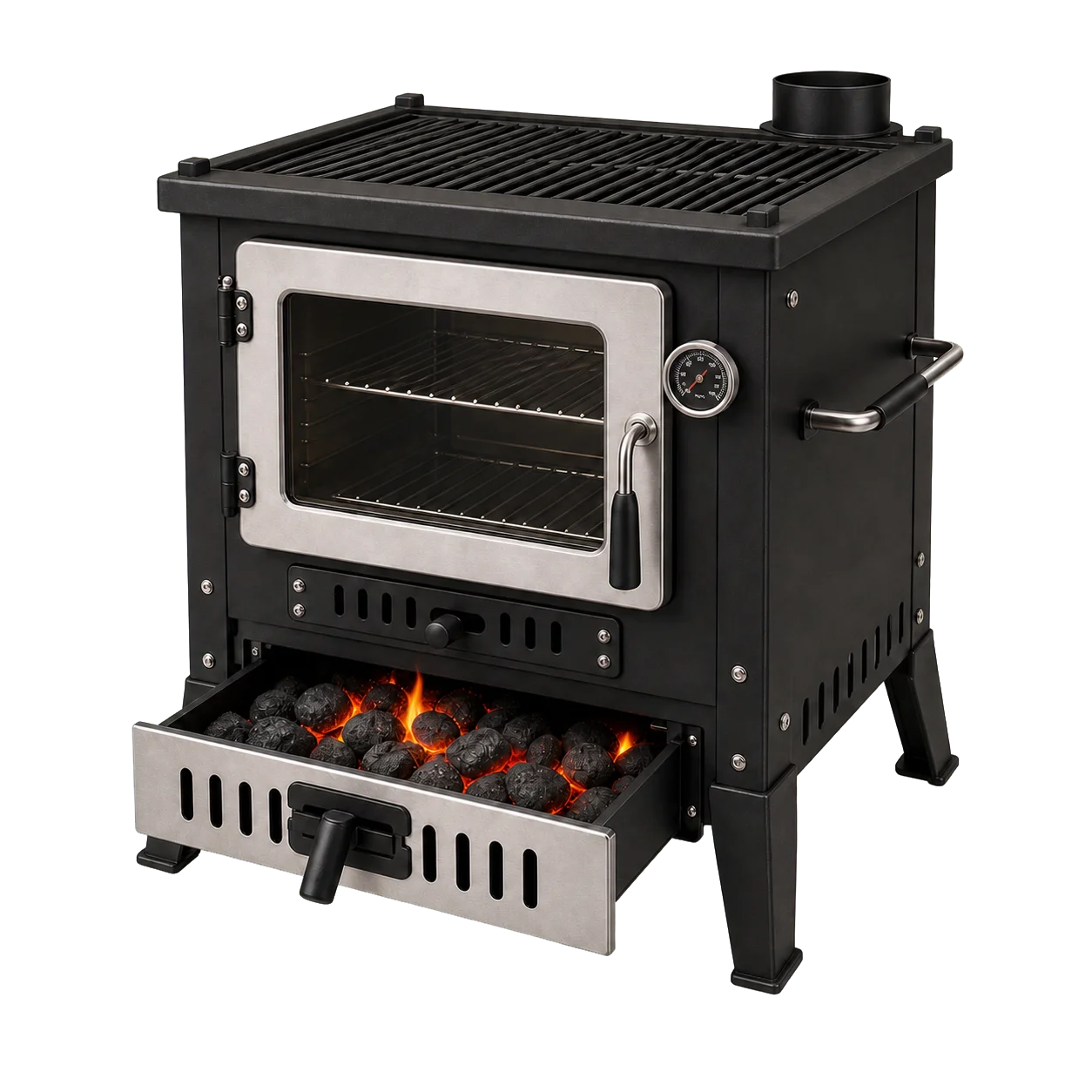
Briquettes and lump charcoal differ in dimensions, density and ash behavior. The selected model records fuel batch and depth, grate and lower-air geometry, roasting vessel and food mass, rack position, refill method and residue interval.
Fuel dimensions, batch mass, tray depth and preparation are stated for the selected configuration rather than grouped into one charcoal claim.
Clear rack dimensions, supported mass, vessel clearance, door opening and removal path define roasting capacity.
The documentation identifies residue capacity, tray removal and separate cooled-cleaning steps for ash and food-contact components.
Design Details
The roasting-cycle record connects the declared charcoal batch with fuel support, chamber openings, food load and residue removal.
Area, depth, retention, grate position and batch mass are recorded for the nominated briquettes or lump charcoal.
Opening dimensions and positions are documented without assuming temperature stability or uniformity.
Rack support, food mass, vessel clearance, door movement and temperature-observation method are checked for the selected cycle.
The instructions identify ash capacity, tray-removal tools, complete-cooling condition and separation from food-zone cleaning.
Specifications
Fuel form, food load, cooking method and ash interval should be defined together before chamber size is selected.
Materials & Finish
Structural body, fuel support, ash-contact parts and food-zone components receive separate material and service declarations.
Body grade, thickness, reinforcement, joint method, finish location and storage care are stated for the selected construction.
Material, thickness, perforation or bar section, batch load, removal method and wear inspection are documented for the selected fuel setup.
Material, finish, food-contact status, nominated load, removal access and cleaning instructions are declared for each oven component.
Applications
Each use case requires a known charcoal specification, roasting load, supervised cycle and cooled ash plan.
A selected configuration can be specified around the nominated roast, vessel, fuel batch, rack position and local outdoor-fire requirements.
The enclosed roasting cycle can be documented separately from any open-grid grilling configuration, food load and grease routine.
Rack capacity, batch rhythm, fuel refill, ash interval, food-zone cleaning and operator responsibility can be defined for managed service.
OEM & Private Label
Private-label work can coordinate coal tray, rack, chamber and tools with the destination menu.
FAQ
Fuel form, batch mass, roasting load and ash behavior define the evidence applicable to a selected model.
Only when both fuel ranges are documented for the selected tray and grate. Their dimensions, density and ash behavior differ, so shared compatibility is not assumed.
Use clear rack dimensions, supported food mass, vessel clearance, door opening and the nominated roasting cycle rather than shell volume.
No. Chamber geometry, openings, fuel distribution, food load and operation all affect temperature; an evenness statement requires a defined trial.
The instructions identify the extinguishing condition, tray or residue path, tools and full-cooling requirement before ash service.
No generic charcoal oven is suitable for indoor operation. Follow the selected model's outdoor-only instructions and carbon-monoxide warnings.
Provide charcoal form and dimensions, batch mass, roasting vessel and food load, rack position, refill and ash method, materials, tools, quantity and destination.