Simultaneous Household Cookware Loads
Each advertised worktop position records vessel base, filled mass, handle clearance and interaction with the fuel and oven doors.
Wholesale Oven Stoves
These cabin cookstoves are specified around household cookware and oven loads, a prepared-wood and cleaning routine, model-specific service parts and the complete fixed installation.
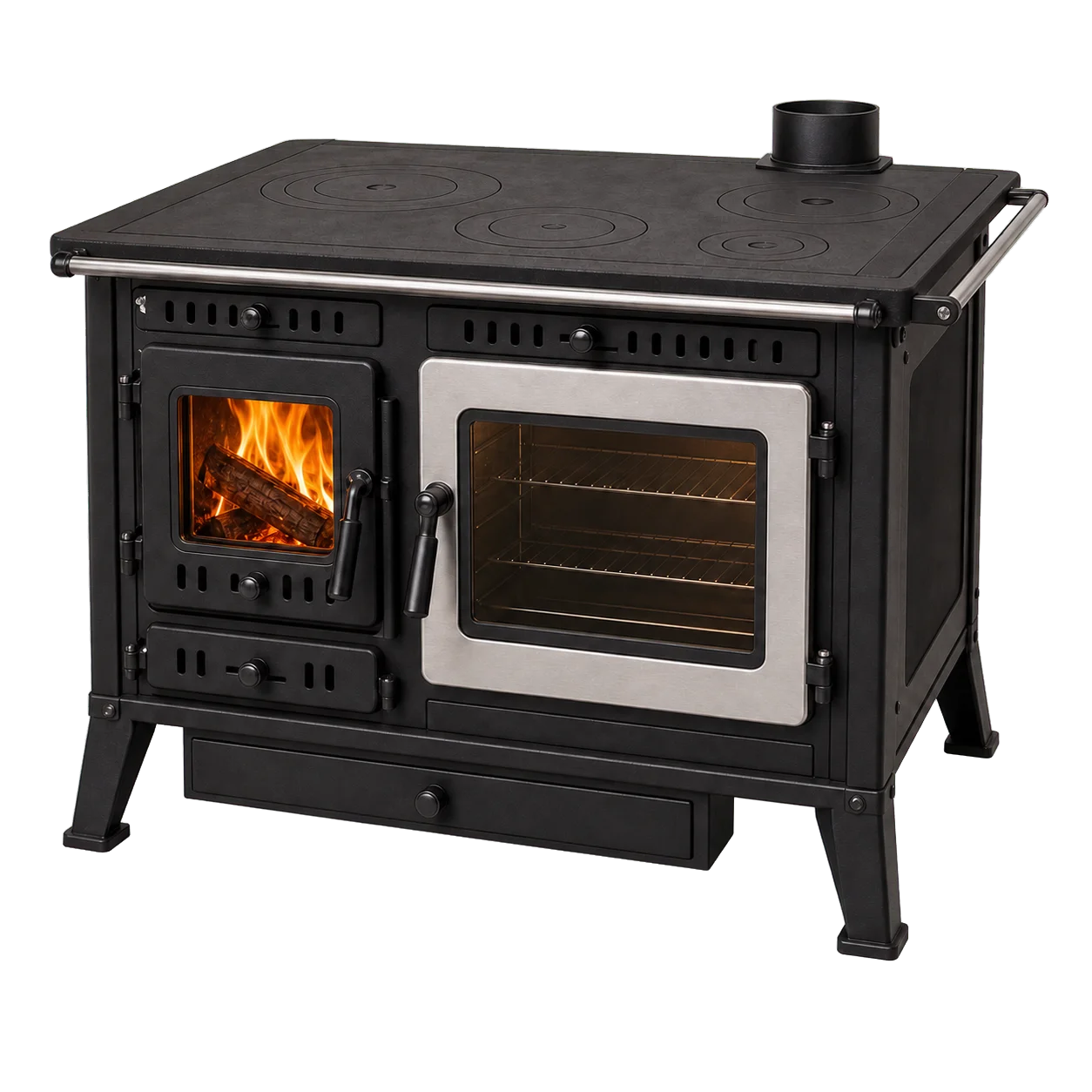
Product Focus
A cabin cookstove is specified as part of the kitchen layout. The selected model records simultaneous filled cookware, oven trays and food loads, fuel-door and serving routes, daily ash and surface care, service-part availability and the full hearth and chimney envelope.
Each advertised worktop position records vessel base, filled mass, handle clearance and interaction with the fuel and oven doors.
Clear rack dimensions, supported food mass, door swing and tray-removal path define the documented oven capacity.
Availability and revision references for seals, grates, rings, racks, handles and controls are confirmed for the ordered model.
Design Details
Cabin kitchen routines, menu cycles and fixed installation constraints should guide menu load, tray design and maintenance intervals.
Log dimensions, door swing, refill route and operator reach are checked with nominated cookware occupying the worktop.
Ring or plate contact, filled mass, handle clearance and movement are recorded for each advertised vessel position.
Rack support, food load, door opening and tray movement are specified around the planned kitchen circulation area.
The instructions separate ash removal, worktop maintenance and food-zone cleaning with access and service intervals stated.
Specifications
Cookware, oven trays, prepared fuel, household use and the fixed installation belong in one specification.
Materials & Finish
Structural body, cookware-contact top and oven food-zone components receive separate material, load and care declarations.
The main body, cooking top and chimney components are documented by material, reinforcement and finish limits for safe service and replacements.
Top material, section and filled-load behavior are documented with ring geometry and surface-care requirements.
Material, finish, food-contact status, supported food load, removal access and replacement references are declared by component.
Applications
Each household setting requires documented cookware, fuel, meal workflow, service capacity and installation conditions.
This layout is defined by household cookware, tray count, meal sequence, prepared logs and the intended hearth-and-chimney route.
The cookstove configuration can be documented as one cooking option without implying room-heating performance or removing installation requirements.
Regional vessels, filled loads, food batches, local fuel and remote-service needs can define a farm-kitchen configuration.
OEM & Private Label
Private-label work can coordinate top rings, oven, firebox and service parts with family cookware and recipes.
FAQ
Household cookware loads, oven access, daily service and fixed installation define the relevant cookstove configuration.
Count only the positions verified on the named cabin layout, where handle clearance and access remain safe under daily use.
Any marketed room-heating output requires separate model-specific evidence, installation conditions and the applicable compliance path.
Declare food-contact materials separately by cooktop, tray, rack and oven-chamber zones so cabin maintenance follows the real heat path.
Availability is confirmed by model and revision for door seals, grates, rings, racks, handles and controls, with replacement instructions where applicable.
No. A fixed solid-fuel cookstove requires the documented flue, hearth, clearances, ventilation and qualified installation where applicable.
Provide cabin plan, menu load, vessel sizes, hearth layout, flue route and destination for safe planning and realistic production quotes.