Usable Grill Area
Measure food-contact width, depth and grid spacing without counting handles or the frame.
Wholesale Oven Stoves
BBQ grid oven stoves combine an open grill with an enclosed roasting chamber. Specify each food zone separately, then check simultaneous cooking, fuel access and grease management.
Product Focus
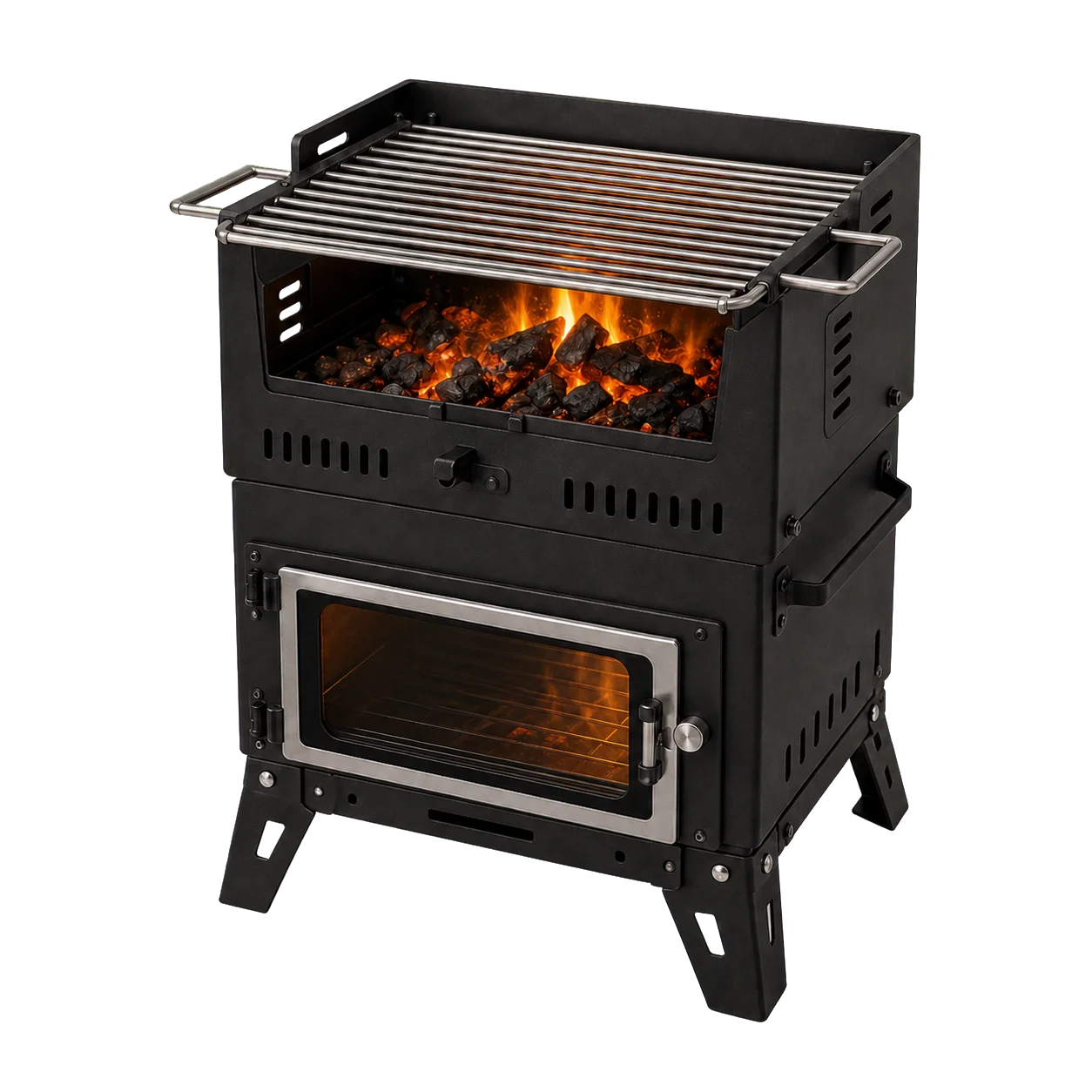
A BBQ grid oven stove combines an open cooking grid with an enclosed chamber for roasting or baking. The two food zones share the appliance but have different supports, tools and residue-handling needs. Compare each zone’s usable area first, then assess whether the selected model supports the intended combined cooking load.
Measure food-contact width, depth and grid spacing without counting handles or the frame.
Check rack dimensions, tray fit, food weight and removal clearance.
Plan distinct collection and cleaning steps for grease, food residue and ash.
Design Details
Review grill support, oven space and fuel access under the intended combined load.
The grid carries food over the cooking heat while leaving gaps between its bars. Bar spacing, material and support determine the usable contact area and suitable food or utensil sizes.
Racks support trays or roasting vessels inside the oven. Food height, the rack load limit and the door opening define the working load and handling space.
The fuel arrangement serves the selected combined appliance. Access for tending must remain usable when the grill and oven are loaded; two visible food zones do not automatically prove simultaneous capacity.
Grease and food residue arise from cooking, while ash comes from the fuel area. Specify separate collection and cleaning procedures for each, with complete cooling before servicing.
Specifications
Specifications should identify the usable grid area, oven rack, food loads, fuel and residue-handling method.
Materials & Finish
Separate structural materials from components used for food and grease handling.
Specify structural grade, thickness, reinforcement and finish separately from food-contact components.
Compare stainless or cast-iron construction, spacing, load and surface-care requirements.
Confirm materials, food-contact suitability, removal access and cleaning methods.
Applications
Match the combined cooking layout to the menu and outdoor service routine.
Plan grill-and-roast menus around combined loads and operator movement.
Secure grids and racks for transport and separate food-contact parts from soot-bearing components.
Agree cooking throughput, fuel access, grease service and operator responsibility.
OEM & Private Label
We can coordinate grid dimensions, roasting space and cleaning accessories around your menu.
FAQ
Combined capacity must be checked with both food zones and fuel access in use.
Only where the selected model supports the combined food loads with sufficient fuel access and an appropriate operating method.
Measure the usable cooking width and depth of the grill, excluding handles, frames and areas that cannot support food. State the bar spacing separately.
Confirm material and food-contact suitability separately for the grid, racks, trays, chamber surfaces and relevant grease components.
Use the specified channels, trays or collectors and their cleaning procedure after full cooling. Grease and combustion ash need separate handling.
Only in supported configurations with the correct grate, airflow, ash arrangement and instructions for each fuel.
Provide your grilling and roasting menu, food loads, grid and rack sizes, simultaneous-use needs, fuel, grease-collection method, cleaning tools, packaging, quantity and destination.