Rack and Tray Fit
Check clear width, depth, height, level spacing and supported weight.
Wholesale Oven Stoves
Baking oven stoves should be selected around the recipes, trays and food loads you plan to use. Compare rack clearance, handling space and temperature data for the actual cooking cycle.
Product Focus
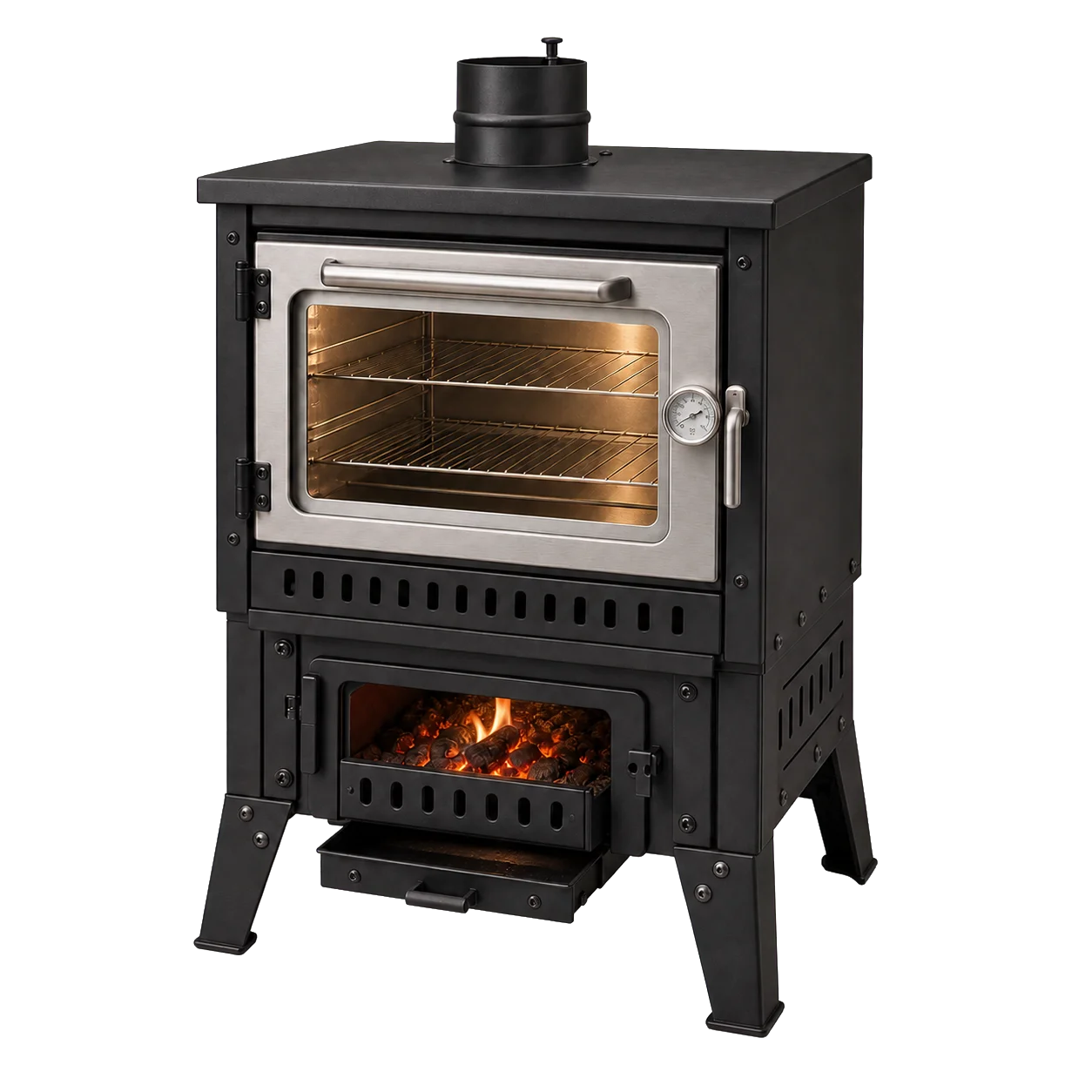
Baking oven stoves enclose racks and trays in a chamber heated by the selected solid-fuel arrangement. Rack height and spacing determine which tins or roasting dishes fit, while the door controls loading and access. Bread baking, roasting and other cooking tasks use that space differently, so baking performance is confirmed for the actual food and operating cycle.
Check clear width, depth, height, level spacing and supported weight.
Confirm whether an indicator is included, its position and the basis for any accuracy claim.
Assess evenness and recovery with defined food loads, rack positions, fuel and door-opening conditions.
Design Details
Review chamber layout, loaded racks and temperature measurement as one baking system.
The oven chamber receives heat through the selected stove layout. The route and surrounding construction affect operation, but appearance alone does not establish temperature distribution or baking performance.
Racks carry tins, trays or roasting vessels at specific heights. Their section, spacing and support need to suit the food weight and leave enough clearance for insertion and removal.
An indicator, where supplied, measures conditions at a particular location. Independent measurement points can be needed to assess chamber behavior, recovery or evenness for the intended recipe.
Racks and other removable parts, where provided, give access to food residue and chamber surfaces. The model’s cleaning method and full-cooling requirements govern their removal and service.
Specifications
Bread size, roasting vessels, batch sequence and fuel method determine the chamber and rack arrangement.
Materials & Finish
Structure, chamber surfaces and racks need separate material and load specifications.
Compare grade, thickness, reinforcement, joints and finish limits.
Confirm material, finish and food-contact suitability with an appropriate cleaning method.
Specify section, spacing, load and removal method for each usable position.
Applications
Match each configuration to the food format and permitted installation.
Use a suitable cabin model with the required hearth and flue installation, matched to loaf tins and batch size.
Plan tray dimensions, food weight, door access, fuel and cleanup for supervised outdoor use.
Evaluate each intended recipe and rack arrangement rather than extending one result to every food.
OEM & Private Label
We can coordinate chamber dimensions, racks and accessories around your recipes and evaluation requirements.
FAQ
Useful capacity and baking performance depend on the loaded rack arrangement and cooking method.
Measure clear rack width, depth and height, usable levels, supported food weight, door opening and fit with the intended tins or trays.
Evenness depends on the model, fuel, food load and rack positions. We can confirm it through a defined trial with set measurement points for your selected configuration.
Confirm the supplied indicator’s specification and installation position. Its reading does not establish the temperature throughout the chamber.
Record the preheat condition, door-open interval, new food load, rack position, fuel, measurement point, recovery target and elapsed time.
Identify the racks, trays, supports and chamber surfaces intended for food contact separately from painted exterior panels.
Provide recipes, food loads, tins or trays, rack needs, fuel, measurement method, performance targets, installation, quantity and destination.