Fuel Format Leads the Product Definition
Pellets, short wood pieces and gel containers require different holders, air paths and customer instructions. The intended fuel is therefore fixed before diameter, finish or accessory selection.
Wholesale Fire Pits
These compact outdoor flame products combine a declared fuel holder, stable table interface and protective retail packaging for patios, hospitality settings and gifting.
Product Focus
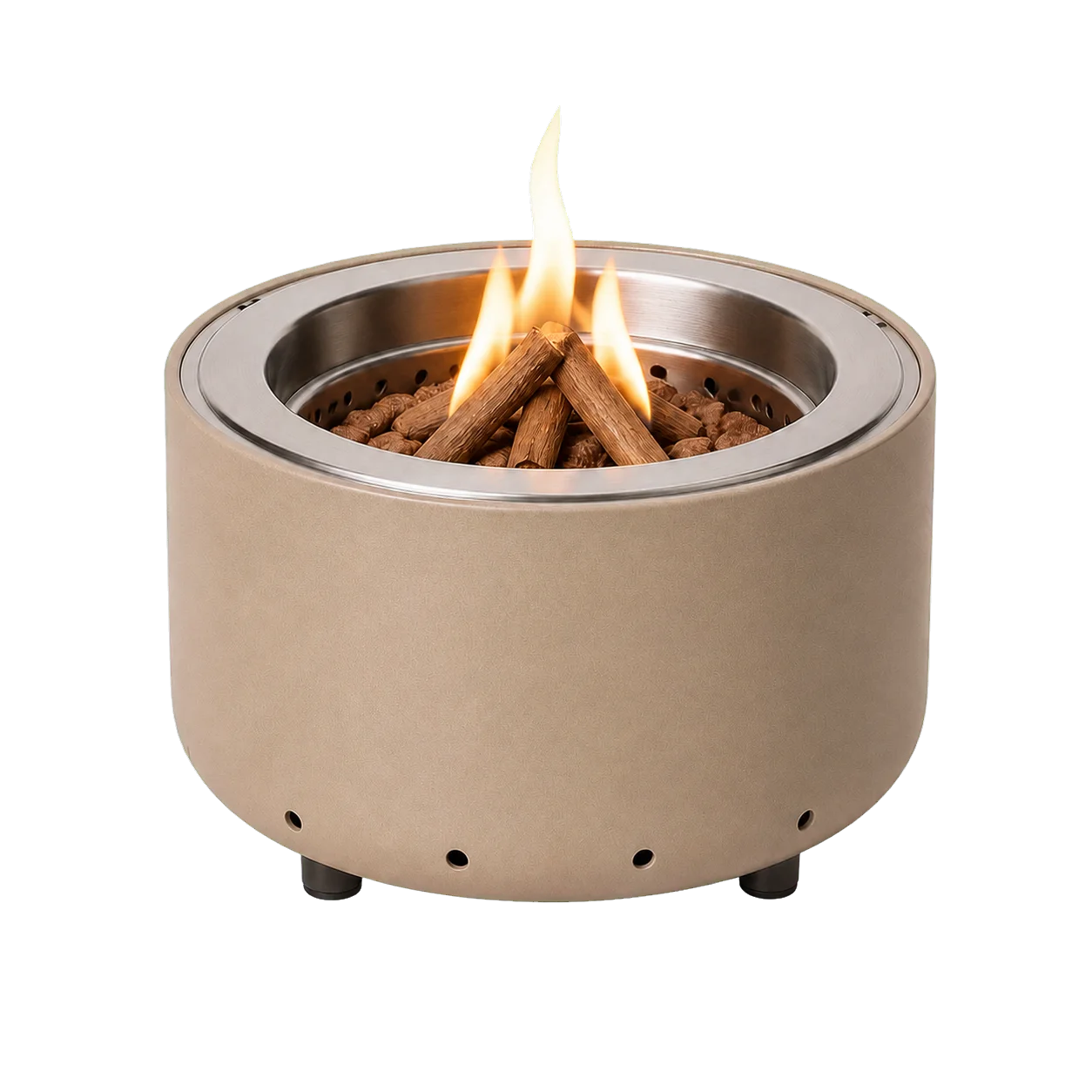
Tabletop fire pits are designed for outdoor ambience rather than space heating. A well-defined model matches a pellet basket, mini-wood chamber or documented gel holder with stable footing, surface-protection guidance and packaging that explains fuel, clearance and complete cooling before handling.
Pellets, short wood pieces and gel containers require different holders, air paths and customer instructions. The intended fuel is therefore fixed before diameter, finish or accessory selection.
Base geometry, included shield and the intended outdoor table category belong in the same specification. No compact fire product should imply that every tabletop surface is suitable without protection.
Seasonal visuals can support merchandising, while the carton should still list outdoor-only use, fuel-loading limits, clearances, cooling and cleaning guidance.
Design Details
Tabletop models depend on a stable base, a fuel-specific inner holder, controlled openings and a surface-protection message suited to compact outdoor furniture.
A pellet basket, mini-wood chamber or documented gel container holds its selected fuel in the intended position. Each holder is identified for that fuel so unsupported formats are not presented as interchangeable.
Air entry is arranged around the holder without weakening the small body or creating openings that release loose fuel.
Feet, an insulating gap or an included shield provide the declared interface with the intended outdoor table category.
Once fully extinguished and cool, the holder and residue components can be removed without turning a decorative outer shell into the ash container.
Specifications
Selection should account for the outdoor table surface, chosen pellet, mini-wood or gel configuration, complete footprint and included heat-protection parts.
Materials & Finish
Stainless fuel components, coated outer bodies and the base interface are declared separately; ceramic coating is presented as a finish, not a body material.
The heat-facing cup or basket can use a declared stainless grade selected for its perforation, forming and cleaning requirements.
Carbon-steel shells can carry black or buyer-specified colors where the coating is kept within its documented heat duty.
Table-contact feet or shields are specified separately from the fire chamber and paired with clear surface-protection guidance.
Applications
The small format suits ambience-led outdoor use when fuel, surface protection, building restrictions and local fire rules are verified without implying room-heating performance.
Compact models suit stable residential outdoor tables only where the table material, surface protection, stated clearances and local fire rules permit open-flame use.
A clearly defined fuel format and protective carton support gifting without presenting the product as an indoor decorative flame.
Hospitality operators can consider the format where fuel handling, supervision, table protection and local rules are controlled.
OEM & Private Label
Private-label options can coordinate holder, diameter, base, finish and carton after the intended fuel and table setting are fixed.
FAQ
Fuel format, table contact and customer instructions provide the basis for comparing colors and gift-pack options.
No. This format is positioned for outdoor visual ambience, not as a room or patio heater.
Only with a holder and air arrangement designed and documented for each fuel. A chamber that physically accepts another fuel is not sufficient evidence of compatibility.
Suitability depends on the base, included shield, heat transfer and table material. Instructions should name the intended outdoor surface category and require additional protection where appropriate.
The declared fuel holder, stable base or shield, any supplied residue-removal part and clear fuel, clearance and cooling guidance should be treated as the core set.
Yes, where the coating system is appropriate for the outer component and its heat exposure. Fuel cups and other direct heat zones may need a different material or finish route.