Panel Span Determines the Reinforcement Strategy
Side length, wall height and opening size establish the unsupported metal area. Formed edges or internal bracing can add stiffness without making the exterior unnecessarily heavy.
Wholesale Fire Pits
These rectilinear fire pits combine supported flat panels, controlled corner construction and accessories registered to the square opening.
Product Focus
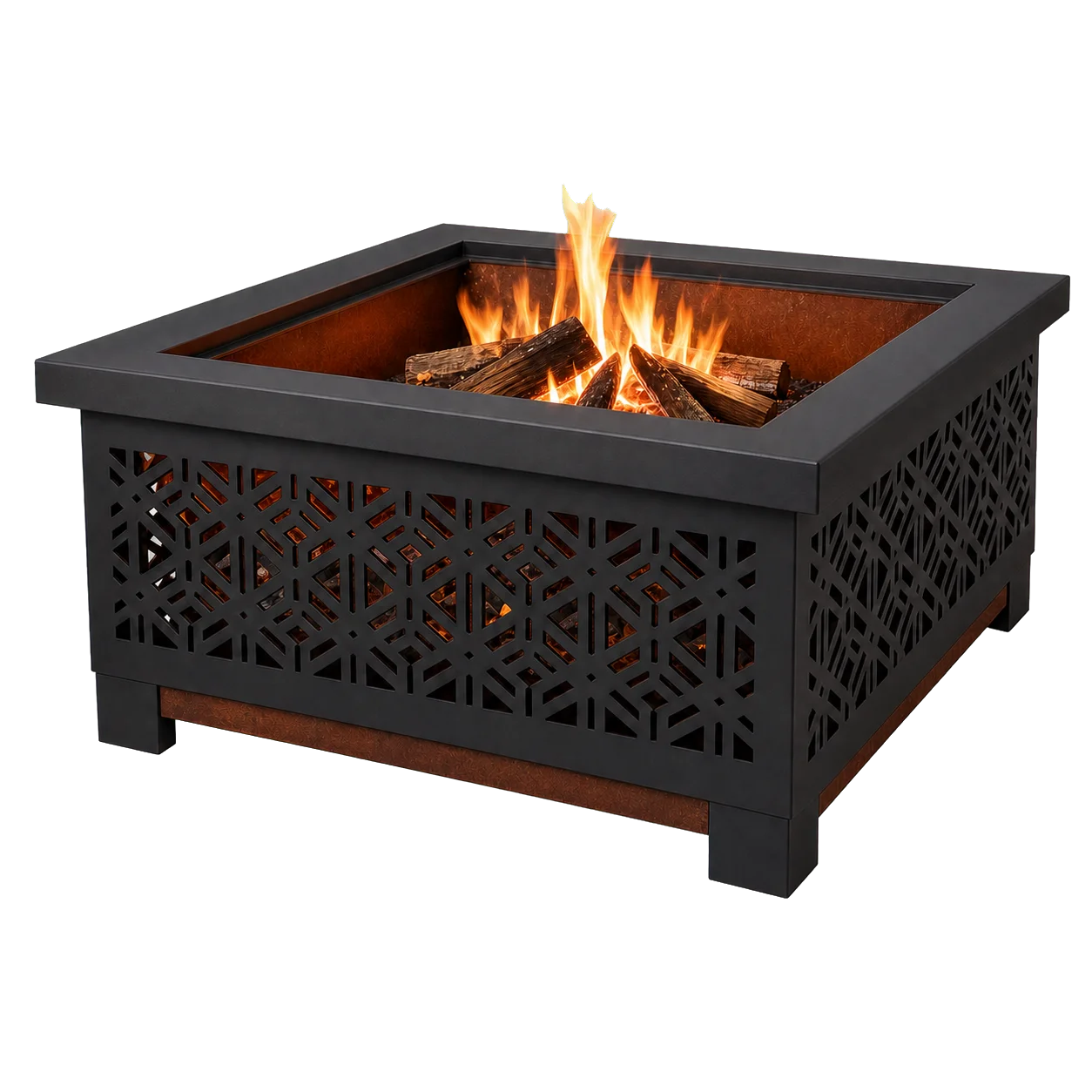
Square fire pits suit modern furniture and landscape layouts, but long flat sides and four corners respond to heat differently from a round shell. Panel gauge, folded returns, joint access and level footing must work together so the body remains aligned and its square screen or lid continues to fit correctly.
Side length, wall height and opening size establish the unsupported metal area. Formed edges or internal bracing can add stiffness without making the exterior unnecessarily heavy.
Folded, welded or fastened corners affect alignment, finish coverage and heat movement. The selected method is specified together with drainage and cleaning access.
Screens, lids and grates should locate on defined supports rather than balance loosely on the rim, particularly after the body has experienced repeated heating and cooling.
Design Details
Panel stiffness, corner construction, level footing and accessory registration define the geometric format.
Side length, wall height and internal returns establish the square fuel area and unsupported panel spans.
Folded, welded or fastened joints maintain alignment and provide access for complete finishing and inspection.
Formed returns or discreet reinforcement stiffen the top while creating a positive seat for square accessories.
Feet or a base frame support all four sides so a screen or lid does not compensate for a twisted installation.
Specifications
Side length, usable fuel area, wall height, corner construction and placement surface determine the appropriate model.
Materials & Finish
Steel grade, sheet thickness, folded returns and coating are considered together because broad flat walls reveal distortion and finish variation.
Carbon steel supports coated geometric bodies when gauge, folded returns and corner finishing are specified together.
Stainless provides an unpainted contemporary option, with visible welds, brushing direction and heat discoloration expectations defined.
Weathering steel suits architectural settings that accept evolving color, drainage requirements and runoff management.
Applications
The format aligns with rectilinear furniture and architecture when corner clearance, guest circulation and fuel access are planned.
Square bodies coordinate with rectilinear seating and paving where corners remain clear of guest circulation.
Plate geometry and weathering finishes can suit specified outdoor sites with prepared support and drainage.
Selected square models can serve supervised hotel or resort courtyards where corner clearances, fuel access, shutdown and maintenance responsibilities are documented.
OEM & Private Label
OEM development can coordinate side length, corner construction, feet, screens and lids across related models.
FAQ
Panel support and corner quality matter more than the simplicity of the outline.
Long flat sides can show heat movement more readily than curved shells. Gauge, formed returns and reinforcement should be matched to the span.
Folded, welded and fastened corners serve different cost, finish and service priorities. The complete body and intended material determine the appropriate route.
Only if it is specifically supported and load-rated for that purpose after the fire pit is fully extinguished and cold. A weather lid is not automatically a furniture surface.
They should register on defined ledges or supports with the intended clearance, rather than balance loosely on the outer rim.
They may be, provided placement, corner clearance, supervision, fuel rules and maintenance are controlled by the operator.