Diameter Defines Both Fire Area and Seating Relationship
Outer size is considered with the internal chamber, tending reach and the operating zone around chairs. These measurements provide a more useful comparison than nominal diameter alone.
Wholesale Fire Pits
These round fire pits combine a defined internal fuel area, stable all-around support and screens, lids or grates matched to each diameter.
Product Focus
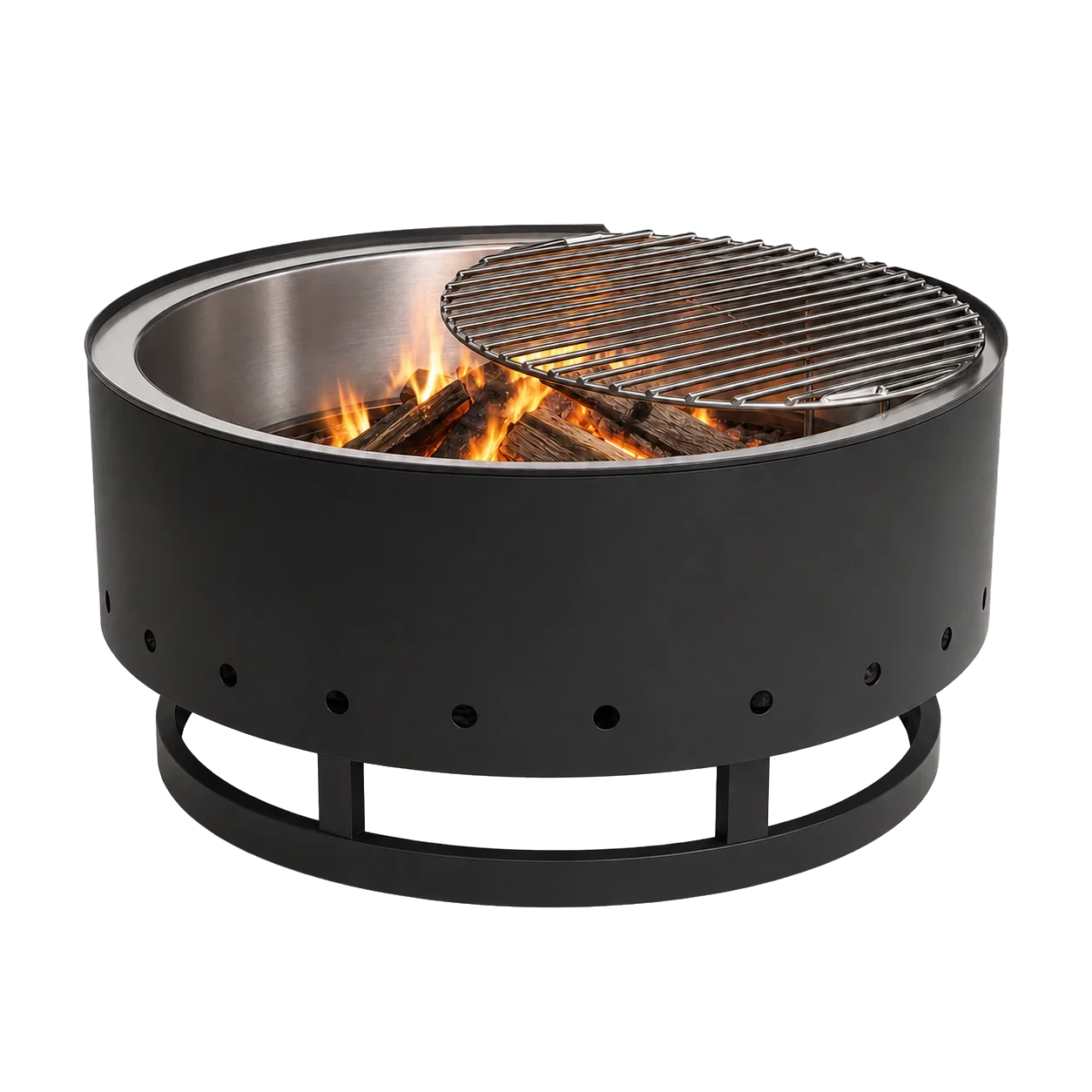
Round fire pits are often approached from several sides, making centered fuel placement, even rim support and predictable accessory seating especially important. A well-defined diameter system links the body, base and removable components without treating every circular model as interchangeable.
Outer size is considered with the internal chamber, tending reach and the operating zone around chairs. These measurements provide a more useful comparison than nominal diameter alone.
Rolled or segmented construction, seam position and base contact influence circular alignment under heat. The screen or lid should continue to seat without rocking after normal use.
Several sizes may use coordinated screens, grates or ash parts, but interchangeability is stated only where the support diameter and seating geometry are actually common.
Design Details
Circular wall support, centered fuel area, stable footing and accessory fit shape a format approached from more than one side.
A rolled shell or joined segments establish an even chamber around the declared wood or charcoal load.
Joint placement and upper-edge forming help the body retain alignment while giving accessories a consistent support.
Feet or a continuous ring support the circular body without leaving one side less stable than another.
Screens, lids, grates and ash parts seat on measured interfaces rather than on a generic round outline.
Specifications
Outer diameter, usable fuel area, wall height, base and shared accessories give buyers a clearer comparison than nominal size alone.
Materials & Finish
Stainless, carbon steel and weathering steel offer different fabrication, aging and maintenance requirements for the circular body.
Rolled carbon steel provides a cost-conscious construction when seam finish, coating coverage and drainage details are specified for the selected model.
Declared stainless components support an unpainted body with grade-specific care for heat tint and environmental exposure.
A weathering-steel version suits landscapes that accept patina development and plan for early runoff.
Applications
The geometry suits group seating and shared access when the operating zone and local open-fire requirements are defined.
The circular format supports seating on several sides when the complete operating zone and tending access are maintained.
Round bodies provide a familiar fire-ring format for prepared garden settings, with screens or grates matched to the selected diameter where required.
Selected portable or larger round models can serve permitted campsite gathering areas where operators define placement, fuel, supervision and shutdown procedures.
OEM & Private Label
Private-label development can coordinate diameters, screens, lids and grates across related circular models.
FAQ
Internal fire area, support and accessory diameter should be confirmed before the exterior round format is treated as universal.
Outer diameter is useful for placement, but internal fuel area, wall height and base footprint are also required for a meaningful comparison.
Only when the support diameter, rim shape and required clearances are intentionally shared across those bodies.
Geometry can provide similar access around the perimeter, but wind, fuel placement and tending still affect flame and radiant heat distribution.
The choice depends on body size, filled load and site. A continuous ring offers broad contact, while well-spaced feet can provide drainage and clearance.
Yes, where the grate has stable support, declared food-contact material and usable area appropriate to the intended menu.