The Published Pack Includes Every Working Part
Complete-kit dimensions and mass should include panels, legs, ash components, grate when supplied and the storage case, so distributors can calculate freight and describe the actual carried load.
Wholesale Fire Pits
These flat-pack fire pits combine repeatable panel assembly, defined ground support, cold ash handling and a complete travel pack with every required campsite component.
Product Focus
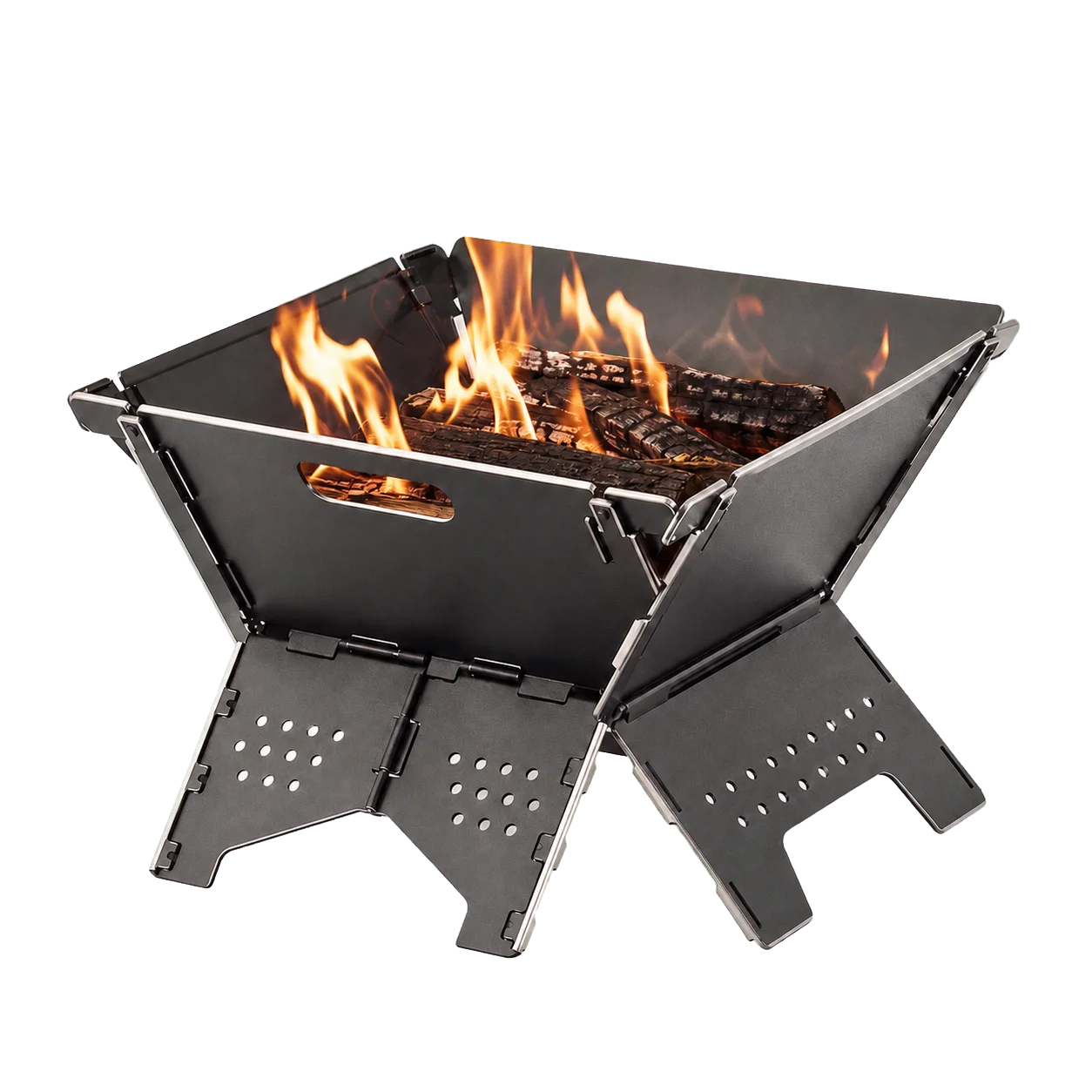
A folding fire pit is practical for vehicle or campsite kits when the panels register clearly, the assembled body supports the declared fuel load and every cooled component returns to a protected pack. Folded dimensions matter, but so do edge treatment, ground clearance, ash handling and fit after repeated heating.
Complete-kit dimensions and mass should include panels, legs, ash components, grate when supplied and the storage case, so distributors can calculate freight and describe the actual carried load.
Tabs, hinges or slots should retain clear order, secure engagement and practical refit after full cooling. Low folded volume has little value if heat movement makes later assembly difficult.
The intended site surface, support footprint and any base tray or shield are stated with the product. Local rules and full cooling still govern where and when the unit can be packed.
Design Details
Panel registration, assembled support, ground clearance and smooth refit after full cooling define the portable system.
Tabs, hinges or slots make orientation clear and reduce reliance on loose fasteners during campsite setup.
Engaged joints and supports keep the assembled walls registered while the base carries the nominated wood or charcoal load.
Leg spread, tray position and any shield are matched to the declared outdoor setup rather than relying on portability as a safety claim.
The used body is cleaned, inspected and stacked so fully cooled soot-bearing faces remain isolated from clean travel equipment.
Specifications
Complete-kit mass, folded dimensions, panel count, declared fuel and the cooled-ash routine belong in one specification.
Materials & Finish
Stainless and coated-steel panels offer different mass, corrosion and finish expectations; thickness and edge treatment remain model-specific.
Stainless sheet supports an unpainted travel format, with thickness and edge finish selected so cooled panels still assemble and pack smoothly.
Formed carbon steel provides a cost-conscious construction when abrasion points and direct heat zones receive appropriate finish decisions.
The storage case and internal divider separate fully cooled residue-bearing faces from clean gear and protect panel edges; neither is represented as suitable for hot components.
Applications
The format fits customers who value low storage volume and accept assembly, active fire management and full cooling before repacking.
Flat packs suit cars, RVs and overlanding storage where customers need a portable fire pit without carrying a fixed bowl.
Straightforward assembly and identified ash parts support permitted campsites with established fire-management rules.
The compact pack suits shorter permitted outings when setup, active supervision, full extinguishing and complete cooling can be completed before departure.
OEM & Private Label
OEM development can coordinate panel order, locks, support, pouch and replacement references around the intended packed target.
FAQ
Used-panel fit and the complete packed system are more meaningful than the thickness of unused folded panels.
It should include every panel, support, ash component, grate when supplied and the final storage case.
Heat movement can occur. Material, thickness and relief geometry should be selected so the cooled panels still assemble, support the load and return to storage without forcing.
Hinged bodies reduce loose parts, while slotted panels can produce a thinner pack. The right choice depends on weight, setup expectations and replacement strategy.
No universal surface claim is appropriate. The intended ground setup, clearance components, local rules and manufacturer instructions must all be followed.
Panels, hinge pins, legs and trays can carry individual service references when their interfaces remain consistent on the specified model.